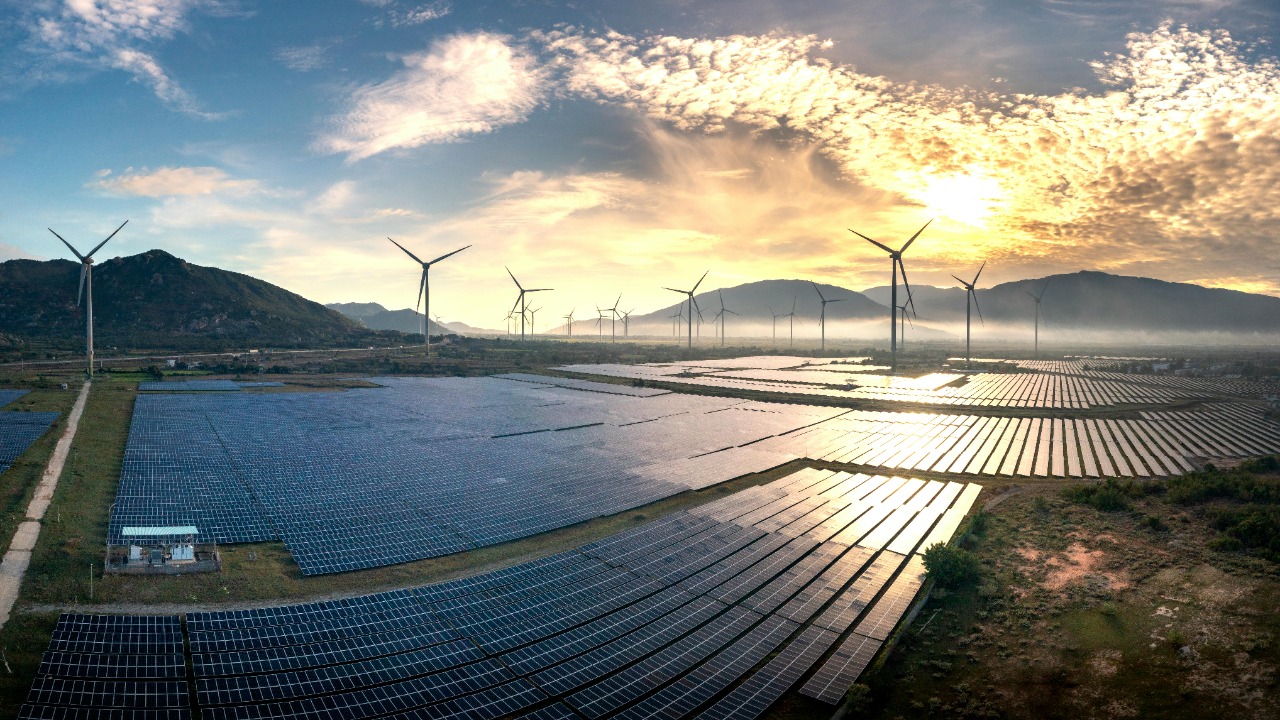

Solar panels and wind turbines have become the public face of clean energy, yet the heat beneath our feet is quietly emerging as a powerful third pillar. Geothermal power, long treated as a niche technology, is starting to attract serious investment and policy attention as grids search for round-the-clock low carbon supply. The question now is whether governments and markets can move fast enough to turn this underground resource into a mainstream force.
Unlike variable renewables, geothermal can run almost continuously, which makes it a natural partner for solar and wind in a decarbonised system. From ancient bathhouses to modern data centers, people have tapped the Earth’s warmth for Millennia, but only recently have drilling techniques and new business models hinted at a much larger role for this resource in the global energy mix.
From ancient Romans to next‑generation wells
Geothermal energy is not a futuristic invention, it is one of humanity’s oldest heat sources. Historical accounts describe how Romans channelled hot water from natural springs to warm communal baths and buildings, while Italy later pioneered early geothermal power plants that drew steam from natural underground reservoirs. Researchers now argue that the same basic principle, using the planet’s internal heat, can be scaled with modern drilling and reservoir management to provide reliable electricity and district heating in many more regions, as highlighted by recent work on the Millennia of use by Romans and in Italy.
What is changing is not the physics but the toolkit. Oil and gas style techniques are being adapted to create engineered reservoirs where natural ones are scarce, while directional drilling allows multiple wells from a single pad to tap deeper, hotter rock. Analysts describe this as a shift toward “next generation” geothermal, with new projects using advanced wells, closed loop systems and superhot rock concepts that could dramatically expand the resource base if they prove commercially viable, a trend underscored by rising investment in these technologies.
The “sleeping giant” label is starting to fit
Industry advocates have long described geothermal as a “sleeping giant,” a phrase that has now migrated from marketing decks into mainstream policy debates. In one recent assessment, Kristina Hagstr Ilievska, chief marketing officer for Baseload, used the phrase while outlining The Potential for a one hundred fold expansion of the market if new drilling and financing models take hold, a vision captured in her comments The Potential. That optimism is echoed by Sanjeev Kumar, head of policy at the non profit European Geothermal Energy, who has also called Geothermal the sleeping giant of the energy world and argued that it could help meet electricity demand growth by 2050, a view set out in his Geothermal policy work.
Market forecasts are starting to catch up with that rhetoric. Allied Market Research projects that the Geothermal Power Market will reach 14.5 billion dollars globally within the next decade, with growth across every major Power Station Type, including Dry Steam Power Stations and Flash plants, even as developers warn that exploration and drilling remain costly and time consuming, according to the latest Geothermal Power Market analysis. That combination of high upfront risk and long term, fuel free operation is precisely why policymakers are now debating new risk sharing tools and tax incentives tailored to geothermal, rather than treating it as an afterthought in solar and wind focused support schemes.
Why geothermal still trails solar and wind
Despite the momentum, geothermal capacity remains modest compared with the explosive build out of solar farms and wind parks. In the United States, Geothermal Power Generation has grown at a steady pace Since 2020, but it still accounts for a small slice of total renewable output, as detailed in the Key Findings for the United States in the latest Geothermal Power Generation report. Public awareness is part of the problem, as advocates concede that geothermal has struggled to compete with the simple story and visible hardware of rooftop panels and spinning turbines.
Cost and geography also help explain the gap. A widely shared discussion on Why geothermal is not as popular as solar and wind points to the fact that viable projects have historically clustered in volcanic or tectonically active regions, while drilling risk and exploration costs can be high compared with modular solar installations, a perspective captured in one Quora thread. Industry analysts argue that better data, improved drilling techniques and new financing structures can chip away at those barriers, but they also stress that geothermal will not match the sheer speed of solar deployment without targeted policy support.
Evidence the market is finally waking up
There are signs that this support is starting to materialise. A recent federal market report notes that more than 1.5 billion dollars in public and private funding has flowed into new geothermal projects and technologies in the United States in just a few years, with both power generation and direct use heating expanding within the same period, according to the latest market report. Installed Capacity Growth in the Western United States has been particularly notable, with As of 2024 U.S. geothermal power nameplate capacity reaching 3.97 g, a figure that underscores how incremental additions are starting to add up in key states, as documented in the Installed Capacity Growth data.
Corporate buyers are also starting to treat geothermal as a strategic asset. One high profile example is a deal for a 150 m power system that Sage agreed to build for Meta, using next generation geothermal technology to supply energy hungry data centers, a milestone that illustrates how large tech firms are looking beyond solar and wind for firm clean power, as described in recent coverage of Sage. Analysts at Global Energy Monitor, in their GEM GGPT brief, note that global geothermal capacity additions have historically been slow, with only 382 m added in some years, but they also highlight a recent pipeline of larger projects that could accelerate growth if financing and permitting hurdles are addressed, as detailed in the GEM analysis.
Policy, PR and the path to scale
For geothermal to move from niche to mainstream, policy will be as important as technology. The International Energy Agency has flagged that investment in next generation geothermal is surging, but it stresses that clear regulatory frameworks, drilling risk insurance and grid access rules will determine whether that capital translates into steel in the ground, a point made in its commentary on policies. In the United States, the 2025 U.S. Geothermal Market Report notes that more than 1.5 billion dollars in new investment has flowed into the sector since 2020, with both power and direct use applications expanding respectively within the same period, underscoring how targeted support can unlock private capital, as summarised in the $1.5 billion figure.
Perception may be just as critical as permitting. One industry advocate described the sector’s struggle for attention as a PR Battle, arguing that a likely reason geothermal lags is that it has not told its story as effectively as solar and wind in the clean energy market world, a critique laid out by Spencer Nelson When he discussed the need for better public relations and policies, as reported in the Battle over messaging. At the same time, academic voices continue to remind policymakers that Millennia of experience, from Romans to Italy and beyond, show that geothermal can deliver reliable heat and power from natural underground reservoirs, a historical perspective reinforced in recent Romans focused research. As I weigh these threads, I see a technology that is no longer sleeping, but still stretching, and whether it fully wakes up will depend on how quickly policymakers, investors and the public recognise that the clean energy transition is not just about what we build on the surface, but what we unlock far below it.
More from Morning Overview