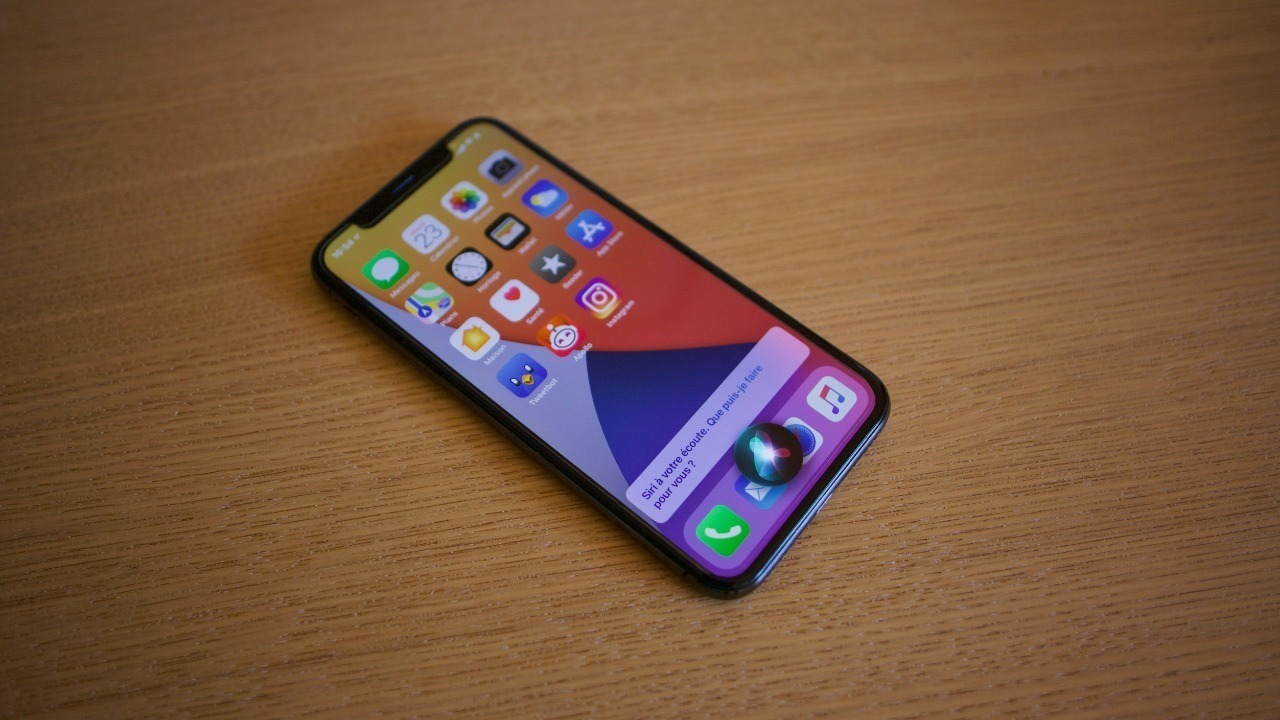

Siri is on the verge of its biggest reinvention since it arrived on the iPhone, with Apple preparing to turn its familiar voice assistant into something much closer to a full conversational chatbot. Instead of a rigid command system that sets timers and sends texts, the next version is expected to handle open‑ended questions, multi‑step tasks and natural back‑and‑forth dialogue. In effect, Apple is positioning Siri to compete directly with the kind of generative AI experience people now associate with ChatGPT.
That shift is not just a software upgrade, it is a strategic reset for how intelligence works across the iPhone, iPad and Mac. If Apple delivers what its own executives and outside experts are now hinting at, Siri will become the front door to a broader “Apple Intelligence” layer that quietly understands context, reaches into your apps and data, and still respects the company’s strict privacy posture.
The long‑rumored Siri reboot finally takes shape
For years, Siri has lagged behind newer assistants that can write emails, summarize documents or debug code, and Apple has been under pressure to respond. Reporting and expert commentary now converge on a clear direction: Apple is rebuilding Siri around large language models so it can understand more conversational prompts, remember context across turns and generate natural responses that feel closer to a human chat. Early descriptions suggest that what started as a simple voice interface will be reintroduced as a system‑wide AI companion that can reason about what you say instead of just matching keywords, a shift that several detailed analyses frame explicitly as an answer to ChatGPT.
Apple is expected to lean heavily on its control of hardware and software to make this feel less like a chatbot bolted onto a phone and more like a native capability. Instead of sending every query to a remote data center, the company is investing in on‑device processing so that at least some of Siri’s new intelligence runs locally on the A‑series and M‑series chips inside current iPhones and Macs. That approach, described in depth in coverage of Apple’s broader Apple Intelligence plans, is meant to keep responses fast and private while still allowing more complex requests to tap cloud‑scale models when needed.
From voice commands to full conversational assistant
The most visible change for everyday users will be how much more fluid Siri feels in conversation. Instead of barking rigid commands like “Set timer ten minutes” or “Open Photos,” people will be able to speak naturally, ask follow‑up questions and correct themselves mid‑sentence without starting over. Apple is training its models to track context across a session so that if you ask about “that email from Jordan” and then say “reply and say I am free Friday afternoon,” Siri can infer the thread you mean and draft a response in one flow, a capability that experts quoted in recent commentary describe as central to the redesign.
That conversational layer is expected to extend beyond voice. On iPhone and Mac, Siri will increasingly show up as a text interface that looks and behaves more like a modern chatbot, letting you type complex prompts, paste in content to summarize or ask for help drafting documents. The company is already seeding expectations that Siri will be able to generate longer‑form text, rewrite notes in different tones and answer open‑ended questions about topics that go far beyond the device itself, mirroring what users now take for granted in ChatGPT and similar tools. Coverage of Apple’s internal demos suggests that this chat‑first Siri will be tightly integrated into the system share sheet and app menus so it feels like a built‑in assistant rather than a separate AI app.
Deep integration with iPhone, Mac and iPad
Where Apple hopes to differentiate itself is not just in how smart Siri sounds, but in how deeply it can act on your behalf inside the operating system. The revamped assistant is expected to gain far more granular control over apps and settings, so that a single request like “Pull the photos from my last trip to Chicago, make a short video with music, and send it to my family group chat” can trigger a chain of actions across Photos, Music and Messages. Reporting on Apple’s internal roadmap describes Siri as a kind of automation engine that can string together multiple steps that today would require manual tapping through different apps, with the new AI layer deciding how to translate natural language into concrete system actions.
On the Mac, that could mean asking Siri to “clean up my desktop, archive old screenshots and open the Xcode project I was working on last week,” then watching as it sorts files, moves them into folders and launches the right app without further input. On iPad, the assistant could become a more capable study partner, summarizing PDFs in the Files app, pulling definitions from Safari and dropping key points into a Pages document. Enthusiasts dissecting early leaks and developer clues on community forums have zeroed in on this cross‑app orchestration as the feature that could make Siri feel indispensable again.
How Apple plans to compete with ChatGPT on privacy and control
Apple is entering a generative AI race that OpenAI, Google and others have been running for years, but it is doing so with a very different playbook. Instead of pushing users toward a single cloud chatbot, Apple is threading its models through the operating system and emphasizing that much of the processing will happen on device, with only the most demanding tasks sent to servers in a way that obscures personal identity. Analysts who have seen Apple’s positioning describe privacy as a core selling point, with the company arguing that its approach can deliver many of the same capabilities as ChatGPT while keeping sensitive data like messages, photos and location history under tighter local control.
At the same time, Apple is not ignoring the expectations that ChatGPT has set for creativity and breadth of knowledge. The upgraded Siri is expected to handle tasks like drafting social posts, brainstorming ideas and explaining complex topics in plain language, all while staying within Apple’s content guidelines and avoiding the more chaotic behavior that has occasionally surfaced in rival chatbots. Some reports suggest Apple is exploring partnerships or interoperability with existing AI providers for certain queries, but the company’s public messaging so far has focused on building its own stack and using its hardware advantage to keep latency low and battery impact manageable, a balance that detailed coverage frames as central to its competitive pitch.
What users should realistically expect in the first release
Even with all the hype, the first version of this new Siri is unlikely to be a magic wand that solves every AI task perfectly. Early reporting points to a phased rollout that prioritizes core experiences like smarter messaging, richer search across your own content and more flexible voice control, with more advanced developer hooks and niche skills arriving over time. I expect that some of the flashier demos, such as multi‑step automations that touch half a dozen apps at once, will initially be limited to newer devices with the latest chips, a pattern that has already been hinted at in detailed breakdowns of which iPhone and Mac models are expected to support the full feature set.
There is also the question of reliability. Generative models are prone to confident mistakes, and Apple has a lower tolerance for visible errors than some of its rivals. I expect the company to constrain Siri’s new abilities in areas where wrong answers could be harmful, and to label certain responses as suggestions rather than definitive facts. Early testers and influencers who have shared glimpses of Apple’s internal builds on social platforms like Instagram have emphasized that the experience is still evolving, with Apple iterating on interface details and guardrails as it goes.
More from Morning Overview