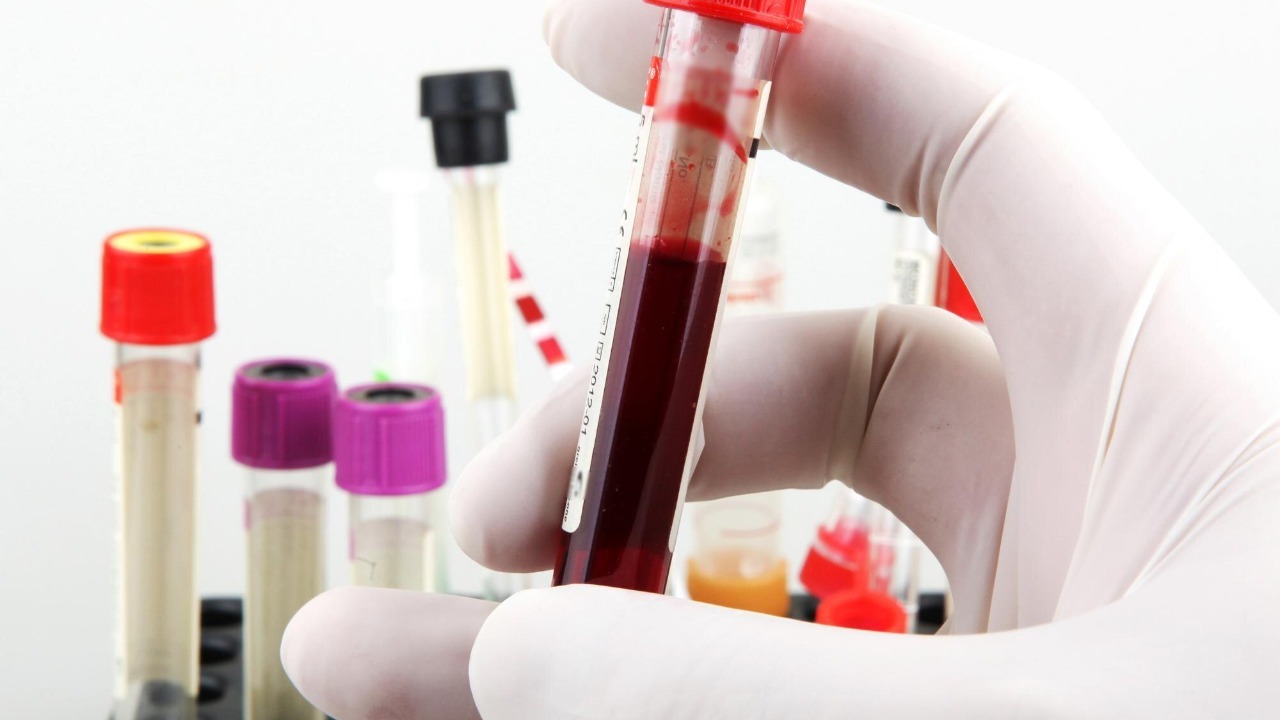

For decades, Parkinson’s disease has been diagnosed only after unmistakable symptoms such as tremor, stiffness, and slowed movement appear, often after extensive damage to the brain’s dopamine system. Now researchers are converging on a different possibility: a routine blood draw that could flag the disease many years, perhaps even decades, before those classic signs emerge. If that promise holds, it could shift Parkinson’s from a condition detected too late into one that can be tracked and potentially treated at its earliest, most reversible stages.
The emerging tests do not look for a single “Parkinson’s gene” or one rogue protein. Instead, they read subtle molecular fingerprints in the blood that reflect what is happening deep inside the nervous system. By combining these signatures with what is already known about early non‑motor symptoms, scientists hope to build a new kind of risk radar that could change how neurologists, primary care doctors, and patients think about the disease.
Why a blood test for Parkinson’s matters now
Parkinson’s is already described as the world’s fastest growing neurodegenerative disorder, and researchers at UCL have reported that it affects nearly 10 million people globally, a number they expect to rise sharply in the coming decades as populations age and survival improves for other chronic illnesses. In their analysis, a team that included scientists at UCL and University College London’s Faculty of Population Health Sciences showed that a carefully designed blood assay could identify people who would go on to develop Parkinson’s up to seven years before symptoms, highlighting how urgent it is to move diagnosis earlier in the disease course. Their work on a blood signature underscores that the current wait‑for‑tremor model leaves a large window of missed opportunity.
Other groups have reached similar conclusions using different technologies, which strengthens the case that blood can carry reliable clues about the disease. One large study of people who later developed Parkinson’s found that specific patterns in their blood could be detected long before diagnosis, and that these patterns were distinct from those seen in healthy controls, suggesting that the biology of Parkinson’s is active well before the first clinic visit. Researchers involved in that work, also linked to UCL, argue that such tests could eventually be used to enroll at‑risk individuals into prevention trials, in much the same way that cholesterol testing opened the door to early statin therapy for heart disease.
The Scandinavian study that pushed the timeline back decades
The boldest claims about how early Parkinson’s might be detected come from a collaboration between scientists in Sweden and Norway, who analyzed blood samples from large population cohorts that had been followed for many years. By comparing people who eventually developed Parkinson’s with those who did not, they identified a molecular pattern that appeared long before diagnosis and remained relatively stable over time. According to their report, these biomarkers could, in some individuals, be present decades before the first tremor or gait change, suggesting that the disease’s roots stretch far back into midlife.
The same work, described in more technical detail in a Nature paper, used advanced proteomic methods to scan thousands of proteins in the blood and then applied machine‑learning models to pick out the combination that best predicted future Parkinson’s. The researchers reported that their algorithm could distinguish future patients from controls with high accuracy, and they emphasized that the signal was not simply a reflection of general aging or inflammation. A companion analysis in another study focused on how these protein changes mapped onto known pathways in the brain, including those involved in synaptic function and mitochondrial health, reinforcing the idea that the blood test is capturing genuine neurodegenerative processes rather than random noise.
From lab bench to clinic: how the tests actually work
Although the phrase “simple blood test” suggests a straightforward lab slip, the underlying science is intricate. One approach, highlighted by the American Parkinson Disease Association in a discussion of a new blood test, focuses on misfolded alpha‑synuclein, the protein that clumps in the brains of people with Parkinson’s. By amplifying tiny amounts of this abnormal protein in blood or related fluids, scientists can detect a seeding activity that appears to be highly specific to the disease. Another strategy, used by Scandinavian teams, measures broad panels of proteins and then uses statistical models to derive a composite risk score, which can be updated over time as more data accumulate.
RNA‑based methods add a third layer to this toolkit. In one study, scientists reported that a panel of RNA markers in the blood could distinguish people with symptomatic Parkinson’s from healthy volunteers and, crucially, could also identify individuals in earlier stages. They described the assay as fast and non‑invasive, and suggested that it could support both early diagnosis and targeted intervention. Another group working in Europe has developed a relatively simple test that looks at a smaller set of blood proteins in patients at early stages of the disease, although outside experts have cautioned that more research is needed to confirm how well it performs in broader populations.
Early symptoms, risk windows, and what “decades before” really means
Even before any lab test is ordered, clinicians have long known that Parkinson’s often announces itself in subtle ways that can precede tremor by many years. People may develop constipation, a reduced sense of smell, or vivid dreams that involve acting out movements in bed, all of which can be early signs of the disease. Reporting by Angelica Stabile has highlighted how these surprising symptoms can appear years before classic motor problems, and how they might one day be combined with blood‑based biomarkers to refine individual risk estimates. The idea is not to diagnose Parkinson’s on the basis of constipation or dream enactment alone, but to use them as clinical flags that justify a closer look.
Recent coverage of the Scandinavian work has gone further, suggesting that early Parkinson could be detected decades before symptoms with a simple blood test, a claim echoed in a radio report that framed this as a potential turning point for treatment. Another analysis described how the discovery of long‑range protein signatures reveals a crucial window in which disease processes are active but neurons have not yet been irreversibly lost, opening the door to preventive strategies. That perspective was reinforced in a technical summary that noted how the new biomarkers could support early diagnosis via blood tests and help identify when disease‑modifying therapies should be started, rather than waiting for visible disability.
Promise, limits, and what comes next for patients
For patients and families, the prospect of a blood test that can predict Parkinson’s years in advance is both hopeful and unsettling. On one hand, earlier detection could allow neurologists to tailor exercise programs, adjust medications that might worsen symptoms, and enroll high‑risk individuals in clinical trials of drugs that aim to slow or prevent neurodegeneration. On the other, there is not yet a proven therapy that can stop Parkinson’s in its tracks, which raises ethical questions about how to use predictive information responsibly. Commentators have stressed that any screening program would need to be paired with clear counseling and follow‑up plans, not just a lab report that leaves people to interpret their own risk.
Researchers involved in the Scandinavian and UCL projects have been careful to frame their findings as a foundation rather than a finished product. They note that the current tests have been validated in specific cohorts and will need to be checked in more diverse populations, including people with conditions that can mimic Parkinson’s. Coverage in The Independent has emphasized that while the discovery of blood biomarkers opens a crucial window for intervention, it does not replace careful clinical assessment. A related summary on scientists in Sweden and Norway also pointed out that the global number of people with Parkinson could more than double by 2050, which makes it even more important to refine these tools now, while there is still time to build the infrastructure for earlier diagnosis and, eventually, prevention.
More from Morning Overview