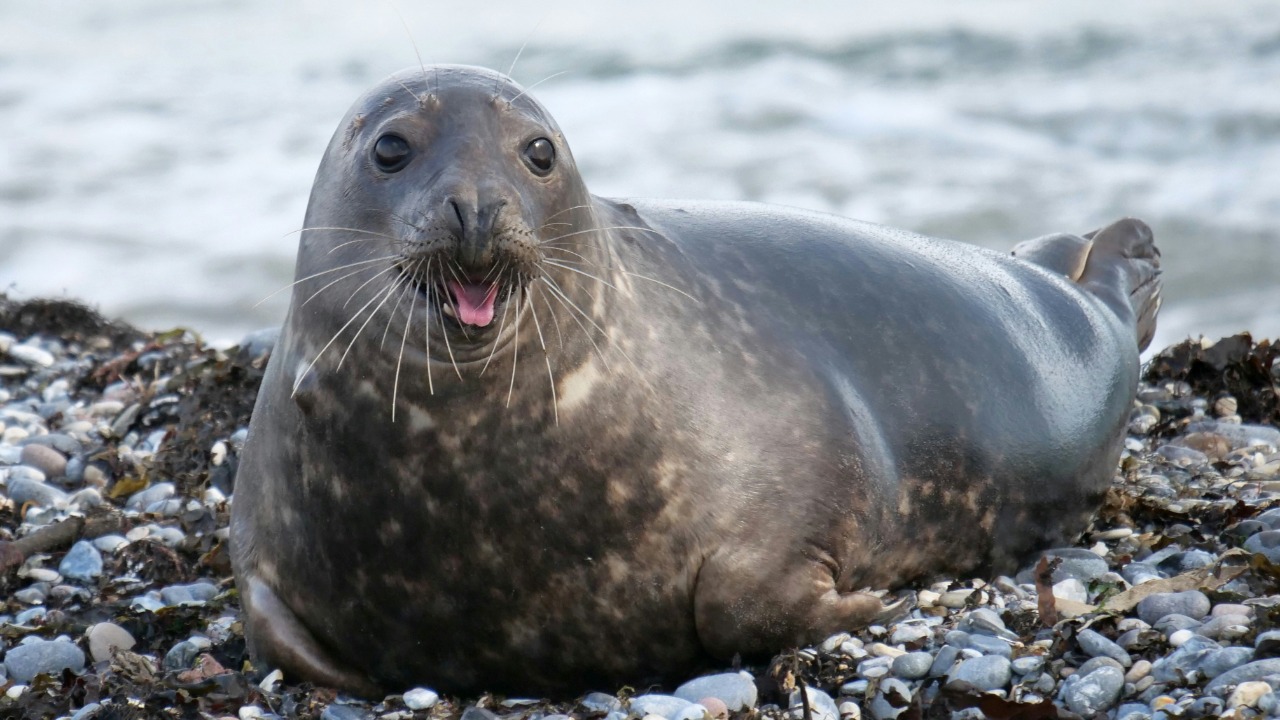

Along the sandbanks and tidal flats of the Dutch coast, a familiar shape is becoming harder to spot. Harbor and grey seals that once crowded the shallows of the Wadden Sea are now turning up in smaller numbers, leaving researchers to piece together why a population that had rebounded from past crises is suddenly slipping again. The stakes reach far beyond one charismatic species, because these animals are sentinels for the health of an entire marine ecosystem.
Scientists across the Netherlands, Germany and Denmark are now racing to understand what is driving the decline, from shifting prey and industrial noise to disease and plastic pollution. Their work is unfolding in real time, with new surveys, necropsies and management plans trying to keep pace with a problem that, so far, refuses to yield a single simple cause.
The first signs that something was wrong
The alarm over disappearing seals did not start with a mass die off, but with a subtle bend in a graph. Between 2020 and 2021, the estimated number of harbor seals counted along the Dutch coast began to shrink after years of steady growth, a trend that researchers tracking the population had not expected to see outside of major disease outbreaks. Barring the two deadly distemper epidemics that swept the region in the 1980s and 2000s, the animals had been a conservation success story, so the new downturn immediately raised questions about what had changed in the water and on the sandbanks where they haul out to rest, breed and moult, as described in recent reporting.
Those concerns have focused on the Wadden Sea, a UNESCO listed tidal system that stretches along the coasts of the Netherlands, Germany and Denmark and hosts the largest Harbor seal population in Europe. The Wadden Sea is both a nursery and a feeding ground, and its shallow basins and undisturbed sandbanks are central to how Harbour seals use the area for breeding, moulting and resting, according to the current management plan. When counts there falter, it is a warning that something in one of Europe’s most carefully watched marine ecosystems is out of balance.
What the latest counts reveal
To move beyond anecdote, researchers rely on coordinated aerial and boat based survey work that has been refined over decades. The latest harbour seal surveys across the Wadden Sea and Helgoland show a long term decline in the number of animals hauled out during the moult, even as pup numbers remain high, a pattern that suggests adult survival or distribution is changing rather than reproduction alone. Those coordinated survey flights, which cover the Wadden Sea and Helgoland in a narrow seasonal window, are central to how scientists track trends and are detailed in recent monitoring updates.
In the Netherlands the picture is complicated by the fact that pup counts are still rising even as overall numbers soften. In the Netherlands they increased by 10% to 7,285, while at Helgoland, 100 seals were counted compared to 56 in the previous year, Following a period of relative stability. At the same time, grey seal numbers are still climbing in parts of the region, with counts showing that On the Danish side, 303 grey seals were recorded, a decrease of 16.1 percent compared with the previous season but still part of a longer term expansion that may be reshaping competition for space and prey.
A mystery with many suspects
When I talk to researchers about the disappearing seals, what stands out is not a single smoking gun but a crowded suspect list. A comprehensive Harbour seal report for the Wadden Sea notes that the causes of the decline remain unclear, but points to prey availability, potentially caused by human activities, interactions with grey seals and offshore construction as likely contributors, a set of pressures laid out in detail in the latest Harbour assessment. The same document underlines that the decline is not uniform across the entire Wadden Sea, which hints at local factors such as specific fishing grounds, shipping lanes or construction sites playing a role.
Pollution is another thread that keeps surfacing. Introduction sections of new research on marine debris stress that During the last few decades, the environmental effects of marine debris have become more and more apparent, with entanglements and ingested plastics documented in seals and other marine mammals in multiple regions. That work, which includes detailed case studies of entanglements and stomach contents, is summarised in a recent study of entanglements and ingested marine debris. When combined with the chronic noise of shipping and the pulse of pile driving from offshore wind projects, which are flagged as concerns in the WADDEN SEA SEAL MANAGEMENT PLAN 2023-2027 available Wadden Sea, the picture that emerges is of animals navigating a habitat that is noisier, dirtier and more crowded than the one their grandparents knew.
Inside the two year investigation
Recognising that piecemeal studies were not enough, authorities and scientists have launched a coordinated, two year international investigation into dwindling common seal numbers in the Wadden Sea. That project, which began after counts showed a sustained downturn, is designed to combine aerial surveys, tagging, necropsies and food web analysis so that researchers can link changes in seal numbers to specific pressures such as prey shifts or disease, as outlined in recent coverage of the new research effort. The work is being coordinated across national borders because the seals themselves do not recognise political lines, moving freely between Dutch, German and Danish waters.
Part of that investigation zeroes in on the youngest and most vulnerable animals. New research explores Harbor seal pup deaths in the Wadden Sea, with By The Animal Reader describing how necropsies and field observations are being used to understand why some pups fail to survive their first weeks. That work, which includes photographic documentation of Harbor seal carcasses and field notes from researchers and is illustrated with images credited to Canva, is summarised in a short report available New online. Another summary of the same project stresses that the Harbor seal population at risk in The Wadden Sea is the largest of its kind in Europe, and warns that if the system is not understood and protected in time, the consequences will ripple far beyond a single coastline, a point underscored in a separate summary of the findings.
Why the outcome matters far beyond the sandbanks
For coastal communities, the vanishing seals are both an emotional loss and an economic warning sign. Wildlife tourism, from boat trips to seal watching hides, depends on the animals being present in predictable numbers, and local guides are often the first to notice when familiar haul out sites thin out. A 2024 annual survey of the Wadden Sea harbour seal population notes that a workshop with members of the Expert Group Marine Mammals and Wadden Sea seal centres, organised by the Common Wadden Sea Secretariat, was convened specifically to interpret the current changes in the population and advise on management responses, as described in a detailed survey note. That kind of cross border coordination is one reason the Wadden Sea has become a model for how to manage shared marine resources.
More from Morning Overview