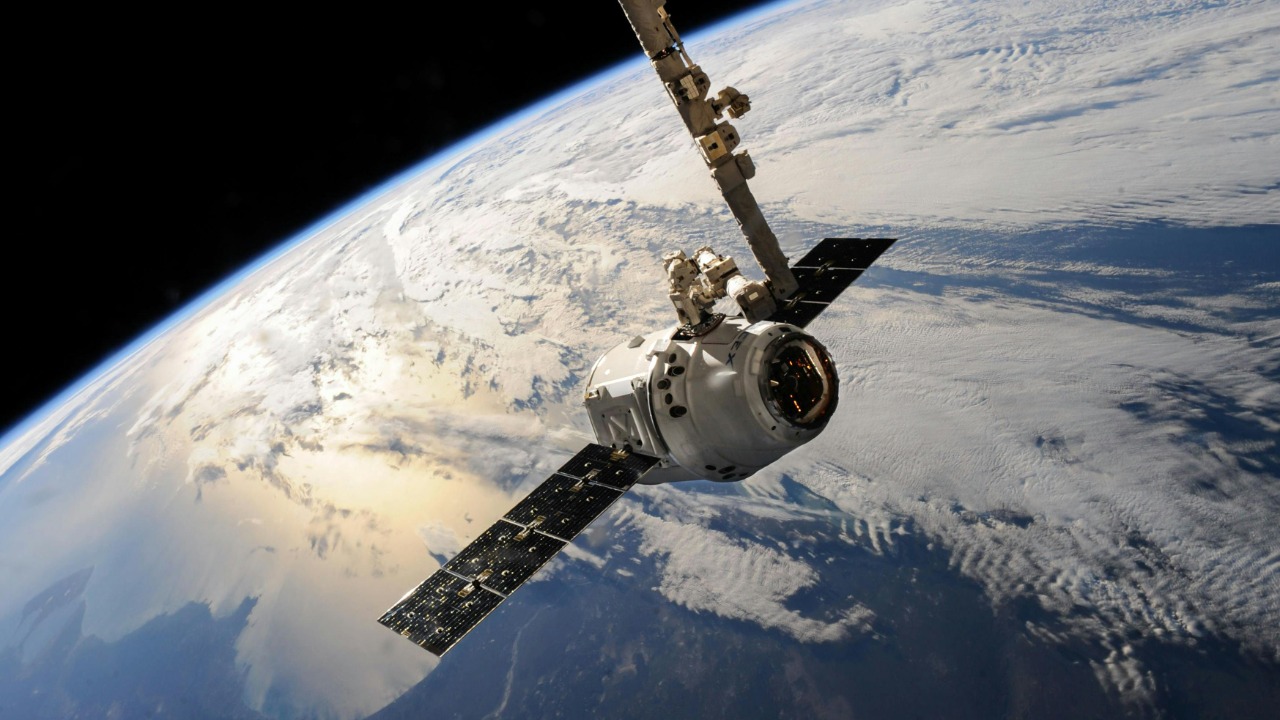

Researchers now say the world may be only 5.5 days away from a serious satellite collision at any given moment, a warning that turns an abstract orbital risk into a near-term countdown. The concern is not just about one unlucky impact, but about a chain reaction that could cripple the Low Earth infrastructure behind GPS, weather forecasts, banking networks, and global communications. That ticking window reflects how crowded and fragile near‑Earth space has become in the span of a single commercial space race.
The new estimate comes as scientists track intensifying solar storms, swelling satellite constellations, and a growing cloud of debris that together push the system closer to a tipping point. Instead of months to maneuver out of harm’s way, operators now talk in days, or even hours, as they try to steer thousands of machines through an increasingly chaotic traffic pattern.
The 5.5‑day “crash clock” and why it matters
The 5.5‑day warning is built around a simple but unsettling idea: in Low Earth orbit, the odds of two satellites slamming into each other are no longer remote, they are calendar‑level events. Researchers have framed this as a Collision Risk and Satellite Harm Clock, or CRASH Clock, which estimates how long the current traffic and debris environment can go before a major impact becomes likely. One recent analysis of Low Earth traffic concluded that the countdown to a serious crash sits at just 5.5 days, a figure that reflects both the number of active spacecraft and the density of junk already circling the planet.
That clock is not a prediction of a specific accident on a specific day, but a statistical measure of how thin the safety margin has become. It draws on the same logic that underpins the classic Kessler scenario, in which one collision sprays fragments into nearby orbits, those fragments hit other satellites, and the process cascades. In a detailed look at this risk, analyst Margo Anderson described how One solar storm or some other catastrophic failure could be enough to start that chain, turning a single mishap into a long‑lived debris belt that threatens every spacecraft that passes through.
From months to days: a shrinking window to dodge disaster
For most of the space age, satellite operators could treat collision avoidance as a slow, deliberate process, with weeks or months to plan a maneuver. That luxury has evaporated as mega‑constellations have filled key orbital shells with thousands of new spacecraft. Analysts now report that the reaction window has shrunk from months to mere days, with operators juggling a constant stream of close‑approach alerts as they try to keep their fleets safe. One assessment of this shift notes that the time to respond has fallen sharply since the first Starlink launches, forcing companies and governments to rethink their risk thresholds and automation strategies.
The numbers behind that scramble are stark. Astrophysicists who track the maneuvers of large constellations point out that one network alone now performs roughly one avoidance burn every 106 seconds, a cadence that leaves little room for error or delay. They also highlight that there are roughly 5,000 other active payloads sharing those lanes, each with its own propulsion limits, software quirks, and communication lags. In that environment, a miscalculated burn or a brief loss of control can quickly turn a routine conjunction into the first link in a much larger chain.
Solar storms, “2.8 Days to Disaster,” and the Kessler tipping point
Compounding the traffic problem is a surge in solar activity that can scramble satellite electronics and puff up Earth’s atmosphere, changing orbital paths in unpredictable ways. Earlier this month, Jan reports from European space weather monitors described an X‑class flare and associated shock that disturbed the upper atmosphere, a reminder that geomagnetic storms can nudge satellites into new altitudes and increase drag. Around the same time, a separate analysis framed the risk in even starker terms, warning that Low Earth Orbit Could Collapse Without Warning in as little as 2.8 days if a major disturbance hit a dense orbital shell and triggered a cascade of failures.
Those short timeframes are closely tied to a new way of quantifying catastrophe. Researchers led by Thiele and her team have introduced what they call The CRASH Clock, described as a New Metric for Catastrophe that blends solar forecasts, debris models, and satellite behavior into a single countdown. In their work, Thiele and colleagues, identified in one summary as “Thiele and” co‑authors, emphasize how even a modest increase in launch rates or a single large breakup can push the clock sharply downward. Their focus on the Col, or collision, probability reflects a growing consensus that the system is edging toward the classic Kessler scenario, in which the density of junk in The Kessler effect’s Low Earth Orbit, or LEO, threshold becomes self‑sustaining.
The solar threat is not theoretical. Space weather observers reported that Earth was hit by an S4 solar radiation storm earlier this month, the strongest since the 2003 Halloween Storms, according to NOAA. Events at that level can disrupt communications, degrade solar panels, and temporarily blind star trackers, exactly the kind of stress that could cause one satellite to lose control at the worst possible moment. When that happens in an orbital band already packed with hardware, the CRASH Clock’s 2.8‑day and 5.5‑day benchmarks start to look less like outliers and more like a baseline.
Constellations, close calls, and a crowded orbital shell
Even without solar fireworks, the sheer number of objects in orbit is pushing the system toward its limits. One widely cited tally notes that 45,000 plus human‑made objects now circle the planet, a swarm that includes working satellites, defunct spacecraft, spent rocket stages, and fragments from past collisions. Analysts warn that if disaster strikes, we may have under three days before some of those satellites begin to reenter in large numbers, a scenario that would threaten not only orbital services but also ground infrastructure under key flight paths. The simple phrase that “Space is getting crowded” understates how complex the traffic patterns have become as operators stack multiple constellations into the same altitude bands.
That complexity is already producing near misses and forced maneuvers. In one recent case, Researchers in China reported that a close call between a Chinese satellite and a rival spacecraft in December directly triggered a large‑scale orbit lowering by a major constellation operator, affecting about 4,400 satellites. The study, which drew on tracking data from China and Reading, framed the maneuver as a defensive move to reduce collision risk in a crowded shell. It also underscored how one incident can ripple across thousands of spacecraft, forcing fuel‑burning altitude changes that shorten mission lifetimes and complicate future traffic management.
Starlink’s course correction and what comes next
Some of the biggest players in the new space economy are now adjusting their strategies in response to these warnings. Earlier this year, one major operator announced that it would gradually lower thousands of Starlink satellites in 2026, arguing that a slightly lower orbit would reduce long‑term collision risk and speed up natural deorbiting if control is lost. Company officials framed the move as a response to rising conjunction rates and to launches by other satellite operators, a tacit acknowledgment that no single firm can manage the risk alone. The plan followed an earlier incident in which one of its Starlink satellites exploded and another narrowly avoided colliding with a Chinese spacecraft, prompting executives such as Nicolls, VP of Starlink Engineering, to publicly commit to more aggressive risk‑reduction steps.
More from Morning Overview