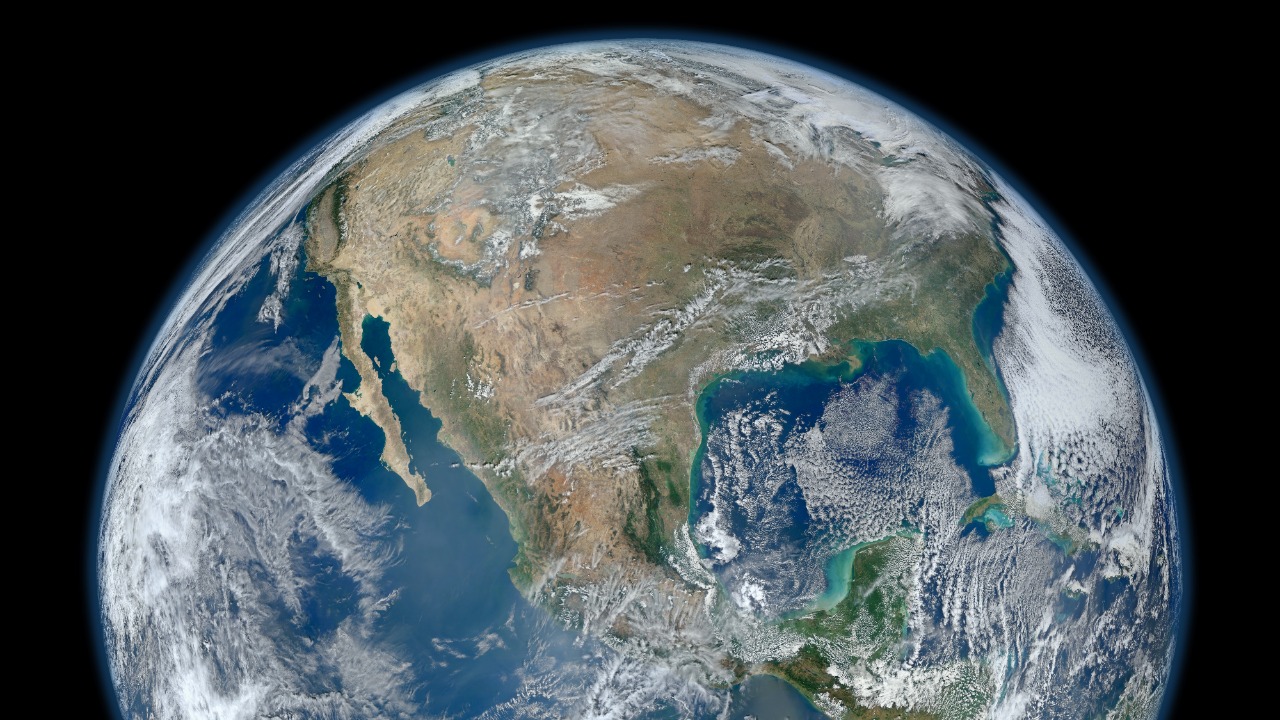

Earth’s climate is shifting faster than many models anticipated, and scientists now warn that self-reinforcing feedbacks could push key systems beyond their stable range. Instead of a smooth, predictable warming, they describe a world edging toward abrupt changes in ice, oceans, forests, and human habitability. The emerging picture is not just of higher temperatures, but of a planet where once certain thresholds are crossed, the damage accelerates on its own.
Those warnings are grounded in new research on tipping points, from destabilizing ice sheets to weakening carbon sinks and overheated oceans. Together, these studies suggest that the window to keep the climate in a relatively steady state is narrowing, even as they point to specific actions that could still shift the trajectory away from runaway change.
Record heat and a climate system under strain
Scientists tracking the past few years of extreme warmth argue that the climate system is already behaving in ways that strain older expectations. Analyses of record warm years in 2023 and 2024 highlight how sea surface temperatures are rising unusually quickly, with accelerating ocean heating now a central concern rather than a distant risk. That rapid ocean warming feeds back into the atmosphere, intensifying heat waves on land and disrupting rainfall patterns that agriculture and water systems depend on.
Researchers involved in the latest set of New Insights in Climate Science describe how these trends are assessed through peer-reviewed work that links physical changes to impacts on agriculture and urban settlements. They point to a growing mismatch between the pace of warming and the capacity of infrastructure, from power grids to drainage systems, to cope with more frequent extremes. In that context, the idea of “stability” is no longer abstract physics, it is about whether food systems, cities, and health services can keep functioning as the baseline climate shifts beneath them.
From thresholds to tipping points
Climate scientists have long warned that warming beyond certain limits risks triggering abrupt, irreversible shifts in Earth systems. Many of those warnings focus on the difference between holding global temperature rise close to 1.5 degrees Celsius, or 2.7 degrees Fahrenheit, and allowing temperatures to climb higher. As one overview explains, Scientists describe tipping points as thresholds where gradual pressure from greenhouse gases suddenly produces a large, often irreversible response, such as the collapse of a forest or the loss of a major ice sheet.
Those thresholds are not isolated. Climate researchers emphasize that several large-scale systems are approaching what they call a biological tipping point, and that these systems “talk to each other” through shared oceans and atmosphere. That means a shift in one region, such as rapid Arctic warming, can alter circulation patterns that affect rainfall in the tropics or heat waves in mid-latitudes. In a social media briefing, climate advocates summarized new work by warning that Our planet is headed toward several catastrophic tipping points, and that once those are crossed, climate change shifts from fixable to effectively unstoppable on human timescales.
Ice sheets, oceans, and new feedbacks
One of the starkest examples of emerging feedbacks comes from the Greenland ice sheet, where new modeling suggests the system Largely loses its stability once certain warming thresholds are passed. In that work, Scientists describe how meltwater can pool and drain in ways that speed up ice flow, with one Simulated scenario involving a subglacial lake eruption that destabilizes large sections of ice. Once that process begins, it feeds on itself, exposing darker surfaces that absorb more heat and further accelerate melting.
Global assessments of tipping elements now warn that humanity is on the verge of large-scale shifts in several systems at once. In a synthesis of current research, Global scientists warn that humanity is on the verge of crossing multiple tipping points, including changes in the stability of major ice sheets and shifts in the strength of the Atlantic Ocean circulation. That report, part of the Global Tipping Points, or GTPR, frames these risks as part of a broader pattern of Scientists Warn of, where one tipping event can trigger others.
Carbon sinks, forests, and the limits of buffering
For decades, land ecosystems have quietly absorbed a large share of the carbon dioxide released by human activity, slowing the rate of warming. New work compiled by Future Earth now suggests those 10 new insights include a stark warning that Land based carbon sinks are reaching critical limits. As forests face more frequent droughts, fires, and pest outbreaks, their ability to soak up emissions weakens, and in some regions they risk flipping from net absorbers to net sources of carbon.
That shift is already visible in warning signs from major forest systems. Researchers describe Alarm bells sounding in forests that are losing resilience, with hotter, drier conditions wiping out all but isolated patches of tree cover. A separate overview of three major changes to watch, from collapsing ice sheets to thawing Arctic permafrost and disappearing coral reefs, underscores how the loss of these natural buffers can accelerate warming. Once permafrost releases long-frozen methane and carbon dioxide, or coral reefs die back and stop protecting coastlines, the feedbacks amplify both climate impacts and the costs of adaptation.
Politics, public pressure, and the race to change course
As the science sharpens, political and diplomatic language has grown more urgent. Senior United Nations officials now warn that stakes could not, describing a world on the edge of a climate abyss if emissions are not cut far more quickly. In parallel, climate researchers and communicators have brought the findings of the Global Tipping Points work into public forums, with figures like Herb Simmons the host explaining how these thresholds could reshape everything from food security to migration.
Scientists are equally clear that the trajectory is not fixed. In a recent synthesis of climate dynamics, Professor Lenton concluded that Only with a combination of decisive policy and civil society action can the world tip its trajectory toward clean and affordable green technologies. That message is echoed in the latest Oct briefings, which stress that without rapid cuts in fossil fuel use, societies will face the full force of climate change rather than a manageable set of impacts. In the Arctic, meteorologists now describe an early February pattern shift as a sign that old seasonal rules no longer apply, with In the Arctic conditions increasingly shaped by a climate that has already warmed into a new regime.
More from Morning Overview