
From the Arctic permafrost to restless volcanoes and gas‑choked lakes, scientists are tracking a series of natural systems that are quietly storing extraordinary amounts of energy and pollution. Each is stable for now, yet all share a troubling trait: once certain thresholds are crossed, they can shift abruptly, with little time for people in the path to react. In parallel, global risk experts have started to fold these “slow” natural threats into a broader warning that humanity is running out of time to reduce both environmental and geopolitical dangers.
That is the backdrop for the latest decision by the Bulletin of the Atomic Scientists to keep the symbolic Doomsday Clock at just 85 seconds before midnight, a signal that multiple hazards are converging faster than governments are responding. The hidden natural time bombs scientists describe are not science‑fiction scenarios, they are already changing coastlines, reshaping polar landscapes and, in some cases, prompting evacuation and emergency planning.
Natural time bombs in a world 85 seconds to midnight
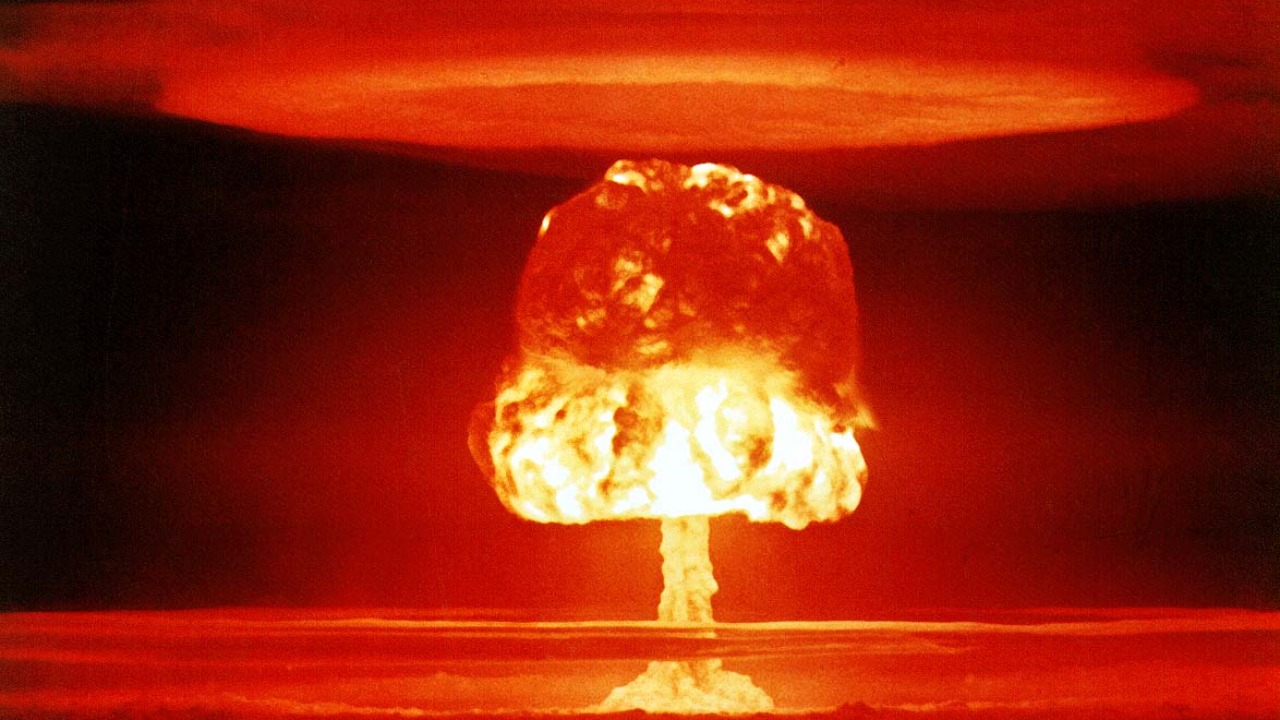
When the Bulletin of the Atomic Scientists set the clock to 85 seconds to midnight, it framed the current moment as one in which cascading risks are uncomfortably close to spinning out of control. In its PRESS statement, the group’s experts linked that setting to nuclear tensions, climate disruption and emerging technologies that can amplify both. A companion analysis on the Doomsday Clock notes that 85 Seconds to Midnight January is the closest the world has ever been to the metaphorical point of catastrophe. Another commentary, introduced with the phrase Because of what it calls a failure of leadership, stresses that the Bulletin of the Atomic Scientists Science and Security Board sees unresolved nuclear command and control vulnerabilities as part of the problem.
That clock is not a prediction, it is a judgment about proximity to danger, and it now incorporates the destabilizing potential of natural systems that are being pushed by human activity. Earlier assessments of the Doomsday Clock highlighted how climate change helped move the hand to 100 seconds before midnight, a shift that predated the latest adjustment. The current RELEASE from the Bulletin of the Atomic Scientists calls for swift action from political leaders, arguing that the window to defuse both man‑made and natural threats is narrowing.
Methane and mercury beneath the Arctic and Siberia
One of the most worrying slow‑burn hazards is locked into frozen ground. As the Arctic warms, scientists have warned that thawing permafrost in Siberia may act as a methane time bomb, releasing a gas with far greater warming power than carbon dioxide. Reports of Colossal explosions in the tundra, leaving behind massive craters, suggest that pockets of gas can build up until they rupture violently. Video from the same region shows how a remote Siberian landscape can be reshaped in an instant, while a separate clip describes how, In Alaska, a huge lake erupted with gas and water.
Researchers are also tracking how methane is migrating beneath the permafrost in Studies in Svalbard, where scientists say gas is moving under ice‑rich lowlands and could vent more widely in the future. A separate explainer on a so‑called methane beast beneath the Arctic, introduced in a Frozen Methane Monster podcast, underscores how much carbon is stored in frozen soils. Detailed reporting on Arctic permafrost notes that the thaw is more widespread than anticipated, while earlier warnings about an Arctic region methane Arctic methane time bomb stress that large releases could have huge economic impacts for the world.
The looming “mercury bomb” in thawing ice
Alongside methane, another toxic legacy is emerging from the thaw. Over centuries, mercury has built up in frozen ground so that today, Arctic permafrost may hold more of the metal than the atmosphere, oceans and soils combined. One recent digest describes how Over time, this mercury has accumulated in northern Alaska, where meltwater can carry it into rivers that feed major watersheds. The same analysis warns that as the Arctic warms, this hidden store could be mobilized, contaminating fish and communities that depend on them.
Scientists who study this phenomenon have started to describe it bluntly as a potential mercury bomb. In a short video, a researcher interviewed in Could a “Mercury Bomb” Explode in the Arctic? explains that they think of the region as having so much mercury that, as permafrost falls in a changing climate, it could release large amounts into ecosystems. That risk sits alongside the broader permafrost concerns already raised in Frozen Time Bomb coverage, which frames the melt as a dual threat to climate and public health.
Restless volcanoes and gas‑charged lakes
Far from the poles, geologists are watching volcanoes that have been quiet for geological ages but are now showing signs of life. One report focuses on a Volcano dormant for 700,000 years that could soon resume activity, with scientists noting that The Taftan in Iran frequently expels gas despite its long quiescence. A parallel story on the same Volcano repeats the 700,000 figure and emphasizes that renewed unrest has prompted closer monitoring. Together, they illustrate how a system that appears extinct on human timescales can still harbor enough energy to threaten nearby populations.
Off the Pacific Northwest, another hazard is building beneath the waves. Axial Seamount, an active underwater volcano off the Oregon Coast, is now predicted to erupt in 2026 after a surge in seismic activity and seafloor inflation. A social media post notes that the volcano lies About About 300 miles from the coast of Oregon and that Scientists have been monitoring a huge area of unrest to avoid being caught off guard. Inland, a separate analysis of hydrothermal systems under Yellowstone notes that a hidden danger lurks beneath the park, where steam‑driven blasts can occur even without a full magma eruption, and that Even if monitoring for signs of impending hydrothermal explosions is not yet possible, scientists are not suggesting that visitors should assume everything is going to explode.
Lake Kivu, tsunamis and the coastal risk map
Some of the most dramatic natural time bombs are not in mountains at all but in deep lakes. Along the border of Rwanda and the Democratic Republic of the Congo, Lake Kivu holds vast quantities of dissolved methane and carbon dioxide that could, under the wrong trigger, erupt as a lethal gas cloud. Detailed coverage in a piece labeled Lake Kivu explains how a disturbance, such as a landslide or volcanic activity, could cause the lake to overturn, releasing gas that suffocates people and animals along the shore. The article, filed under News and By Sascha Pare, notes that engineers are already extracting some of the methane for power, both to generate electricity and to reduce the risk of a sudden release.
Coastal communities face a different but related challenge as scientists refine tsunami risk maps. A technical summary on tsunami hazards explains that Now several unnamed locations around the globe have been identified as potentially vulnerable, taking into account new details about seafloor faults and landslide zones. That work intersects with concerns about underwater volcanoes like Axial Seamount and with speculative posts about deep seismic pressure beneath Los Angeles, where a viral message described what lies beneath the surface as a ticking time bomb of geology and asked, “Is this just another overblown warning?” in a thread that also referenced Because off Donald Trump in an apocalyptic tone.
More from Morning Overview