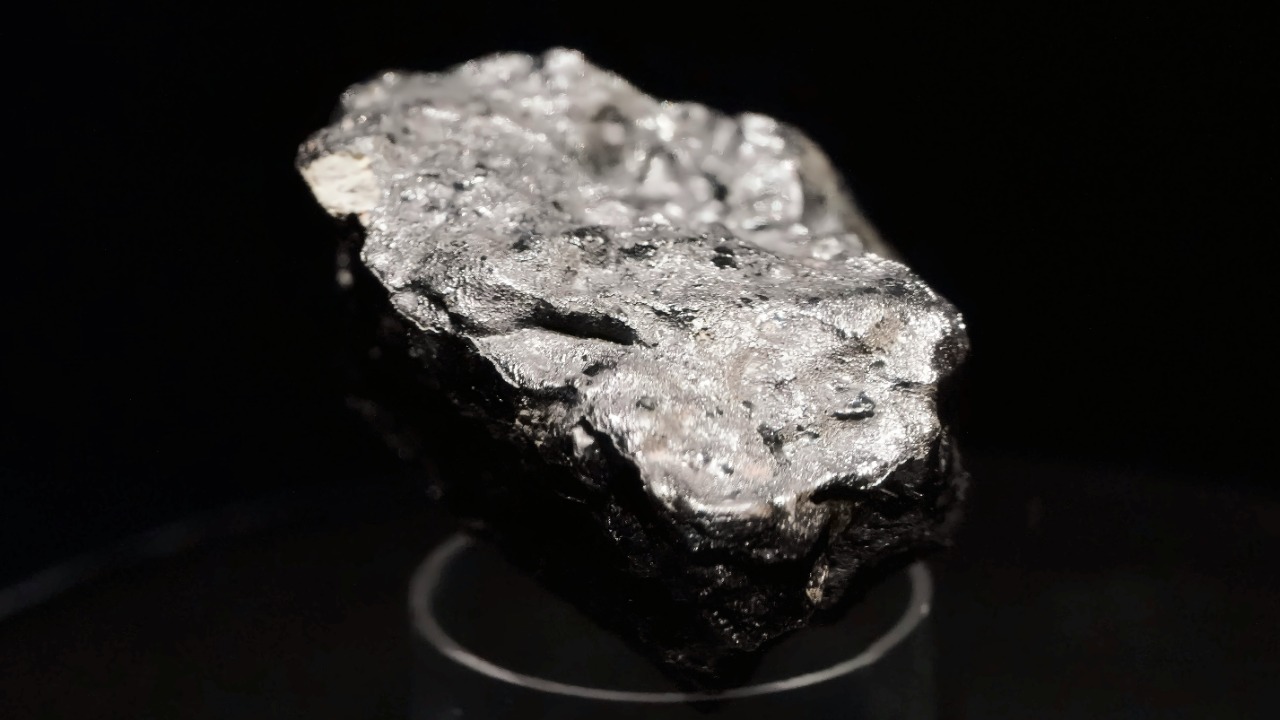

Aluminum has long been treated as a workhorse metal, valued for its light weight and corrosion resistance rather than any exotic behavior. Now researchers are revealing a subtler power hidden in its atomic structure: the ability to store, move, and release energy in ways that could reshape everything from rockets to consumer electronics. By probing how this familiar metal behaves under extreme conditions, scientists are turning aluminum into a platform for cleaner propulsion, smarter manufacturing, and even new forms of data-driven design.
Instead of discovering an entirely new element, the breakthrough lies in uncovering overlooked capabilities inside a metal that already surrounds us in cars, laptops, and power lines. I see this shift as part of a broader pattern in science, where the real disruption comes not from exotic materials but from learning to coax unexpected performance out of the ordinary ones we already know.
From kitchen foil to high-energy fuel
The most striking expression of aluminum’s hidden potential appears when it is finely divided and combined with oxidizers, turning a mundane structural material into a high-energy propellant. In solid rocket boosters, aluminum powder burns at extremely high temperatures, releasing dense energy that can help lift heavy payloads off the pad. Historical accounts of launch systems describe how engineers leaned on aluminum-based propellants to boost thrust while keeping overall vehicle mass manageable, a tradeoff that made large multistage rockets technically and economically feasible in the first place, as detailed in archival volumes on rockets and people.
What makes this behavior so powerful is not that aluminum suddenly becomes a different substance, but that its familiar chemistry is pushed into a regime where it behaves more like a fuel than a frame. When the metal is milled into microscopic particles, its surface area explodes, allowing oxygen to attack far more quickly and releasing heat in a tightly controlled burst. I view this as a reminder that the line between “structure” and “energy” in materials is often artificial, and that the same atoms that hold up a launch tower can, under the right conditions, help propel a spacecraft away from it.
Atomic structure, stress, and the science of resilience
To unlock aluminum’s deeper capabilities, scientists have had to move beyond simple strength tests and into the realm of atomic-scale structure and stress. The metal’s crystalline lattice, dotted with defects and grain boundaries, determines how it responds when bent, stretched, or heated, and those responses can be engineered as precisely as any electronic circuit. In education circles, this kind of structural thinking is increasingly treated as a core scientific habit of mind, with curriculum frameworks urging students to connect microscopic arrangements of matter to macroscopic behavior, a shift reflected in detailed guidance for science instruction.
When I look at how researchers now talk about aluminum alloys, I see less emphasis on a single “strongest” recipe and more on tuning microstructures for specific tasks, such as absorbing impact in a car crash or resisting fatigue in an aircraft wing. That approach treats the metal as a dynamic system rather than a static object, one whose internal architecture can be redesigned to manage stress, dissipate energy, and even self-heal microcracks before they grow. The hidden power here is not magic hardness, but the ability to encode mechanical intelligence into the arrangement of atoms.
Aluminum in extreme environments
Aluminum’s quiet versatility becomes most obvious when it is pushed into environments that would quickly destroy less adaptable materials. In aerospace, the metal has been asked to endure rapid temperature swings, intense vibration, and corrosive exhaust, yet it remains a mainstay of airframes and fuel tanks. Historical narratives of launch programs describe how engineers balanced aluminum’s low density against its tendency to soften at high temperatures, often pairing it with thermal protection systems or composite reinforcements to keep structures stable during ascent, as documented in technical histories of rocket development.
What I find revealing is that aluminum’s role in these harsh settings is rarely static. Alloys are reformulated, heat treatments are adjusted, and joining techniques evolve as missions demand higher performance. The metal’s underlying chemistry stays the same, but its engineered behavior shifts to match new extremes, whether that means resisting cryogenic fuels or surviving reentry heating. That adaptability, grounded in a deepening understanding of phase diagrams and defect physics, is part of what makes aluminum such a potent platform for innovation.
Data, AI, and the new metallurgy
The latest wave of discovery around aluminum is being driven less by trial-and-error metallurgy and more by data-rich modeling and artificial intelligence. Instead of testing every possible alloy in a lab, researchers can now simulate how different compositions and processing routes will affect properties like strength, conductivity, and corrosion resistance. In other sectors, AI systems are already being used to generate and optimize complex designs, from targeted marketing layouts to dynamic service workflows, as seen in tools that automate ad design for automotive service drives.
On the research side, large language models and specialized benchmarks are being used to evaluate how well AI systems can reason about technical data, a capability that directly affects their usefulness in materials science. Evaluation suites that track model performance on nuanced tasks, including those documented in detailed benchmark results, are quietly shaping which models scientists trust to help sift through alloy databases and simulation outputs. I see this convergence of AI and metallurgy as a new kind of laboratory, one where aluminum’s phase behavior and defect dynamics can be explored in silico long before a single ingot is cast.
Industrial ecosystems built on a single metal
Aluminum’s hidden power is not only technical, it is also economic and social. Entire industrial ecosystems have grown up around its extraction, refining, and fabrication, linking mining regions, smelters, rolling mills, and high-tech manufacturers. In many countries, these value chains intersect with broader debates about trade, labor, and gender equity, particularly where women are concentrated in lower paid segments of manufacturing and logistics. Analyses of global commerce have highlighted how targeted policies can make trade work better for women in sectors that depend on metals and other commodities, including detailed recommendations on inclusive trade that extend to industrial supply chains.
When I map those insights onto aluminum, I see a metal that quietly shapes livelihoods as much as it shapes aircraft wings. Decisions about where to site smelters, how to regulate energy use, and which downstream industries to support all influence who benefits from aluminum’s value. As new applications emerge, from lightweight electric vehicles to advanced packaging, the challenge will be ensuring that the gains from this versatile metal are shared more evenly across the workforce, rather than reinforcing existing inequalities in pay and opportunity.
Geopolitics, infrastructure, and strategic materials
Because aluminum is so deeply embedded in infrastructure and defense, it inevitably carries geopolitical weight. Control over bauxite deposits, refining capacity, and smelting technology can translate into leverage in international negotiations, especially when supply chains are strained. Historical document collections on security and diplomacy show how industrial capabilities, including metals production, have often been treated as strategic assets in regional power struggles, a pattern that surfaces in archival records on North Korea and other heavily sanctioned states.
Aluminum’s role in power grids, transportation networks, and military hardware means that disruptions in its supply can ripple quickly through an economy. I read this as a reminder that the metal’s “hidden power” is not only in its microstructure but also in its position at the intersection of energy policy, trade rules, and security planning. Governments that treat aluminum as a strategic material, rather than a generic commodity, are more likely to invest in recycling, efficiency, and diversified sourcing, all of which can buffer against shocks.
Public understanding, history, and the stories we tell about metals
For most people, aluminum’s journey from ore to smartphone casing is invisible, and that invisibility shapes how society values the science behind it. Public history projects and classroom resources increasingly emphasize the importance of tracing how materials move through time and across borders, encouraging students to see technology as part of a broader human story. Collections of classroom commentary and teaching experiments, such as those compiled in online archives of history pedagogy, show educators wrestling with how to connect abstract concepts like industrialization to the tangible objects students handle every day.
When I apply that lens to aluminum, I see an opportunity to reframe the metal not as a disposable wrapper but as a protagonist in narratives about energy, environment, and equity. Diaries and personal records from the mid twentieth century, including spiritual and reflective writings preserved in collections of 1966 diaries, hint at how rapidly changing technologies were already reshaping daily life and inner experience. Bringing similar human voices into the story of aluminum could help bridge the gap between laboratory breakthroughs and public imagination, making the metal’s hidden capabilities feel less abstract and more connected to lived reality.
Innovation cultures and the pace of discovery
Behind every new use of aluminum lies a culture of experimentation that extends far beyond any single laboratory. Engineers, entrepreneurs, and policymakers all contribute to the pace at which new alloys and applications move from concept to market. Weekly technical blogs and industry updates, such as those that track emerging tools and workflows in digital and manufacturing sectors, provide a window into how practitioners share lessons and refine best practices, a process visible in ongoing industry commentary that often touches on materials and automation.
At the same time, political upheavals and institutional reforms can either accelerate or stall this innovation engine. Detailed documentary collections on democratic transitions, including analyses of the Democratic Revolution 1999, show how shifts in governance can reshape research funding, industrial policy, and educational priorities in a matter of years. I see aluminum’s evolving role as tightly coupled to these broader currents: when societies invest in science education, transparent regulation, and open exchange of technical knowledge, the hidden capacities of common metals are far more likely to be discovered and responsibly deployed.
Learning from the past to shape aluminum’s future
One of the quieter lessons from the history of technology is that materials rarely reveal their full potential all at once. It often takes decades of incremental work, spread across universities, factories, and government agencies, before a metal like aluminum is fully integrated into critical systems. Archival narratives of rocket development, industrial policy, and educational reform all point to the same pattern: breakthroughs emerge where long term investment in basic science meets practical problem solving on the factory floor, a dynamic that has repeatedly elevated aluminum from novelty to necessity, as seen in both aerospace histories and broader accounts of engineering practice.
Looking ahead, I expect the next wave of discoveries around aluminum to come from intersections that are only now taking shape: AI guided alloy design, circular manufacturing that treats scrap as a primary resource, and educational systems that teach students to see materials as living systems rather than static objects. Political documents, classroom frameworks, and reflective writings all underscore how deeply our choices about technology are entwined with values and institutions, from the structure of trade agreements to the content of science curricula. If we take those lessons seriously, the hidden power in this common metal will not just be a matter of better rockets or lighter cars, but a test of how thoughtfully we align scientific insight with social priorities.
More from MorningOverview