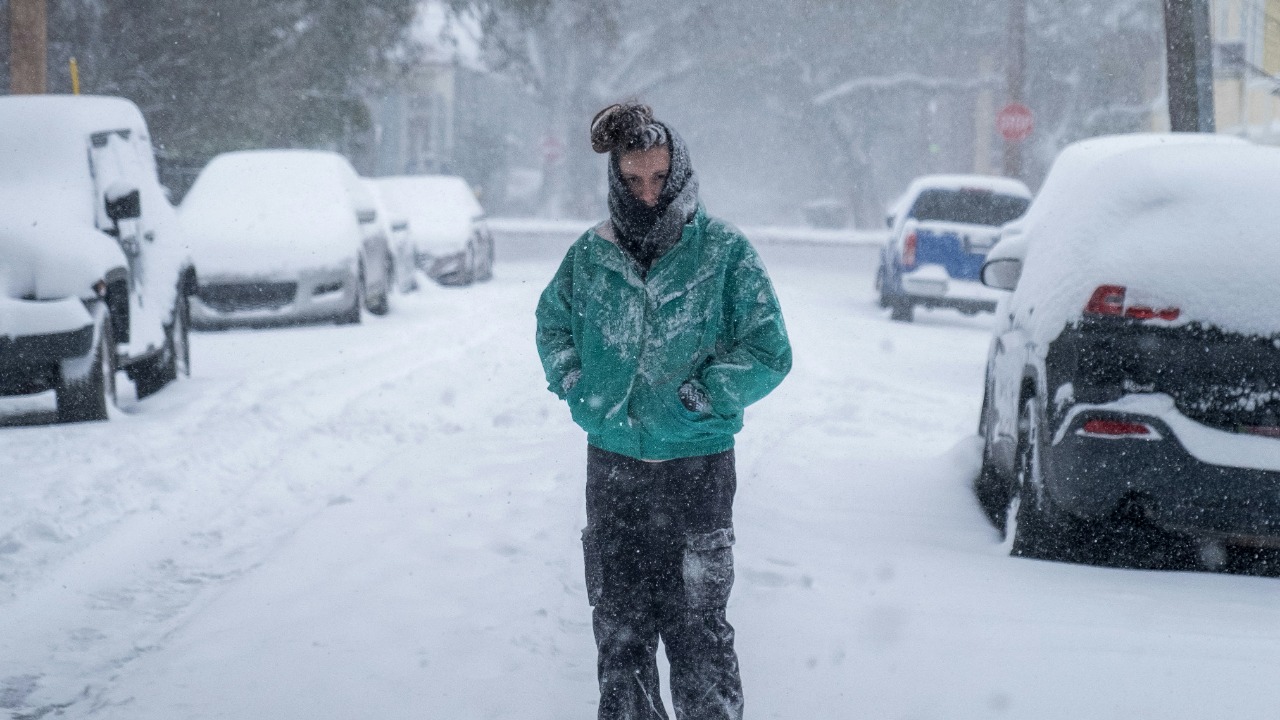

Winter used to be the season people could count on, a predictable stretch of cold punctuated by the occasional blizzard. Now, scientists tracking the atmosphere say the season itself is changing shape, with violent storms, sudden thaws, and snow droughts emerging as part of a new pattern. They argue that the same forces driving record heat are also rewiring winter, turning once rare events into recurring features of a more volatile climate.
At the heart of their concern is a simple throughline: as the planet warms, the machinery that governs cold air, storm tracks, and ocean cycles is behaving in unfamiliar ways. The result is a winter that can swing from bare mountainsides to crippling ice storms in a matter of weeks, a shift that is already testing infrastructure, water systems, and public safety across the United States and beyond.
Heat records meet a restless winter
Climate researchers warn that the backdrop to this turbulent season is a planet that is heating faster than expected. They note that Earth is warming at a faster rate, and that While Rohde said nearly all of that warming comes from human-caused greenhouse gas emissions, which are turning near-record hot years into the norm rather than the exception. In that context, another near-record hot year is not just a summer story, it is a warning that the baseline for every season, including winter, has shifted.
As global temperatures climb, Scientists are watching winter weather advisories stack up in places that are also grappling with heat-driven extremes. A Winter Weather Advisory can now arrive on the heels of an autumn wildfire season or a late-season heat wave, underscoring how a warming climate is not eliminating cold but instead layering new hazards on top of old ones. I see that collision of extremes as the defining feature of this emerging winter pattern.
Polar vortex on edge
High above the Arctic, the polar vortex is showing signs of unusual stress, and that instability is one of the clearest signals that winter is entering unfamiliar territory. Forecasters tracking a rare early-season disruption say its January intensity could be unlike anything seen in years, a sign that the cold air reservoir over the pole is more prone to lurching south in dramatic bursts. A detailed Polar Vortex Update notes New Stratospheric Warming, with a Winter Shift Likely across the mid-latitudes as that cold air spills into North America and Europe.
Meteorologists describe the trigger for these shifts as a sudden stratospheric warming, a phenomenon so abrupt that one analysis framed it as the moment When the sky suddenly changes its mind. Meteorologists call it SSW, and while the name sounds technical, the consequences are anything but abstract, often leading to prolonged cold snaps and heavy snow far from the Arctic. One forecaster laid out the Key Warning Signs, warning that a weakening or unstable vortex allows intense cold air to spill southward and drastically alter weather patterns.
La Niña, atmospheric rivers, and a split-screen winter
At the same time, the Pacific Ocean is reinforcing the chaos through a stubborn La Niña pattern that is reshaping precipitation and storm tracks. Federal drought analysts describe La Ni as one of two phases of the El Ni Southern Oscillation, and note that a Double Dips La Niña helped shape 2025 and continues through winter 2025–26. That persistence is a key reason why some regions are locked in drought while others are bracing for repeated winter storms.
On the West Coast, that ocean pattern is feeding a conveyor belt of moisture that forecasters describe as back-to-back atmospheric rivers. One outlook warned that Most read forecasts highlighted how a Major polar vortex disruption would send Arctic surges across North America and through January and early February, even as California faces torrents of rain and mountain snow. Another forecast flagged above-normal atmospheric river activity for Northern and Central California, tying it to broader concerns about America‘s water infrastructure and the risk that Record King Tides could flood the San Francisco Bay when storms coincide with high seas.
Storm forecasts grow more extreme
Seasonal outlooks for this winter reflect how these large-scale shifts are playing out on the ground, with forecasters openly using language that would have sounded alarmist a decade ago. One long-range video briefing on 2026 Winter Storms highlights how a particular phase helps create those negative NAO blocking patterns, the same ones that bring cold to North America the way they did in some of the harshest winters on record. Another clip focused on Jan 15 describes multiple clippers ahead of a larger winter storm, warning that this is the current system moving through and that we are going to see quite a bit of this in the coming days because behind all of this harsher air is waiting to drop south.
Written outlooks are just as stark. One national preview framed the season as a Winter Forecast Predicts Massive, warning that the winter of 2025–2026 is shaping up to be memorable for its snow, ice, dangerous wind chills, and power outages. A separate analysis described how Meteorologists warn that an extraordinary combination of La Niña and polar vortex behavior could produce a unique weather warning as the 2025–2026 winter unfolds, a phrase that captures how overlapping climate drivers are amplifying each other rather than acting in isolation.
Snow droughts and “unprecedented” territory
Even as some regions brace for crippling storms, others are confronting the opposite problem, a lack of snow that is just as disruptive. In the interior West, experts are sounding the alarm about an unprecedented phenomenon unfolding across the United States, pointing to What is happening in Utah as a prime example. There, mountain ranges that tend to get an average of 275 inches of snow a year are facing a 25 year low in snowfall, a shortfall that threatens water supplies, ski economies, and ecosystems that depend on a deep, slow-melting snowpack.
That kind of snow drought is not a simple fluke, it is part of the same climate system that is producing stronger storms elsewhere. A separate drought assessment ties the pattern back to the Drought in 2025, noting again how a Double Dips La Niña steered storms away from some basins while hammering others. When I look across these reports, the throughline is that winter is no longer a uniform blanket of cold but a patchwork of extremes, with some communities drowning in snow and others staring at bare ground and empty reservoirs.
More from Morning Overview