
Archaeologists have long known that complex societies can rise, flourish and then disappear so completely that only scattered ruins hint at what was lost. Now a new wave of research is sharpening the picture of how one such highly developed ancient culture collapsed, and what that story reveals about the limits of human resilience when climate, politics and myth collide. The findings are also forcing a reckoning with popular claims about “lost” advanced civilizations, separating what the evidence supports from what belongs firmly in the realm of speculation.
The real vanished civilization behind the headline
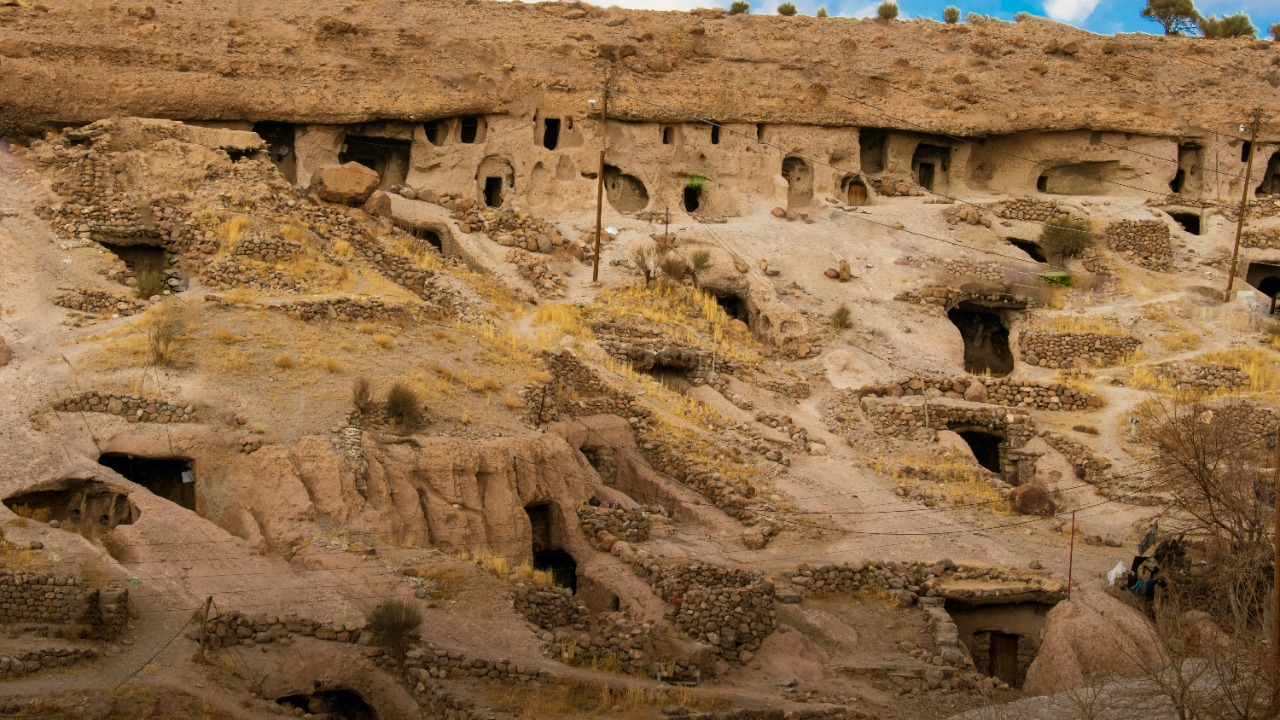
When people hear about an “advanced ancient society” that vanished, many instinctively think of Atlantis or some Ice Age superculture, but the most compelling case in the evidence is a Bronze Age civilization that disappeared roughly 2,500 years ago. Archaeologists have pieced together its story from city plans, irrigation works and trade goods that show a sophisticated command of engineering and long distance exchange, yet the society itself fragmented in a relatively short span of time. A detailed visual reconstruction of how such a culture rose and fell, including its monumental architecture and sudden decline, is laid out in a short film that tracks how an advanced civilisation vanished after centuries of apparent stability.
What makes this case so striking is not just the scale of the ruins but the forensic clarity with which researchers can now trace the pressures that undermined the system. Layers of abandoned buildings, shifts in burial customs and changes in imported goods all point to a society that was tightly integrated and then rapidly reconfigured. Rather than a single apocalyptic event, the evidence suggests a cascade of stresses, from environmental shocks to internal political fractures, that together pushed a complex network past its breaking point.
How archaeologists actually “crack” a disappearance
To say scientists have “cracked” how a civilization vanished is not to claim a single smoking gun, but to acknowledge that multiple lines of data now converge on a coherent explanation. Excavations reveal when urban centers were abandoned, sediment cores show when rivers shifted or droughts intensified, and radiocarbon dates help synchronize these changes across a region. Specialists then test competing scenarios, asking whether war, trade disruption, climate change or disease best fits the pattern of decline seen in the ground. In recent years, that process has been sharpened by a more explicit pushback against sweeping, unsourced narratives about lost cultures, including detailed critiques of claims that there was an advanced civilization 12,000 years ago that somehow left no clear trace.
Professional archaeologists emphasize that extraordinary claims require extraordinary evidence, which is why they lean so heavily on datable artifacts, stratigraphy and peer review rather than on intuition or pattern spotting alone. That methodological discipline is visible in the work of researchers who have publicly challenged popular television narratives about a global prehistoric culture, arguing that the material record instead shows a mosaic of regional societies developing at different paces. One prominent field archaeologist has described spending significant time fighting claims about an advanced lost civilisation, precisely because such stories can overshadow the real, evidence based histories of societies that did exist and did collapse.
Climate stress, water and the slow unravelling
In the case of the Bronze Age society at the heart of this story, the most persuasive explanation centers on environmental stress, especially changes in water availability. Archaeological surveys show that its cities were anchored to river systems and irrigation networks that required constant maintenance and political coordination. When those rivers shifted course or their flow became more erratic, the cost of keeping fields productive rose sharply, and marginal settlements were abandoned first. Climate reconstructions from lake sediments and cave formations in the wider region point to prolonged dry spells that would have strained even the most sophisticated hydraulic infrastructure.
That pattern fits a broader insight emerging from research into ancient complexity: advanced does not mean invulnerable. Societies that invest heavily in large scale water control, intensive agriculture and long distance trade can achieve impressive surpluses, but they also become more exposed to systemic shocks. The same dense networks that move grain and goods can transmit crisis. Modern discussions of whether industrial civilization would leave a clear geological fingerprint have drawn on this logic, with some scientists proposing the so called Silurian Hypothesis as a thought experiment about how climate altering species might appear in the rock record. The Bronze Age collapse shows that even without fossil fuels, environmental stress can tip a complex system into fragmentation.
Myth, memory and the lure of a lost golden age
Part of why stories about vanished advanced societies resonate so strongly is that many cultures preserve myths of a lost golden age, often destroyed by flood, fire or divine anger. Those narratives can echo real events, such as coastal flooding or volcanic eruptions, but they are not blueprints for a hidden global civilization. In online debates, enthusiasts sometimes point to shared motifs in distant mythologies as proof of a single progenitor culture, while professional historians counter that similar stories can arise independently from similar human experiences. A long running discussion among specialists on one prominent forum has unpacked just how plausible theories of lost advanced civilizations really are when weighed against the archaeological record.
In the Bronze Age case, later legends did preserve a memory of a powerful kingdom that fell from grace, but the material evidence points to a gradual reorganization rather than a single cataclysm. Smaller successor states emerged, trade routes shifted and religious practices evolved, even as the monumental core was left to decay. That nuance is often flattened in popular retellings, which prefer a clean before and after. Yet it is precisely in the messy middle, where people adapt, migrate and improvise, that the most instructive lessons lie for societies facing their own environmental and political stresses today.
The modern fascination with “lost” high technology
Contemporary fascination with lost advanced civilizations is not confined to academic debates; it thrives in podcasts, streaming series and social media groups that blend archaeology with speculation. Some advocates argue that there is a suppressed body of evidence for Ice Age level technology, from precision stone cutting to alleged global mapping knowledge, and that mainstream researchers are too conservative to acknowledge it. A detailed blog style essay has laid out the case for lost advanced civilisations, stitching together anomalies and gaps in the record into a narrative of repeated rises and falls.
Scientists who study actual ancient collapses respond that unexplained does not mean unexplainable, and that cherry picking out of context artifacts can create the illusion of a hidden pattern. They also note that if a truly industrial level civilization had existed tens of thousands of years ago, it would likely have left unmistakable signatures in the form of widespread mining scars, synthetic materials and global pollution layers. That argument has been explored in popular science features that ask whether we are really Earth’s first advanced civilisation, only to conclude that while the thought experiment is useful, the hard evidence still points to our own era as the first to reshape the planet at this scale.
What the Bronze Age collapse can, and cannot, explain
Returning to the specific civilization that vanished 2,500 years ago, the new synthesis of data helps clarify both the power and the limits of archaeological inference. Researchers can now map the contraction of its urban footprint, track the decline of certain imported luxury goods and identify shifts in diet that suggest people were turning to hardier, less prestigious crops. They can also see where populations moved into hill forts or smaller, more defensible settlements, hinting at rising insecurity. A widely viewed explainer video has walked audiences through how such an advanced civilisation vanished, using animations to show the interplay between climate stress, political fragmentation and external pressures.
What they cannot do is read the inner thoughts of those who lived through the transition, or reconstruct every local variation in how communities coped. Some regions may have experienced relatively peaceful adaptation, while others saw violent upheaval. The absence of written records from many of these sites means that archaeologists must infer motives from patterns in the debris, a process that is inherently probabilistic. That uncertainty is sometimes seized upon by proponents of more dramatic theories, but it is a feature, not a bug, of a discipline that prefers cautious inference to sweeping, unfalsifiable claims.
How online communities shape the narrative
In the digital age, the story of any ancient civilization is quickly refracted through online communities that mix expertise, curiosity and conspiracy. On social platforms, groups dedicated to alternative history share satellite images, personal theories and selective quotations from academic papers, often framing mainstream archaeology as a closed club. One such community has hosted lengthy threads on whether modern discoveries of submerged ruins or megalithic sites prove the existence of a lost advanced civilisation, with members debating the significance of erosion patterns and tool marks.
At the same time, question and answer sites have become venues where professional archaeologists and informed amateurs try to meet that curiosity with patient explanation. Detailed responses to queries about evidence for an ancient advanced human civilization often walk readers through what would count as convincing proof, from consistent radiocarbon dates to industrial scale residues, and why such signatures are currently lacking for any pre Bronze Age high technology culture. These exchanges do not always change minds, but they do show that the line between rigorous inquiry and imaginative storytelling is being negotiated in real time, in public.
Why the mundane evidence matters more than the myths
For the scientists who have spent decades excavating the ruins of the vanished Bronze Age society, the most compelling evidence is often the least glamorous. It lies in the orientation of house foundations, the composition of pottery clays, the isotopic signatures in animal bones that reveal shifting herding strategies. These details, when aggregated across hundreds of sites, tell a story of adaptation and strain that is far richer than any single legend of a sunken city. They also anchor the broader claim that we now understand, in outline, how a once thriving, technologically capable culture unraveled under the combined weight of environmental change and political fragmentation.
That focus on the mundane is precisely what frustrates some fans of lost civilization narratives, who prefer the drama of cataclysm and the allure of hidden knowledge. Yet it is also what makes the scientific account so powerful. By showing how real people responded to drought, resource scarcity and shifting trade, the research offers a mirror for our own moment, when climate stress and geopolitical tension are again testing the resilience of complex systems. The lesson is not that we are destined to repeat the Bronze Age collapse, but that advanced societies are only as durable as their capacity to adapt, cooperate and read the warning signs written, quite literally, in the layers beneath their feet.
How this changes the debate about “lost” civilizations
As the picture of this particular vanished society comes into sharper focus, it also reframes the broader debate about lost civilizations. The more precisely archaeologists can document how a known complex culture rose and fell, the less room there is for vague appeals to mystery as an explanation for every gap in the record. Detailed case studies show that collapse is usually a process, not a single event, and that it leaves a dense trail of material clues. That reality undercuts the notion that an even more advanced global civilization could have flourished and disappeared without leaving comparable, or even more obvious, traces in the ground and in the geological record.
At the same time, the research invites a more nuanced public conversation about what “advanced” really means. The Bronze Age society in question did not have microchips or satellites, but it did have complex bureaucracy, large scale engineering and far reaching trade, all achieved with the technologies of its time. Recognizing that sophistication on its own terms helps shift attention away from speculative Ice Age empires and toward the very real achievements and vulnerabilities of the cultures we can actually study. In that sense, the scientists who say they have cracked how one advanced ancient society vanished are not closing the door on wonder; they are redirecting it toward the evidence, and toward the sobering possibility that our own civilization’s fate will one day be read in similarly patient, stratigraphic detail.
More from MorningOverview