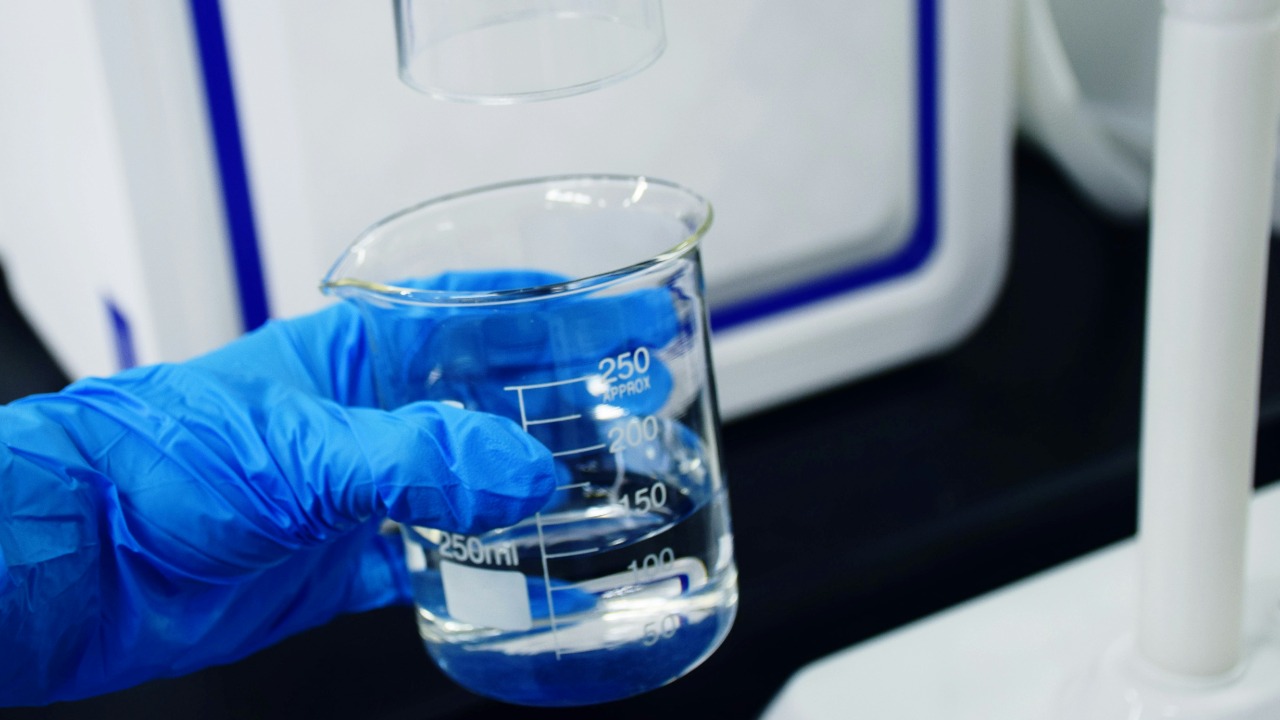

Water is usually treated as a background player in physics, chemistry, and climate science, but a growing body of research suggests it can behave in surprisingly energetic ways under the right conditions. From confined layers inside minerals to hidden freshwater lenses in the ocean, scientists are uncovering forms of water that store and move energy in ways that could reshape how I think about resources, technology, and even environmental risk.
Instead of a single, familiar liquid, water is starting to look more like a spectrum of states whose behavior depends on pressure, temperature, and microscopic structure. As researchers probe those extremes with advanced instruments and simulations, they are finding not only exotic physics but also practical possibilities, from more efficient desalination to new ways of managing pollution and climate stress.
What scientists mean by “highly energetic” water
When researchers describe water as “highly energetic,” they are not talking about a new chemical formula, but about how much potential and kinetic energy is stored in its molecular arrangements. In confined spaces, such as tiny channels or mineral pores, water molecules can line up in ordered structures that hold more energy than bulk liquid, then release it abruptly when conditions change. Laboratory work has shown that when water is squeezed into nanometer-scale gaps, its hydrogen bonds reorganize, raising its internal energy and altering how it flows and conducts heat, a behavior highlighted in recent coverage of confined water experiments.
Other teams have focused on how water behaves at interfaces, where it meets solid surfaces or other liquids, and found that thin layers can carry charge, respond strongly to electric fields, and even move ions in ways that resemble tiny batteries. Reports on “water hiding in plain sight” emphasize that these interfacial layers can store significant energy compared with ordinary bulk water, especially when they are trapped in geological formations or engineered materials, a point underscored by research summarized in work on energetic interfacial layers. Together, these findings suggest that the same H2O that fills a glass can behave very differently when it is confined, charged, or structured at the nanoscale.
Hidden reservoirs and the search for untapped freshwater
Beyond the lab, scientists are also discovering that some of the most consequential water on Earth is literally out of sight. Beneath the ocean surface, layers of relatively fresh water can accumulate above denser saltwater, forming lenses that are difficult to detect but potentially valuable in a warming world. Recent field work in the North Atlantic has identified such subsurface bodies as possible “untapped” freshwater sources, with researchers using shipboard instruments and remote sensing to map their extent and salinity, as shown in reporting on North Atlantic freshwater lenses.
These hidden reservoirs are not magic solutions to global water scarcity, but they do expand the menu of options for coastal regions facing drought and saltwater intrusion. Tapping them would require careful engineering to avoid destabilizing local ecosystems or triggering conflicts over access, since any extraction would change density gradients and currents. Still, the very fact that such bodies exist, storing relatively low salinity water in dynamic equilibrium with the surrounding ocean, reinforces the idea that Earth’s hydrological system contains energetic structures that standard surface maps simply miss.
From lab curiosity to potential technology
The leap from exotic water behavior in a lab cell to real-world devices is always a long one, but some of the physics behind “high energy” water is already feeding into applied research. Engineers working on membranes for desalination and filtration, for example, now design nanopores that intentionally exploit the way confined water moves and carries ions. By tuning pore size and surface charge, they can coax water into faster, more selective flow regimes, a strategy that builds directly on the kind of nanoscale effects described in studies of water in narrow channels.
At the same time, computational scientists are using high resolution simulations to test how structured water might be harnessed in energy storage or sensing. Detailed numerical benchmarks, such as those used to evaluate complex models in projects like the WildBench evaluation suite, help researchers compare competing theories of how water behaves under extreme confinement or electric fields. Those models, in turn, guide experimental designs for next generation membranes, sensors, and possibly microfluidic power harvesters that rely on water’s unusual response to nanoscale environments.
Why communication about exotic water matters
As with any counterintuitive scientific finding, the way researchers and journalists describe energetic water can either clarify or confuse. Claims that water has “memory” or mystical properties have circulated for decades, often blurring the line between peer reviewed physics and pseudoscience. That history makes it especially important to explain what is actually being measured, such as changes in hydrogen bonding or ion transport, and what remains speculative. Scholars who study public understanding of science have long warned that oversimplified narratives can backfire, a concern echoed in critical discussions of misleading arguments in resources like Bad Ideas About Writing, which highlight how complex topics are often flattened into catchy but inaccurate slogans.
In the case of highly structured water, the risk is that nuanced work on confined phases or interfacial layers gets repackaged as evidence for miracle cures or perpetual motion. That is why many physicists emphasize clear language about energy scales, experimental limits, and reproducibility, and why they push back when fringe interpretations piggyback on legitimate research. Careful communication does not dampen the excitement of discovery; it protects it, by making sure that the most surprising results are framed in terms that can be tested, challenged, and eventually used.
Ethical and social stakes of new water frontiers
Any claim that water resources are “untapped” immediately raises questions about who will tap them, who benefits, and who bears the risks. Freshwater lenses in the ocean, deep aquifers, or confined reservoirs in rock formations are not blank slates; they sit within existing ecological systems and political boundaries. Ethical frameworks that stress the universal destination of goods and the protection of vulnerable communities argue that water should be treated as a shared resource, not just a commodity, a perspective articulated in social teaching documents that describe access to water as a basic right and a matter of justice, as seen in the Compendium of the Social Doctrine of the Church.
Legal scholars are already grappling with how emerging technologies intersect with water law, environmental regulation, and indigenous rights. Analyses of resource governance and regulatory gaps, such as those discussed in contemporary legal commentary on environmental and administrative law, highlight how new extraction methods can outpace the rules meant to manage them. If energetic water in confined geological structures becomes a target for industrial use, those same debates will intensify around questions of ownership, liability for contamination, and long term stewardship.
Health, regulation, and the promise of “structured” water
Alongside serious physics, there is a parallel marketplace that sells “structured” or “energized” water as a wellness product, often with claims that far exceed the evidence. Regulators and health authorities have had to scrutinize how such products are marketed, especially when they intersect with medical services or cannabis related therapies. In some cases, applicants for health and wellness licenses have described water based treatments and infrastructure in detail, as in filings like the Nutmeg State Health and Wellness Center RFA response, which outlines facility plans, patient services, and compliance strategies.
Those documents show how quickly scientific language can migrate into commercial settings, where terms like “infusion,” “filtration,” or “activation” may be used loosely to suggest benefits that regulators must evaluate carefully. For public health, the key distinction is between water that is demonstrably safer or more effective because of validated treatment methods, and water that is simply branded with scientific sounding adjectives. As research on energetic water progresses, agencies will likely face more applications that cite cutting edge physics, making transparent standards and rigorous review even more important.
Environmental risks and the energy cost of chasing new water
Extracting water from unconventional sources, whether deep underground or within complex geological formations, carries environmental tradeoffs that are easy to underestimate. Pumping confined freshwater can change pressure regimes, mobilize contaminants, or alter the flow of surrounding saltwater, with knock on effects for ecosystems and coastal infrastructure. Studies of landfill leachate and groundwater contamination, such as the detailed assessment of Florida sites in a report on landfill leachate management, show how water that moves through disturbed environments can pick up a complex mix of chemicals that are difficult and expensive to remove.
Those findings are a reminder that every new water source comes with an energy and treatment budget, from pumping and transport to advanced filtration. If the energy cost of accessing a hidden reservoir is too high, or if the risk of contamination is significant, the net benefit can evaporate quickly. Policymakers weighing investments in desalination, deep aquifer extraction, or oceanic freshwater lenses will need to compare not just volumes, but full life cycle impacts, including greenhouse gas emissions and long term monitoring obligations.
How media and public imagination shape the story
Public fascination with unusual water behavior is not new, but digital platforms have amplified it, turning niche experiments into viral clips. Video explainers that walk viewers through laboratory setups, such as demonstrations of confined water and interfacial effects in science focused channels on platforms like YouTube, can help demystify the physics by showing how measurements are actually made. When done well, these visual narratives give context to phrases like “highly energetic,” grounding them in observable phenomena rather than hype.
At the same time, the speed and reach of online media can blur the line between preliminary findings and established fact. Sensational framing of “hidden” or “miracle” water risks overshadowing the careful caveats that scientists include in their papers and conference talks. For readers and viewers, the challenge is to stay curious without losing sight of the difference between a striking lab result and a scalable solution to water scarcity or energy demand, a distinction that becomes clearer when coverage is anchored in detailed reporting rather than click driven exaggeration.
More from MorningOverview