
Across disciplines that rarely share a headline, scientists are quietly revising the stories they once told with confidence about how humans evolved, how civilizations formed, and how secure our future really is. The official timelines that anchored school textbooks and museum displays are being redrawn, sometimes by a single skull, a buried footprint, or a faint red hand on a cave wall. I see a pattern emerging, not of chaos, but of a scientific establishment forced to admit that the past and the future are both arriving earlier than expected.
What looks like a series of isolated breakthroughs is, in practice, a coordinated demolition of neat chronologies. From human origins in China to ancient cities in Peru, from early art in Indonesia to warnings about an “Era of Global Water Bankruptcy,” the message is consistent. The comfortable timelines that once separated “prehistory,” “history,” and “crisis” are collapsing into a much more compressed and unsettling narrative.
Human origins: a skull, stone tools, and a genetic bottleneck
For more than a century, the story of human evolution has been told as a slow, stepwise march from archaic ancestors to anatomically modern humans. That story is now under pressure from discoveries that blend old and new in ways that do not fit the tidy diagrams. In China, a Replica of a million-year-old skull shows a mosaic of archaic and surprisingly modern traits, hinting that features we associate with our own species may have emerged far earlier, and in more places, than the standard timeline allowed.
The tools that accompanied those early humans are also being reinterpreted. For more than a million years, early people shaped stone in the Oldowan tradition, long treated as a simple, static technology. New analysis of these implements, highlighted in a separate study, suggests a more flexible and innovative culture than the old labels implied, again pushing back the moment when recognizably human ingenuity appears in the record.
Genetics is adding another twist. A 2023 genetic study argues that human ancestors nearly vanished in a severe population bottleneck, a finding that, as one summary notes, “reshapes the timeline of our species and challenges long held beliefs” about how early humans migrated and connected over tens of thousands of generations. The same work, highlighted again in Jan coverage, forces researchers to compress vast stretches of assumed demographic stability into a far more precarious story of near extinction and recovery.
Ancient cities and footprints that move the map of the Americas
If human evolution is being redated, so is the peopling of the Americas. In the desert of Peru, archaeologist Dr Ruth Shady unveiled Peñico, a 3,800 year-old city of the ancient Caral civilization. The site, announced In July by the Peruvian team, includes ceremonial temples and residential compounds that complicate older assumptions that complex urban life in the Americas was limited to a handful of well known centers. It suggests a broader and more diverse landscape of early cities than the official narrative once recognized.
Far to the north, a set of fossilized tracks is forcing another rethink. Human footprints in what is now the United States have been dated as Buried for 23,000 years, a finding that, as one report puts it, is literally “rewriting American history” by pushing human presence on the continent back thousands of years earlier than the long dominant Clovis-first model.
Lost structures, new stories: from Karahantepe to MEXICO’s jungles
The same pattern of revision is playing out in the Old World. At Karahantepe, excavations have revealed a Neolithic complex with an Amphitheater-like sunken space and striking Sculptural Finds. The Neolithic figures appear deliberately arranged, suggesting intentional storytelling in stone long before writing, a detail that the site’s chroniclers invite readers to debate with a simple “Let us know in the comments.” It is a small phrase, but it captures how even specialists are still processing what this means for the timeline of symbolic culture.
Across the Atlantic, new technology is exposing how much of the past still lies hidden. In MEXICO, airborne Lidar mapping has made it far easier to find lost cities buried in dense jungle, revealing settlement patterns that were invisible to ground surveys. Some of the newly mapped sites appear to be centuries older than previously documented centers, which means that the official sequence of rise and fall for Mesoamerican cultures will have to be rewritten yet again as excavations catch up with the data.
The oldest art and the expanding timeline of human creativity
Perhaps the most emotionally charged revisions are happening in the story of human creativity. In Indonesia, a faint red image on a cave wall has been identified as a stylized hand, described in one report as Ghostly Handprint In have Ever Found. The same coverage notes, almost in passing, that Portugal managed to run on renewables for an extended stretch in 2023, a reminder that our capacity for symbolic and technical innovation has always been entangled with how we manage our environment.
A separate analysis describes the Indonesian motif as the Oldest cave painting of a red claw hand, and argues that it could rewrite the timeline of human creativity by showing that abstract, possibly narrative imagery appeared earlier than the familiar animal scenes of European caves. A similar point is made again in Jan coverage, which frames the find as a direct challenge to long held assumptions about when and where symbolic thinking reached its current sophistication.
From deep time to near future: when crisis timelines converge
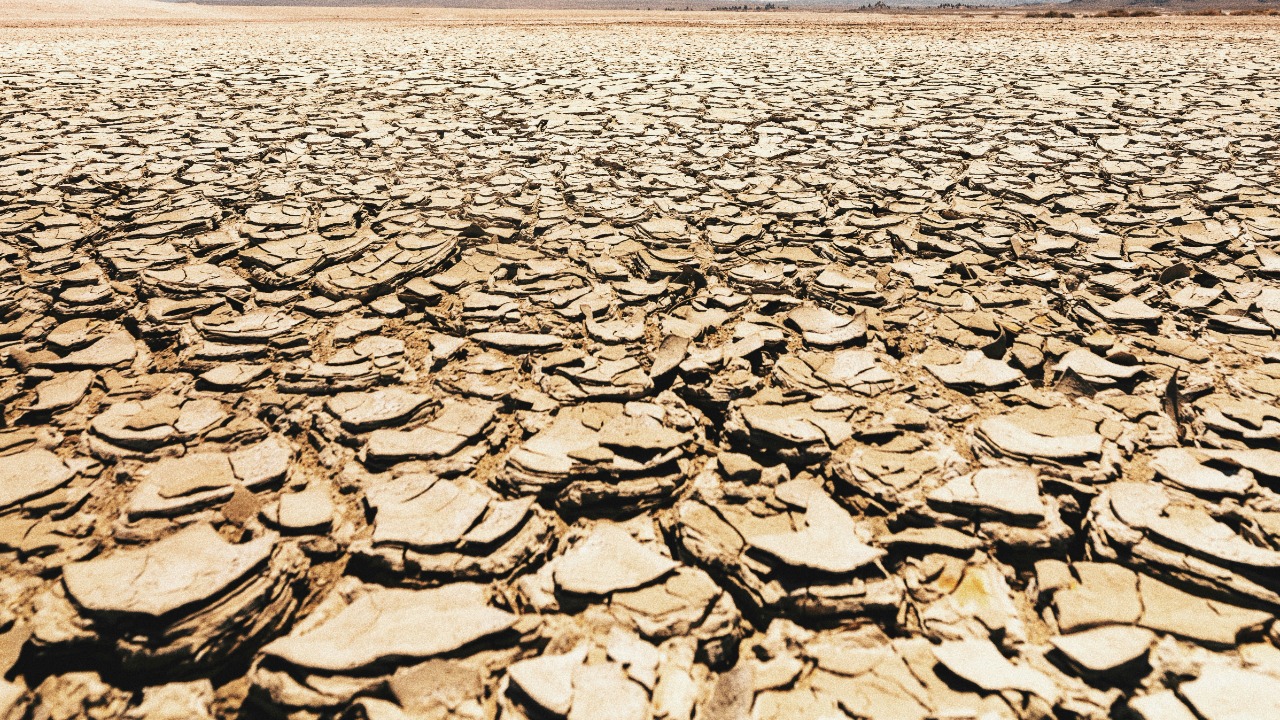
While archaeologists and geneticists are pushing human origins and creativity further back, climate and resource scientists are pulling the future closer. A major report warns that the World Enters an Era of Global, with experts stating that Scientists Formally Define-crisis conditions as a Crisis Reality for. The document is described as a Flagship assessment, and its core message is blunt: the world is no longer approaching a water crisis, it is living in one.
Yet public attention is moving in the opposite direction. Analysts note that Public interest in climate change “fell off a cliff” in 2025, as seen in the number of no-show nations at the COP30 climate conference, even as some regions slipped back into drought. Commentators like those cited in Colbet Highlights Scientific frame 2026 as a potential inflection point, drawing on the Historical and Scientific to argue that demographic trends and resource consumption are converging faster than most political timelines acknowledge.
More from Morning Overview