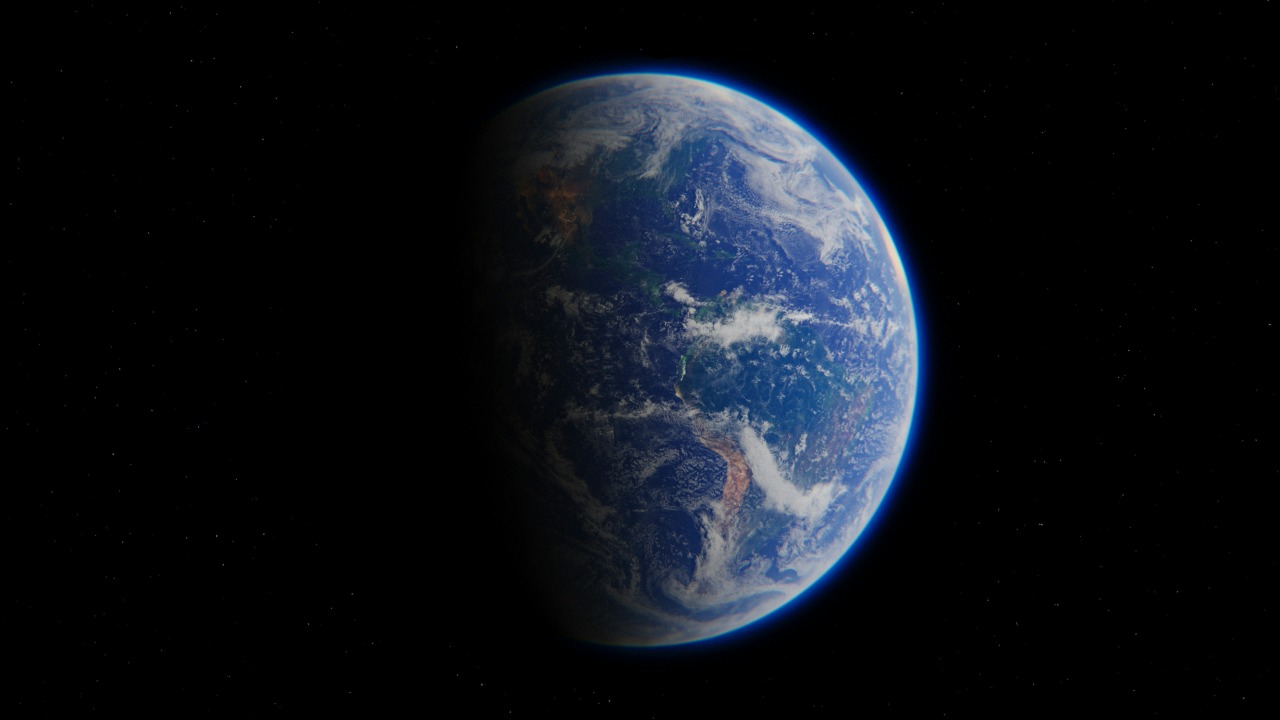

New evidence from rocks, molecules and machine learning is forcing scientists to redraw the opening chapters of Earth’s story, pushing the first stirrings of biology far closer to the planet’s violent youth. Instead of a slow, late emergence, life now appears to have taken hold almost as soon as oceans formed, reshaping how I think about everything from planetary habitability to our own genetic wiring. The result is a new, more crowded timeline in which ancient microbes, fragile RNA strands and even modern epigenetic switches all become part of a single, evolving narrative.
As researchers refine that narrative, they are also learning to recreate key steps in the lab and to decode how information has been stored and edited inside cells across billions of years. The latest work does not just add a few million years to the clock, it reframes what counts as “early,” what counts as “complex,” and how quickly chemistry can turn into something that looks a lot like life.
How far back does life really go?
The central shift in Earth’s timeline is simple to state and profound in its implications: the first traces of life now seem to reach far deeper into the past than most textbooks still admit. Instead of appearing only after the planet had fully calmed, biological signatures are turning up in rocks that formed when Earth was still recovering from colossal impacts and a molten surface. That pushes the origin of life closer to the planet’s formation itself, compressing the window in which sterile rock and water had to become a living world.
Geologists and astrobiologists have been revisiting some of the oldest surviving crust, using more sensitive instruments to search for subtle chemical fingerprints that cannot be explained by simple geology alone. Reports of possible microfossils and isotopic patterns in ancient formations have steadily accumulated, and recent syntheses argue that these lines of evidence together show that life began much earlier than long assumed, a case laid out in detail in new analyses of when life began on Earth.
The rocks that shattered the old origin story
To move the origin of life on the calendar, scientists first had to find rocks old enough to preserve that story and pristine enough to be trusted. That search has focused on a handful of ancient terrains where crust more than three billion years old still peeks through younger layers. Within these battered remnants, researchers have identified structures and chemical ratios that look less like random mineral growth and more like the byproducts of metabolism, hinting that microbes were already thriving when the planet was still geologically hyperactive.
Some of the most striking claims come from formations that preserve tiny, tube-like or filamentary shapes embedded in silica-rich rock, paired with carbon isotopes skewed in the direction expected from biological activity. These findings have sparked intense debate, because non-living processes can sometimes mimic both shapes and chemistry, yet the convergence of multiple clues in the same samples has convinced many researchers that they are seeing the handiwork of very early organisms. A detailed account of these contested but compelling signatures in some of the oldest life on Earth captures how a few grams of rock can overturn comfortable assumptions about when biology began.
AI joins the hunt for Earth’s first organisms
As the evidence has grown more complex, artificial intelligence has quietly become one of the most powerful new tools for sorting signal from noise in the deep-time record. Instead of relying only on human pattern recognition, researchers are now training algorithms on known biological and non-biological textures, chemical profiles and mineral associations, then asking those systems to classify ambiguous samples. The goal is not to let a model decide what counts as life, but to use its ability to spot subtle regularities that might escape the human eye.
In practice, that means feeding high-resolution images and geochemical data from ancient rocks into machine learning systems that can flag combinations of features that strongly resemble modern microbial mats or biofilms. Early results suggest that AI can pick out candidate biosignatures in datasets that would take human experts years to review, and in at least one case, such analysis has been credited with identifying what may be the oldest evidence of life yet proposed, a claim that left many researchers openly astonished when it was reported that AI just found the oldest evidence of biology on our planet.
A dramatic rewrite of Earth’s early chapters
When these geological and computational threads are woven together, the picture that emerges is not a minor tweak but a wholesale rewrite of Earth’s early chapters. Instead of a long, barren prelude followed by a sudden biological dawn, the new timeline suggests that life may have appeared almost as soon as conditions allowed liquid water to persist. That compresses the gap between planetary formation and the first cells, implying that the transition from chemistry to biology might be less improbable than many origin-of-life scenarios once assumed.
Researchers who study early Earth now talk about a world where microbial ecosystems were already shaping the planet’s surface and atmosphere while large impacts still pelted the crust and volcanoes poured out vast lava flows. In this view, life is not a delicate latecomer but a rugged participant in the planet’s violent adolescence, a perspective that has been sharpened by discoveries described as dramatically rewriting the history of life on Earth. I find that shift especially striking because it reframes our own existence as part of a much longer, more resilient biological experiment than the fossil record alone once suggested.
Recreating the first living chemistry in the lab
While geologists and AI specialists push the origin of life backward in time, chemists are trying to move it forward in the lab by reconstructing the steps that might have led from simple molecules to the first self-replicating systems. Many of these experiments focus on RNA, a molecule that can both store information and catalyze reactions, making it a prime candidate for the earliest genetic material. By mixing plausible early-Earth chemicals under controlled conditions, researchers are probing how easily strands of RNA-like polymers can form, copy themselves and evolve.
Recent work has inched closer to a minimal system that could reasonably be called “the first thing that ever lived,” at least in a functional sense. In some setups, short chains of nucleotides assemble spontaneously, then participate in reaction cycles that resemble primitive metabolism, hinting at how a full-fledged cell could eventually emerge. Reports that scientists have moved closer to recreating such a primordial entity, using carefully tuned combinations of lab-created chemicals and environmental cycles, are captured in accounts of efforts to recreate the first thing ever lived, and they underscore how origin-of-life research now spans both ancient rocks and modern glassware.
Rethinking the “when” and “how” of life’s beginning
As these experimental systems grow more sophisticated, they feed back into the debate about when life truly began. If relatively simple mixtures of molecules can generate self-sustaining reaction networks under a range of conditions, then the early Earth may have offered many more opportunities for biology to arise than previously thought. That, in turn, makes it easier to accept a very early origin date, because the necessary chemistry would not have required a narrow set of improbable coincidences.
Some researchers now argue that the line between “prebiotic chemistry” and “life” is less a sharp boundary and more a gradient of increasing complexity, with different parts of the planet hosting different stages of that continuum. In this view, what matters is not a single birthday for life but the point at which information-bearing molecules became robust enough to leave a detectable imprint in the rock record. New syntheses of geochemical and experimental data have framed this as a “shocking story” about when life began, a narrative explored in depth in work that asks when did life begin and concludes that the answer is both earlier and more nuanced than the old timelines allowed.
Epigenetics shows evolution never stopped rewriting
The story of life’s timing is not only about its first appearance, it is also about how living systems have continued to rewrite their own rules over billions of years. One of the most striking modern examples is epigenetics, the layer of chemical marks and structural tweaks that sit on top of DNA and influence which genes are turned on or off without changing the underlying sequence. Far from being a minor footnote, epigenetic regulation shapes development, disease risk and even how organisms respond to environmental stress, revealing that heredity is more flexible than the classic gene-centric view suggested.
Recent research has upended some of the field’s core assumptions, showing that epigenetic changes can be more dynamic, widespread and sometimes more heritable than many biologists expected. Studies have mapped how specific chemical tags on DNA and histones interact with three-dimensional genome architecture, and how those patterns shift across cell types and over time. Reports that scientists have effectively rewritten our understanding of epigenetics highlight how even in the present day, the mechanisms that control life’s information flow are still being reinterpreted, echoing the broader theme that biology’s timeline is more fluid than fixed.
Why this matters for planets, politics and even AI
When I step back from the technical details, the broader stakes of this timeline shift come into focus. If life can emerge quickly on a young, turbulent Earth, then the odds that it has arisen elsewhere in the universe may be higher than the most pessimistic estimates. That possibility is already shaping how space agencies prioritize missions to ancient terrains on Mars and icy moons, where the search for biosignatures now leans heavily on lessons learned from Earth’s oldest rocks and from the computational tools used to analyze them.
Closer to home, the way we frame life’s history also influences how societies think about long-term risk, environmental stewardship and even the governance of emerging technologies. Political scientists have begun to argue that our institutions are poorly matched to the deep timescales on which climate and biodiversity crises unfold, and that a more accurate sense of Earth’s biological longevity could support new models of “long-termist” policy. One analysis of global governance challenges, for example, situates environmental and technological risks within a broader discussion of political order and legitimacy, as outlined in a study of contemporary political science debates that implicitly depend on how we understand humanity’s place in planetary history.
Communication, computation and the next rewrite
The tools that enabled this latest rewrite of Earth’s timeline are themselves part of a rapidly evolving technological ecosystem. Natural language processing systems, for instance, are increasingly used to mine vast scientific literatures, flagging connections between geology, chemistry and biology that might otherwise remain buried in separate disciplines. By scanning thousands of papers and extracting patterns in how researchers describe early Earth environments or biosignatures, these systems can help identify promising hypotheses and underexplored datasets.
At the same time, the rise of large language models has raised new questions about how scientific knowledge is represented, summarized and shared. Researchers studying the behavior of these models have documented both their strengths in pattern recognition and their weaknesses in factual reliability, prompting calls for more transparent evaluation and domain-specific training. One detailed examination of language model performance on formal reasoning tasks, for example, highlights how such systems can assist but not replace expert judgment in fields like origin-of-life research, a point underscored in work on formal language processing that treats AI as a collaborator rather than an oracle.
From ancient oceans to modern screens
What ties these threads together is a simple but humbling realization: the story of life on Earth is being revised from both ends at once. At the ancient end, new rock samples, AI-assisted analyses and clever lab experiments are pushing the first appearance of biology ever closer to the planet’s fiery beginnings. At the modern end, advances in genetics, epigenetics and computational modeling are revealing just how intricate and adaptable living systems have become, and how much of that complexity remains to be understood.
Even popular science communication is adapting to this new picture, with detailed explainers and visualizations helping audiences grasp the staggering timescales and subtle evidence involved. Long-form videos that walk through the latest findings on early Earth, for instance, are reaching millions of viewers and turning obscure geochemical debates into accessible narratives, as seen in a widely shared breakdown of when life began that stitches together fieldwork, lab results and theoretical models. As I follow this evolving conversation, I am struck by how each new discovery does not simply add another date to a timeline, it forces us to rethink what it means for a planet to be alive, and how our own brief moment fits into a story that now stretches almost to the birth of the world itself.
More from MorningOverview