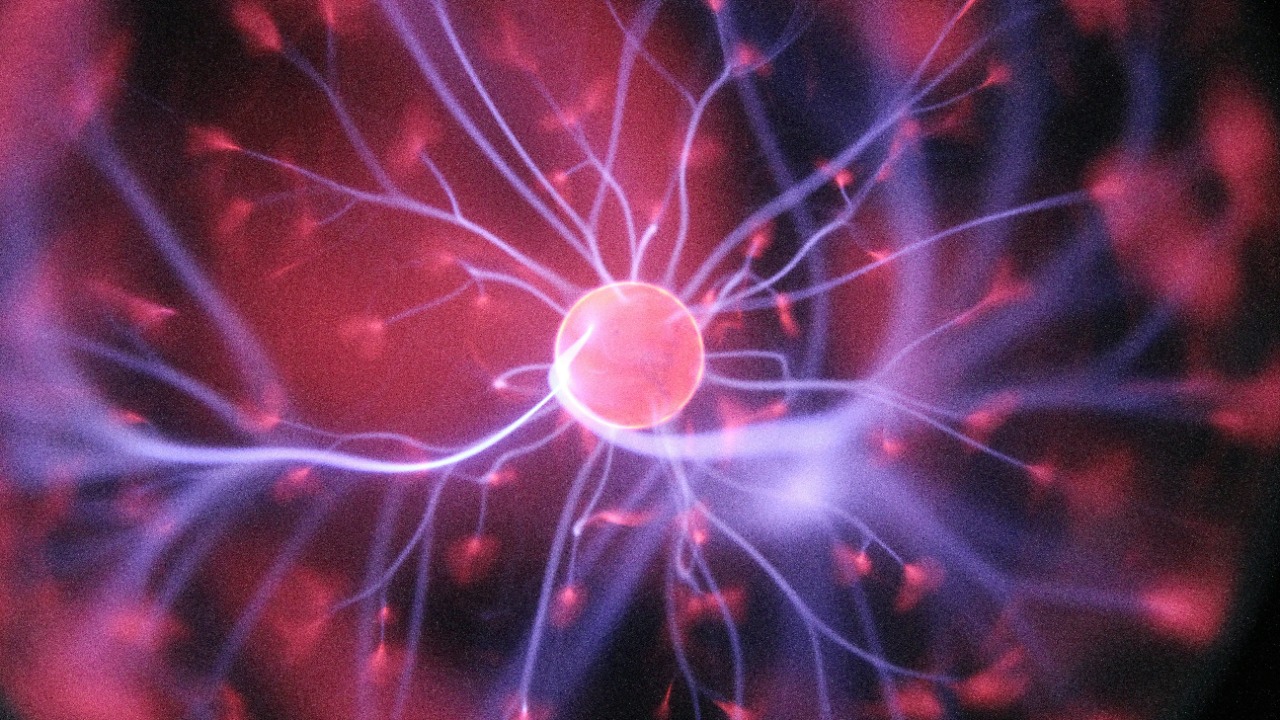

Human bodies are usually described as chemical engines, powered by glucose and oxygen. Yet a wave of new research suggests our cells are also quietly harvesting mechanical motion and turning it into electricity, creating a hidden energy stream that has been running all along. Scientists are now tracing this subtle power source from the outer membranes of ordinary cells to the stressed neurons of the brain and even to the aggressive behavior of cancer.
What is emerging is a picture of life as an intricate electrical machine, where bending, stretching, and crowding at the nanoscale can shift charges and reshape how tissues age, heal, and fail. I see this work not as a replacement for the familiar story of ATP and metabolism, but as a second layer of bioelectric infrastructure that evolution has been tuning for billions of years.
Flexoelectricity, the quiet current in every cell
The most striking idea to surface in recent months is that the membranes surrounding our cells may act like tiny generators. When these flexible shells bend or stretch, their internal charge distribution changes, creating a voltage in a process known as flexoelectricity. Researchers have argued that this effect, long studied in synthetic materials, is strong enough in biological membranes that the constant jostling of proteins and lipids could be feeding a continuous trickle of electrical energy into the cell interior, a possibility highlighted in reporting on flexoelectricity in cells.
Flexoelectricity is different from the textbook picture of nerve impulses or heartbeats, which rely on ion channels opening and closing like gates. Here, the membrane itself behaves like a responsive capacitor, with curvature and tension shifting where charges sit. I find it useful to imagine each cell as a soft, self-adjusting battery casing, where every push from neighboring cells or passing molecules slightly recharges the system. Over trillions of cells, that subtle effect could add up to a significant contribution to the body’s overall bioelectric landscape, shaping how tissues coordinate growth, repair, and communication.
A charged halo around our cells
Flexoelectricity is only part of the story. Experimental work has also pointed to a dynamic electrical environment just outside the cell surface, where ions, water molecules, and structural proteins interact in a constantly shifting cloud. In this narrow zone, mechanical motion and molecular crowding appear to generate additional charge separations, effectively wrapping each cell in a faint but active power layer. Reports on a hidden source of power surrounding our cells describe how this environment might be tapped to influence how cells age and recover from stress.
What makes this surrounding region so intriguing is that it is both physical and informational. The same forces that generate tiny voltages also help organize receptors, guide signaling molecules, and shape how cells sense their neighbors. If that halo can be tuned, perhaps by changing mechanical forces or the composition of the extracellular matrix, it could become a handle for “recharging” sluggish or aging cells. I see this as a bridge between classical bioelectricity and tissue engineering, where the goal is not just to keep cells alive, but to restore their youthful responsiveness by nudging their local electrical environment.
Bioelectricity as a master regulator
These discoveries fit into a broader realization that electricity is not a niche feature of nerves and muscles, but a pervasive regulator of life. Many biological processes, from the firing of neurons to the beating of the heart and the directed movement of molecules, are governed by voltage gradients and ion flows. Recent work on a hidden source of cellular bioelectricity underscores how these electrical cues extend deep into the cell, influencing organelles and metabolic pathways that were once thought to be purely chemical.
When I look across these findings, a pattern emerges: bioelectric signals act as a kind of operating system, coordinating when and where cells divide, migrate, or specialize. Mechanical effects like flexoelectricity and the charged halo at the membrane edge are not isolated curiosities, but additional input channels into that operating system. They give cells more ways to sense their own shape, their neighbors, and the forces around them, then translate that information into electrical language that other parts of the body can understand.
Backup batteries in the brain
If cells are constantly juggling mechanical and electrical energy, the brain is where that juggling act becomes most critical. Neurons are famously hungry for fuel, and when blood flow falters or metabolic stress rises, they risk catastrophic failure. Earlier this year, researchers at Yale reported that neurons use built-in backup batteries that can keep them firing under pressure, revealing an internal reserve system that stores and releases energy when the usual supply lines are strained.
These backup systems are not simple extra fuel tanks. They rely on specialized molecular arrangements that can buffer changes in voltage and ion concentration, effectively smoothing out the electrical supply when conditions get rough. I see a conceptual link between this and the flexoelectric and membrane-halo effects: in each case, the cell is using structure and motion to stabilize its electrical state. In the brain, that stability can mean the difference between surviving a brief oxygen drop and suffering lasting damage, which is why understanding these hidden reserves could reshape how we think about stroke, trauma, and neurodegenerative disease.
Cancer’s hidden power advantage
Not all uses of hidden cellular power are beneficial. Cancer cells are notorious for rewiring their metabolism, and new imaging work suggests they also exploit subtle electrical advantages. Scientists at the Centre for Genomic Regulation, or CRG, in Barcelona used a specialized microscope to reveal that malignant cells can tap into a previously overlooked power source, boosting their energy production by about 60 percent compared with normal cells.
That extra capacity appears to help tumors grow faster and resist stress, giving them a kind of electrical head start over healthy tissue. I read this as a warning and an opportunity. If cancer cells depend on a distinct bioelectric profile, therapies could be designed to target that profile without hitting normal cells as hard. Blocking the pathways that feed this hidden power source, or disrupting the mechanical conditions that sustain it, might weaken tumors in ways that traditional chemotherapy cannot.
From cellular motion to usable electricity
Beyond health and disease, the idea that cells generate electricity simply by moving has caught the attention of technologists. Reporting on how the constant motion of living cells could be a hidden source of electrical power describes experiments where the jostling and deformation of cells in a medium produce measurable currents. In principle, that means a dense culture of cells, or even a living tissue, could act as a biological generator, converting random motion into a steady trickle of electricity.
For now, the power levels involved are tiny, far below what would be needed to run a smartphone or a pacemaker. Still, I see two compelling directions. One is ultra-low-power devices, such as biosensors that harvest enough energy from nearby cells to monitor local chemistry without a battery. The other is conceptual: if engineers can learn from how cells capture mechanical noise and turn it into useful charge separation, they might design new materials and microdevices that mimic this efficiency, blurring the line between living tissue and electronics.
Who owns the discovery, and what comes next
As these findings accumulate, questions of credit and control are starting to surface. Coverage of the work has highlighted that the phrase Hidden Source of Power May Have Been Discovered Surrounding Our Cells has become a kind of shorthand for a broader research frontier, one that spans physics, cell biology, and bioengineering. The reporting, By David Nield, underscores how multiple teams, from membrane theorists to microscopists, are converging on the same basic insight that cells are far more electrically active than the classic diagrams suggest, and that this activity is intimately tied to their mechanical state.
Looking ahead, I expect the most transformative advances to come from collaborations that treat flexoelectricity, membrane halos, neuronal backup batteries, and cancer’s power tricks as facets of a single phenomenon. If our cells are threaded with untapped energy, the challenge is not just to measure it, but to learn when to amplify it, when to damp it down, and when to leave it alone. The entities named in the recent coverage, from Scientists Found and Untapped Energy Source Running Through Our Cells to the corporate structure of Pty Ltd, hint at how quickly this science could move from the lab bench into patents, startups, and eventually therapies. The real test will be whether we can harness this hidden current in ways that respect the delicate balance evolution has already achieved.
More from Morning Overview