
For over a century, physicists have pursued one of science’s most elusive goals — a unified theory that can elegantly explain the forces of nature under a single framework. Now, a breakthrough in quantum gravity research may have just brought us a step closer to realizing that dream.
A new quantum theory of gravity, recently proposed by a group of theoretical physicists, attempts to bridge the gap between Einstein’s general relativity and quantum mechanics — two pillars of modern physics that have long resisted reconciliation. If proven correct, this theory could form the foundation of a true “Theory of Everything,” unifying the laws governing the largest galaxies with those operating at the smallest subatomic levels.
The Problem: Gravity and Quantum Physics Don’t Get Along
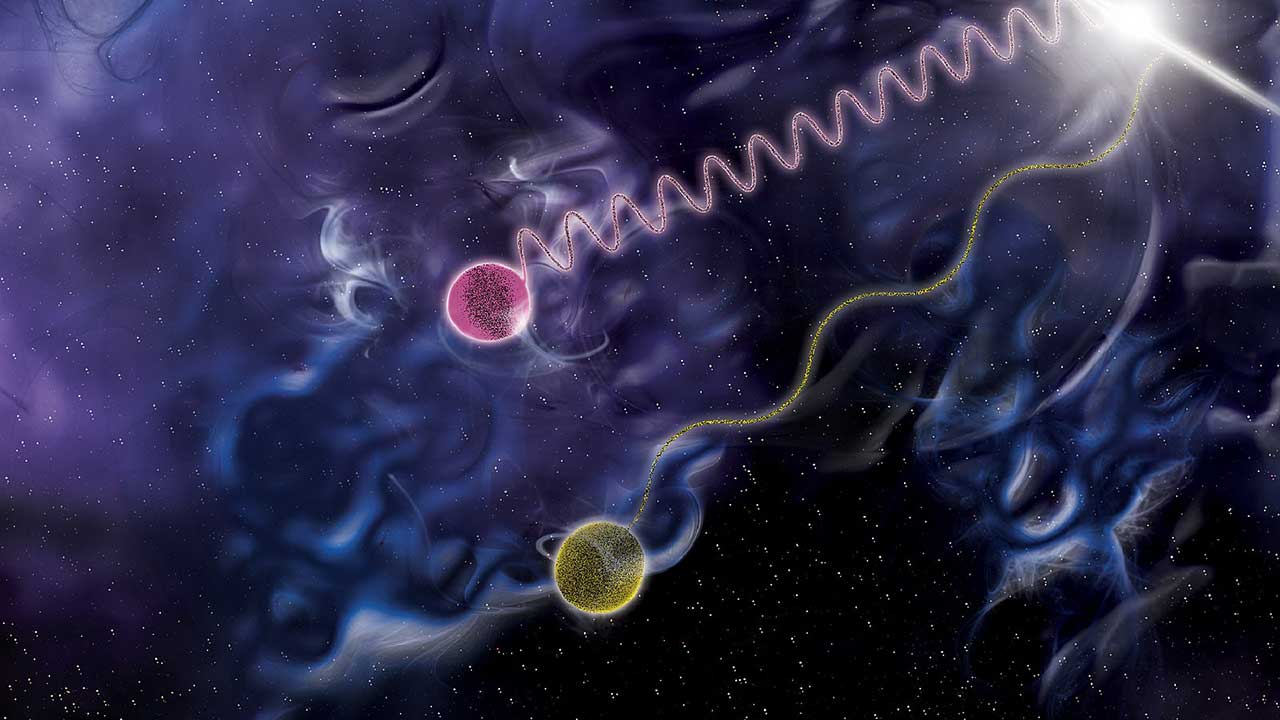
At the heart of modern physics lies a fundamental tension. General relativity describes gravity with incredible precision at large scales — from planets and stars to black holes and the expanding universe. Meanwhile, quantum mechanics governs the behavior of particles, atoms, and the fundamental forces (except gravity) at the smallest scales.
The problem? These two frameworks don’t speak the same language. Gravity, as Einstein described it, is a smooth, continuous warping of spacetime. Quantum physics, on the other hand, is granular, probabilistic, and inherently discrete. Every attempt to merge the two — including string theory, loop quantum gravity, and other models — has faced significant mathematical and experimental roadblocks.
A New Path Forward: Quantum Geometry and Emergent Spacetime

The new theory takes a radically different approach by treating spacetime not as a fundamental entity, but as an emergent property — something that arises from deeper quantum processes. Using a framework based on quantum geometry, this model suggests that gravity might emerge from the entanglement of tiny, discrete building blocks of space and time.
In this theory, the universe isn’t built on a smooth spacetime fabric — instead, it’s woven together by quantum bits of information, sometimes referred to as “spacetime atoms.” The curvature we recognize as gravity could be the macroscopic result of how these bits interact and organize. This perspective not only aligns better with quantum principles, but also offers testable predictions, giving hope for future experiments and observations to support it.
Why This Matters: Toward a Unified Theory of Everything
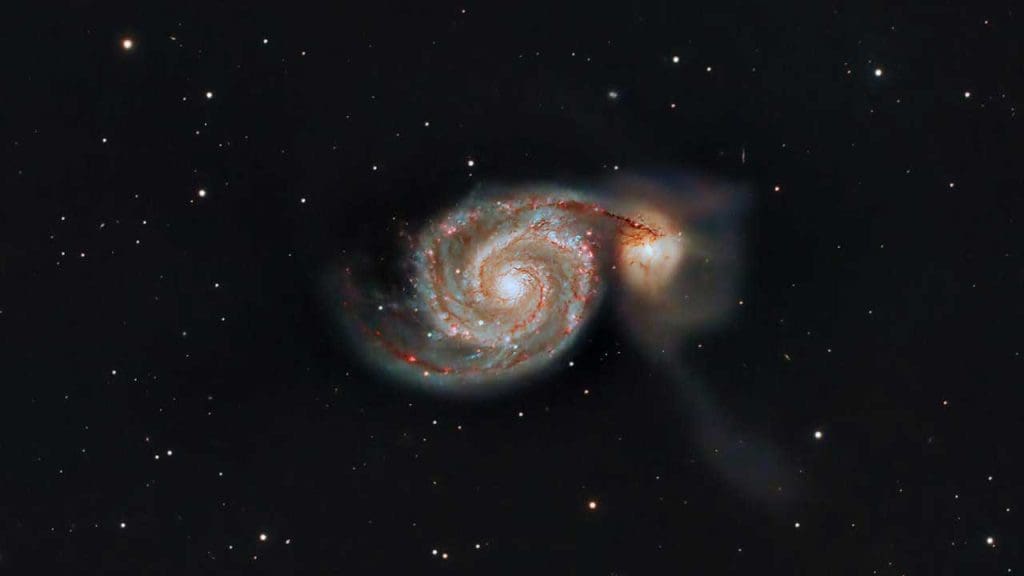
If this quantum gravity model proves accurate, it could unlock answers to some of physics’ greatest mysteries: What happens at the center of black holes? What caused the Big Bang? Can gravity be quantized like other forces? The implications extend beyond physics — into cosmology, information theory, and perhaps even philosophy.
Moreover, a unified theory could lead to new technologies that exploit the deep structure of the universe. Just as quantum theory gave us semiconductors, lasers, and MRI machines, understanding quantum gravity could one day unlock new ways to harness energy, build computers, or even reimagine the nature of reality itself.
Science on the Edge of Revolution

We’re still in the early days of this new quantum gravity theory, and much work remains. Peer review, mathematical validation, and — most importantly — experimental evidence will be needed before this idea is widely accepted. But the excitement in the scientific community is palpable. For the first time in decades, a real contender for a “Theory of Everything” may be within reach.
As humanity continues to unravel the deepest secrets of the cosmos, breakthroughs like this remind us of something profound: the universe is not just stranger than we imagine — it may be stranger than we can imagine.
