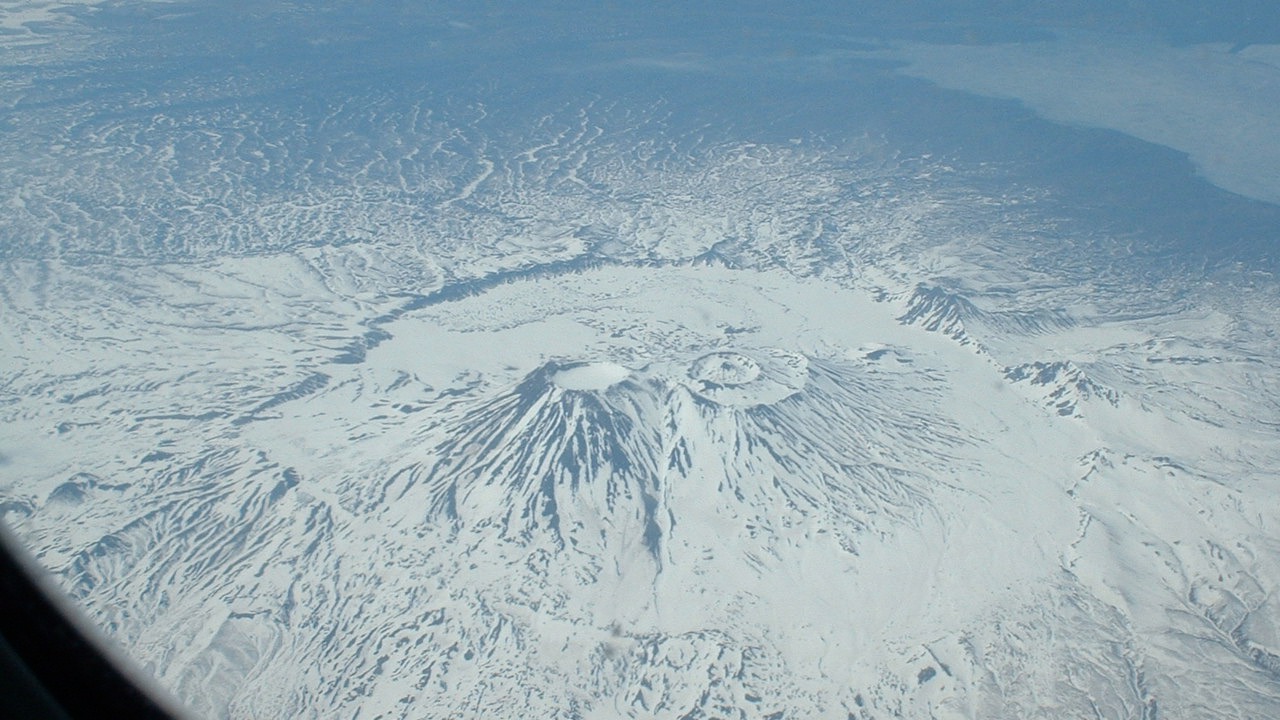

A remote volcano in Russia’s far east has roared back to life in spectacular fashion, unleashing two violent explosions within a single day and sending ash high into the atmosphere. The twin blasts, part of a broader awakening along the Kamchatka Peninsula, arrived on the heels of a colossal offshore earthquake that has shaken scientists’ assumptions about how quiet this corner of the Pacific Rim really is. Together, the megaquake and the double eruption have turned a sparsely populated region into a live laboratory for understanding how Earth’s most powerful forces interact.
The drama is unfolding in a landscape that had been considered dormant on human timescales, with one volcano erupting for the first time in roughly 500 years and another after about 600 years of silence. For residents, pilots and researchers, the sight of ash columns towering over the snow‑streaked cones is both a visceral shock and a reminder that the Pacific “Ring of Fire” never truly sleeps.
Two blasts from Krasheninnikov in a single day
The centerpiece of this extraordinary day of activity is the Krasheninnikov volcano, a complex stratovolcano in Kamchatka that had not erupted in recorded history. Earlier this month, Krasheninnikov produced renewed explosive activity, with ash plumes climbing to about 9 kilometers into the sky and disrupting regional air routes, according to a detailed Report on the event. What stunned volcanologists was not just the height of the plume but the rhythm of the eruption: on Aug 8, it spewed ash twice, delivering two discrete explosions within hours that underscored how quickly conditions inside the magma system were changing.
Visuals captured from the air show a broad, gray column punching through the cloud deck, with pyroclastic material cascading down the flanks of Krasheninnikov and spreading across the surrounding valleys. An aerial video shared by pilot and videographer Artem Sheldr, cited in coverage by science correspondent Geoff Brumfiel, captures the scale of the ash cloud as it billows outward from the crater. For a volcano that had slumbered for centuries, the sudden shift from silence to back‑to‑back explosions is a vivid illustration of how quickly a magmatic system can transition from stable to volatile once pressure thresholds are crossed.
A peninsula of sleeping giants wakes up
Krasheninnikov’s outburst is part of a broader pattern along the Kamchatka Peninsula, a region that hosts about 300 volcanoes, with 29 of them classified as active. Local broadcasters have emphasized that this concentration of volcanic peaks, perched above a major subduction zone, makes Kamchatka one of the most geologically restless places on Earth, a point underscored in a recent segment noting that the peninsula “has about 300 volcanoes with 29 of them still active.” That background helps explain why scientists were already watching the region closely even before the latest eruptions.
In the days surrounding Krasheninnikov’s awakening, another dominant volcano in Kamchatka erupted for the first time in roughly 600 years, marking the second major blast in the region after the initial activity at Krasheninnikov. Coverage of that event stressed that a “dominant volcano in Kamchatka has erupted for the first time in 600 years,” highlighting how unusual it is for two long‑quiet systems to stir almost simultaneously. For local communities, the sight of multiple peaks venting ash on the horizon has transformed a familiar skyline into a reminder that the peninsula’s sleeping giants can reawaken in clusters rather than in isolation.
From 500 years of silence to towering ash plumes
The current surge in activity is even more striking when set against the deep historical quiet that preceded it. Earlier this summer, a volcano on Russia’s far eastern Kamchatka Peninsula erupted for the first time in more than 500 years, sending ash and gas high into the atmosphere and prompting aviation alerts across the North Pacific. Video from that event shows a dense column of ash rising above the cone, with commentators noting that the volcano had been dormant for roughly 500 years before the sudden eruption.
Russian emergency officials reported “Huge plumes of smoke” rising from the crater, with satellite imagery confirming that the ash cloud spread across a wide swath of the peninsula and drifted toward key air corridors used by trans‑Pacific flights. Footage shared under the label “Watch Huge plumes of smoke” captured the moment the eruption punched through the atmosphere, a visual echo of the more recent twin blasts at Krasheninnikov. Taken together, the 500‑year and 600‑year awakenings suggest that several long‑dormant systems along Kamchatka’s spine may be entering a new phase of activity, a possibility that has volcanologists recalibrating their hazard models for the region.
The 8.8 m megaquake that shook the Ring of Fire
Behind the volcanic fireworks lies an even more staggering event: an offshore megaquake that registered 8.8 m in magnitude and rattled the entire northwest Pacific. Seismologists have noted that this 8.8 m rupture, which struck along the subduction zone off eastern Russia, released enough energy to alter stress patterns across a broad swath of the crust, potentially priming nearby magma systems for eruption. One detailed analysis of the sequence described how a “Russian volcano explodes in ‘powerful’ eruption, likely intensified by 8.8 m magnitude earthquake,” underscoring the suspected link between the quake and the subsequent volcanic blast.
Geophysicists had not anticipated such a large rupture in this particular segment of the subduction zone, with one assessment noting that, although the location of the megaquake was not especially surprising, its timing was unusual given expectations of a seismic gap lasting perhaps several centuries. That analysis, framed under the phrase “Although the megaquake’s location isn’t too strange,” highlighted how the event may represent a premature release of tectonic strain. In the immediate aftermath, regional monitoring networks documented changes at six volcanoes, including fresh episodes of uplift and seismic swarms, a pattern summarized in a technical Aug update that traced how the quake’s energy rippled through the volcanic arc.
Scientists race to read the signals from Kamchatka
For scientists, the combination of an 8.8 m megaquake, a 500‑year eruption, a 600‑year awakening and a double blast from Krasheninnikov is an unprecedented opportunity to study how tectonic and magmatic systems interact in real time. Researchers quoted in regional coverage have warned that a string of volcanoes along the Pacific “Ring of Fire” could be more sensitive to stress changes than previously thought, with some describing the Kamchatka sequence as a potential preview of how other subduction zones might respond to future megaquakes. A widely shared clip tagged with “original sound – Dawn.com” and “Daily Mail” featured commentators noting that “Scientists have warned that a string of volcanoes” could be poised for further unrest, capturing the mix of fascination and concern that now surrounds Kamchatka.
Monitoring efforts have expanded beyond Krasheninnikov and the first two reawakened peaks to include other major cones such as Kronotsky, where a separate eruption has drawn the attention of volcanologists and disaster response teams from around the world. One detailed dispatch noted that “Meanwhile, the eruption at Kronotsky has drawn the attention of volcanologists and disaster response teams,” emphasizing how closely experts are now tracking the ash plume’s movement and potential impacts. At the same time, seismologists are revisiting earlier footage and analyses of the initial “Russian volcano explodes in ‘powerful’ eruption” near Russian peak Klyuchevskoy in Russi, using those data to refine models of how quickly stress transfer from a megaquake can translate into volcanic unrest.
More from Morning Overview