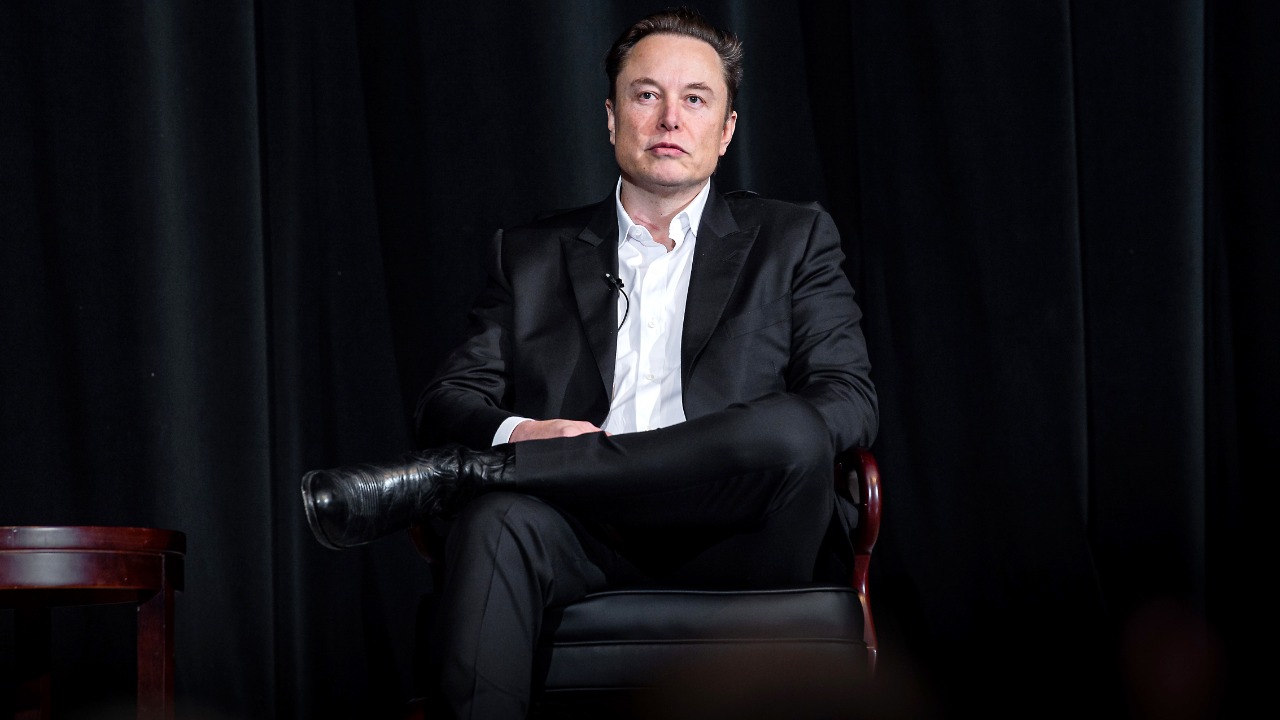

Russian state television has escalated its rhetoric over the war in Ukraine by airing a segment in which a host talked about a nuclear strike aimed at Elon Musk and the Starlink satellite network that underpins much of Kyiv’s battlefield connectivity. The outburst, framed as a response to Musk’s cooperation with Ukraine’s military, highlights how a private tech billionaire has become a central figure in a conflict between nuclear powers. It also exposes how threats against individuals and commercial satellites are increasingly entangled with the politics of space and modern warfare.
The broadcast that turned a tech CEO into a nuclear target
The latest tirade unfolded on a flagship talk show where a Russian state TV host discussed using nuclear weapons against Elon Musk and the Starlink Satellites that support Ukrainian forces. In the segment, the presenter, identified in coverage as part of a Russian State TV Host Calls for Nuclear Strike narrative, railed against Musk’s role in arming Ukraine with connectivity and suggested that a nuclear response would be justified. The rhetoric was not framed as an offhand joke but as part of a broader argument that Western technology companies had crossed a line by helping Kyiv in contested areas of eastern Ukraine, a claim that has been amplified in multiple reports on Russian state TV.
What makes this episode particularly striking is that the threat was not limited to infrastructure in orbit. According to accounts of the same show, the host explicitly linked the idea of a nuclear strike to Musk personally, casting him as a legitimate target because of his role in enabling Ukraine’s communications and targeting systems. Coverage of the incident notes that the video of the rant itself has been affected by a Media Error, with some online players showing a message that a media error caused playback to be aborted and that the media could be corrupt or unsupported, but the underlying description of the segment, including the reference to contested areas of eastern Ukraine, has been preserved in text form and repeated across separate summaries.
Why Starlink has become a battlefield obsession
To understand why a television host would talk about nuclear weapons in the same breath as a commercial internet constellation, it helps to look at how deeply Starlink is embedded in Ukraine’s war effort. Analysts have described how Starlink’s high-speed internet service is used by Ukrainian forces for battlefield communications, weapons targeting and other roles that make it a critical part of the country’s defense, a level of integration that one expert called the part that is incredibly troubling for Moscow in a detailed assessment of Starlink. In that context, Russian officials and propagandists increasingly treat the network not as a neutral commercial service but as a de facto military asset.
Russian strategists have already floated ways to hit U.S. satellites, including those in the Starlink constellation, without necessarily resorting to nuclear weapons. Technical assessments of Russia’s capabilities describe two main attack options, kinetic strikes and electronic warfare, and stress that using these methods, it would not be easy to take out enough satellites to have a significant effect on the Starlink network, which is designed with redundancy in mind. Experts quoted in those analyses warn that any direct attack on U.S. commercial satellites would be highly escalatory, a point underscored in detailed breakdowns of how Russia threatened U.S. satellites and the two main attack options that could be used against U.S. satellites.
Kyiv, SpaceX and the scramble to shut down Russian access
While Russian state TV rails against Musk, Ukrainian officials have been working with SpaceX to ensure that Starlink benefits their own forces and not the Russian side. Ukraine’s digital transformation minister, Mykhailo Fedorov, has described how he contacted SpaceX after evidence emerged that Russian units were trying to use Starlink terminals for their own drones. In a video briefing that has circulated widely, Fedorov pointed to real results saying no Ukrainians have died from Starling equipped Russian drones in recent days after the first technical steps were taken, a claim that appears in a recording of a discussion about how Musk’s SpaceX and Ukraine’s defence ministry plan to block Russia’s use of Starling.
Those efforts have now hardened into a formal arrangement between Musk’s company and Ukraine’s defence ministry. Officials in Kyiv have framed the partnership in stark moral terms, with one statement addressing Musk directly and declaring, While you try to colonise Mars, Russia try to occupy Ukraine, and adding that while his rockets successfully land from space, Russian rockets are killing civilians and destroying infrastructure on the ground. The same statement stressed that the new technical measures are meant to help Ukraine on the battlefield by ensuring that only authorized Ukrainian units can use Starlink terminals, a message that has been echoed in detailed coverage of how SpaceX and Ukraine’s defence ministry intend to block Russia’s use of Starlink.
Technical countermeasures and the limits of Russian drones
Behind the political statements, SpaceX has been rolling out technical restrictions that aim to lock Russian forces out of the network. Fedorov has said that the first steps delivered rapid results and that the next steps would implement a system that will allow only authorized terminals to connect in specific areas, a move designed to protect Ukrainian artillery, among other critical equipment, from Russian drones that rely on satellite links. These details appear in reporting on how Musk’s SpaceX restricts Starlink for Russian drones, where Fedorov’s comments are cited as evidence that the new geofencing and authentication tools are already degrading Russian capabilities that depend on Starlink.
Ukrainian officials have reinforced that message in public appearances, repeating that no Ukrainians have died from Starling equipped Russian drones in recent days and crediting the new restrictions for that outcome. In one widely shared clip, they describe how the defence ministry worked with SpaceX engineers to identify Russian terminals and cut them off, while keeping Ukrainian units online, a process that is discussed in detail in a video about Musk’s SpaceX and Ukraine’s defence ministry to block Russia’s use of Starlink that has been posted on YouTube. The same cooperation is referenced in written accounts that again quote the line, While you try to colonise Mars, Russia try to occupy Ukraine, as a way of framing the stakes of keeping Russian drones from exploiting Starlink access.
Nuclear talk, space warfare and what comes next
Against that backdrop, the nuclear rhetoric on Russian television looks less like an isolated outburst and more like part of a pattern of threatening language around Western space infrastructure. The same Russian State TV Host Calls for Nuclear Strike framing has appeared in multiple accounts of the broadcast, which describe the host calling for a nuclear strike on Starlink Satellites and railing against Musk’s role in arming Ukraine, language that is repeated in a detailed write up on Russian state TV. Another version of the same report, which again uses the phrase Russian State TV Host Calls for Nuclear Strike and highlights the focus on Starlink Satellites, reinforces how central Musk’s constellation has become in Russian propaganda about the war and the perceived threat from Western Media.
More from Morning Overview