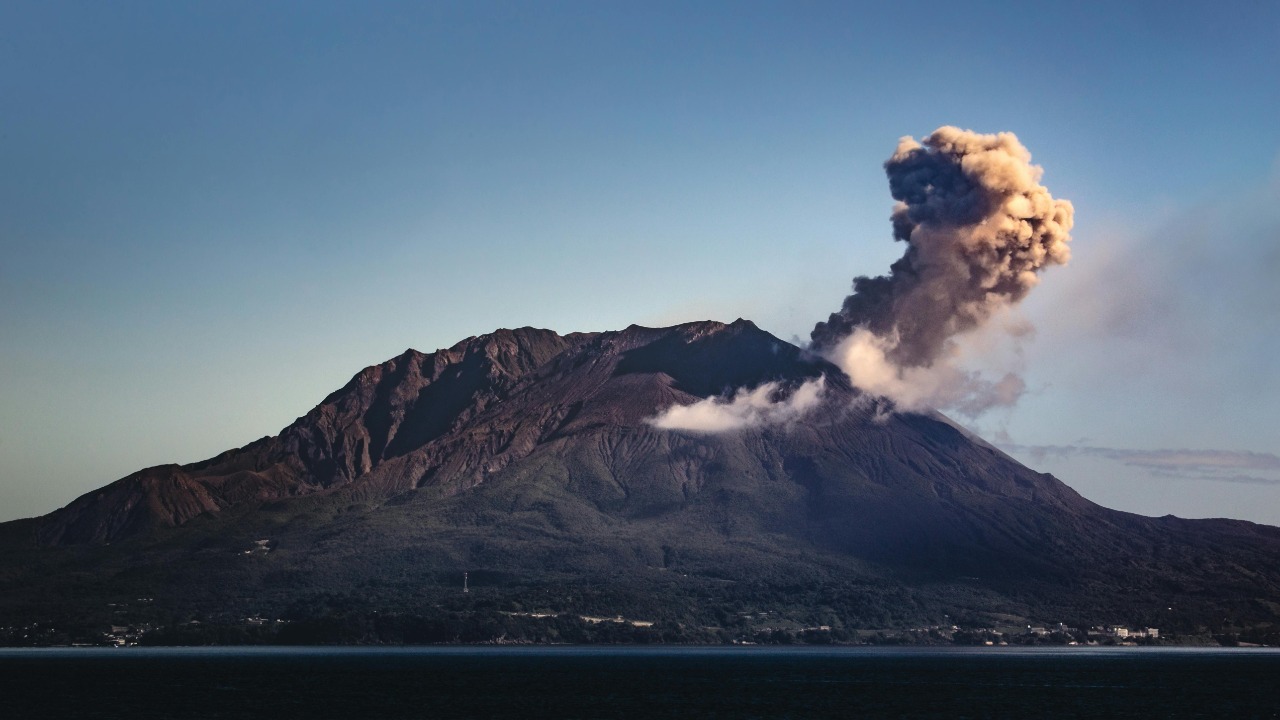

Volcanic eruptions usually leave behind a trail of ash, disruption, and costly cleanup. In the Philippines, that ash is now being reimagined as a strategic asset, as scientists turn it into a material that can blunt some of the most dangerous forms of radiation. By transforming debris from Taal Volcano into engineered blocks and mortars, researchers are sketching out a future in which radiation protection is cheaper, lighter, and more sustainable than traditional lead or concrete.
Instead of treating volcanic fallout as waste, teams working around Taal have shown that its iron-rich particles can be bound into dense, high electron count composites that absorb X-rays and gamma rays. Their work suggests that the same ash that once grounded flights and buried homes could one day line hospital imaging rooms, shield nuclear facilities, and even help protect spacecraft crews from cosmic radiation.
From disaster byproduct to radiation shield
The starting point for this shift is Taal Volcano, whose eruptions have repeatedly coated nearby communities in fine gray dust. Researchers affiliated with Ateneo de Manila University and the National University, Mall of Asia Campus saw an opportunity in that debris, collecting Taal volcanic ash, often referred to as TVA, and testing whether it could be turned into a geopolymer mortar that blocks radiation. Through laboratory work, they found that TVA-based mixes contain iron-rich minerals that significantly reduce radiation intensity as it passes through the material, a result detailed in reports on TVA and its shielding performance.
What makes TVA stand out is not just its availability but its physics. High electron density is crucial for stopping high energy photons, and the ash’s natural composition gives it more electrons per unit volume than many conventional aggregates. Researchers have emphasized that a high electron and denser material such as TVA shows stronger efficiency in blocking hazardous X-rays and gamma rays, a point underscored in technical explanations of how high electron counts translate into better attenuation.
Inside the lab: how volcanic ash blocks radiation
To move from concept to data, the Filipino teams subjected TVA-based mortars and blocks to controlled beams of X-rays and gamma rays, measuring how much energy was absorbed or scattered. Researchers from Ateneo de Manila University and the National University, Mall of Asia Campus report that the iron-rich minerals embedded in the ash are central to this effect, since iron’s atomic structure provides the dense electron cloud needed to interact with incoming photons. Their experiments, described in updates highlighting these researchers, show that TVA composites can rival or exceed some standard shielding concretes in photon attenuation.
Material scientists have also pointed to the microstructure of volcanic ash blends as a hidden advantage. When TVA is mixed with aggregates in optimal proportions, the resulting granular matrix increases disorder at the microscopic level, which in turn enhances photon attenuation by creating more interfaces where radiation can be scattered or absorbed. Analyses of volcanic ash for radiation shielding note that the natural presence of iron-rich minerals and the entropy in granular matter microstructures give these mixes strong attenuation properties, a conclusion echoed in technical reviews of granular microstructures in ash based materials.
Turning ash into building blocks
The most tangible expression of this research is a new class of radiation resistant building blocks molded directly from TVA based mixtures. Scientists in the Philippine teams have cast modular units that look like standard masonry but are engineered to absorb nuclear radiation, effectively turning volcanic ash into a structural shield. Social media posts celebrating how scientists just made a natural material to shield against nuclear radiation describe these Philippine prototypes as a breakthrough in scientists using local geology for global problems.
Engineers have framed these blocks as a “Phoenix rises from ashes” moment, arguing that nuclear radiation proof units made from volcano ash could replace or supplement heavy lead sheets and thick concrete walls. Reports on these innovations stress that the use of volcanic ash may offer a potential alternative to traditional materials like concrete and lead, particularly where weight, cost, or environmental impact are constraints, a case laid out in coverage of Phoenix themed radiation proof blocks.
Beyond nuclear plants: hospitals, industry, and space
While nuclear reactors are the most obvious beneficiaries of better shielding, the Philippine work is already being discussed in the context of medical and industrial facilities. Researchers at Ateneo de Manila University and the National University, Mall of Asia Campus have highlighted how TVA based materials could line diagnostic imaging rooms, protect staff in industrial radiography sites, and reinforce storage areas for radioactive sources. Their statements, captured in detailed accounts of how TVA could be deployed at industrial sites and nuclear facilities, stress that the same blocks can be integrated into standard construction workflows.
There is also a growing conversation about how volcanic ash composites might contribute to space exploration, where every kilogram of shielding launched into orbit carries a steep cost. Analyses of volcanic ash for radiation shielding note that the natural presence of iron-rich minerals and the resulting attenuation properties could make these materials attractive for off world habitats or spacecraft modules, especially if similar ash deposits are found on other planetary bodies. Commentaries on Filipino researchers identifying Taal ash as a new radiation shield have already drawn parallels between TVA and the regolith based shielding concepts proposed for the Moon and Mars.
A regional model for turning risk into resilience
For countries along the Pacific Ring of Fire, the Philippine experience offers a template for turning volcanic risk into a resource. Commenters following the work of Researchers from Ateneo de Manila University and the National University, Mall of Asia Campus have pointed out that similar ash deposits ring Indonesia, Japan, and other seismically active states, suggesting a broad potential for replication. Discussions on how these researchers are reframing ash as a strategic material emphasize that concrete and lead are no longer the only options for serious shielding.
Philippine agencies have also framed the TVA work as an example of disaster byproducts being transformed for public safety. Officials noted that if the approach scales, it would show how the aftermath of eruptions can be turned into long term infrastructure that protects people from harmful radiation, a theme highlighted when local researchers described the project as a way to transform the byproducts of a disaster for the safety of communities.
More from Morning Overview