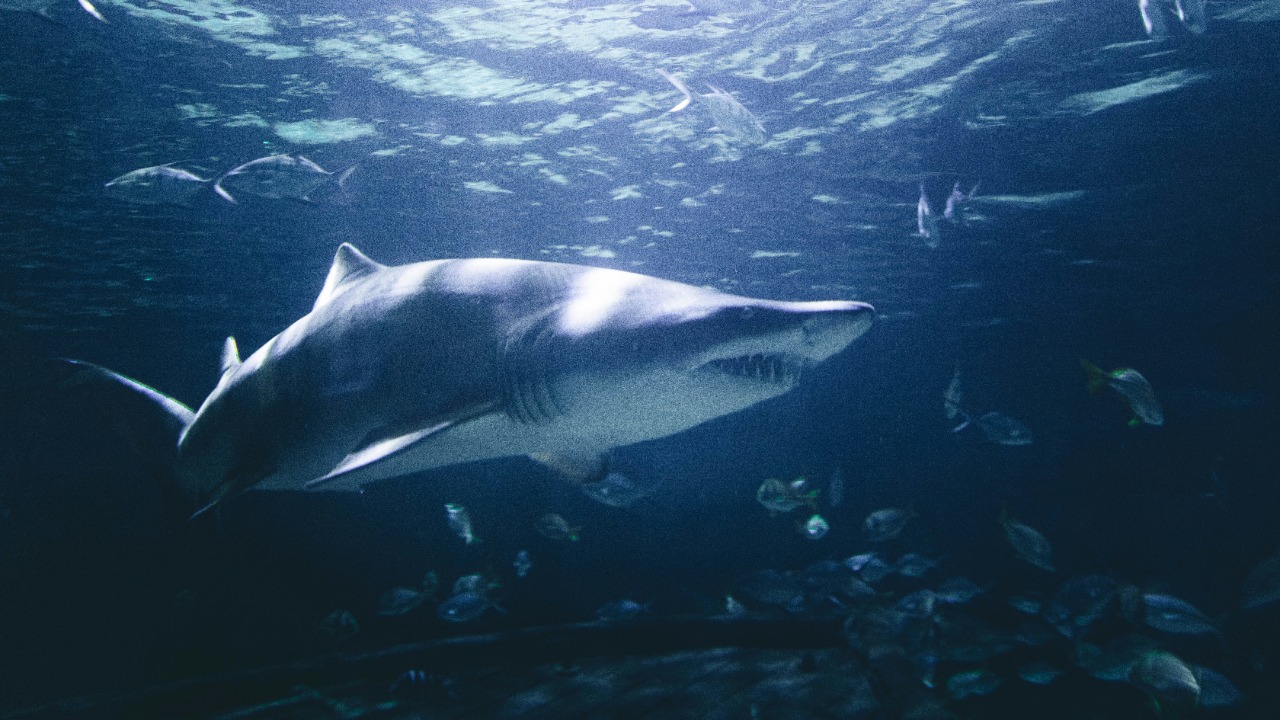

A hulking shark with a rubbery, lantern-like mouth and a body the length of a delivery van is not what most people expect to see in the surf. When a megamouth shark appears close to shore, it jolts both scientists and casual beachgoers, because this animal usually lives far below the waves and has been recorded only a handful of times worldwide. A fresh sighting of a specimen around 14 feet long has again exposed how little we know about one of the ocean’s strangest giants and why every encounter feels like a once-in-a-lifetime event.
For researchers, a stranded or nearshore megamouth is both a scientific windfall and a sobering warning about the pressures facing deep-sea life. For families on the sand, the same animal can look like a “sea monster,” its vast head and slack jaw triggering fear before experts can explain that this shark is a gentle filter feeder. I see that tension play out every time a rare carcass washes up or a shaky phone video goes viral: awe, anxiety and curiosity colliding in a single, lumbering silhouette.
The 14-foot “sea monster” that stopped a beach in its tracks
Witnesses who stumble across a megamouth on the sand often describe it first in terms of sheer size, and a recent 14-foot specimen was no exception. Photos of the animal, shared alongside captions inviting readers to View the stranded “sea monster,” show a bulky, dark body tapering to a relatively small tail, with a head so oversized it seems almost cartoonish. The images, credited to Jam Press, capture the slack, cavernous mouth that gives the species its name, a feature that looks more like a collapsed parachute than the pointed snout people associate with sharks.
Onlookers in these situations tend to cluster around the carcass, phones raised, while local officials scramble to identify the animal and secure the scene. In this case, the 14-foot length immediately set it apart from smaller coastal species, and the odd, flabby head ruled out more familiar giants like great whites. The shark’s condition, already deteriorating by the time it was photographed, suggested it had died offshore before currents pushed it landward, turning an otherwise hidden deep-sea death into a public spectacle of Images that ricocheted across social media.
Why megamouths are almost never seen alive
Part of what makes any beaching so dramatic is just how rarely this species shows itself. Marine biologists point out that, Despite their size, megamouth sharks were unknown to science until 1976, when one became tangled in a ship’s anchor cable. Since then, researchers have logged only 273 confirmed sightings worldwide, a vanishingly small number compared with the thousands of encounters recorded for whale sharks or basking sharks. That scarcity is not just about population size, it is also about lifestyle, because megamouths spend most of their time in deep, dim water and appear to rise toward the surface mainly at night.
Even when they do come shallower, they are not easy to track. Tagging data on other sharks shows how unpredictable their movements can be, and a similar pattern appears in reports from the marine wildlife monitoring organisation Marine OSEARCH, which has documented numerous sharks being “pinged” along busy coasts. In that context, the near-total absence of megamouth detections stands out. When a shark like Cayo, a 10 ft 3 in individual tracked by OSEARCH, appears near beaches, it can be monitored in real time, but megamouths have no such digital footprint. They simply materialise in fishermen’s nets or on remote shores, leaving scientists to reconstruct their journeys after the fact.
A gentle giant with a glowing grin
For all the drama around their appearances, megamouth sharks are not the villains of anyone’s beach day. Conservation groups stress that when people ask, Are megamouth sharks dangerous, the answer is simple: they are filter feeders that pose no threat to humans. They cruise slowly with their mouths agape, sieving plankton and tiny animals from the water in much the same way as the Whale and Basking sharks that share their ecological niche. Their teeth are tiny and largely vestigial, a far cry from the serrated weapons that dominate shark horror films, and there are no verified reports of attacks on swimmers or divers.
What they lack in menace, they make up for in strangeness. Researchers at a major natural history institution have described how, Basically, megamouth sharks wear glowing plankton-like lipstick to attract prey, with the interior of the mouth reflecting and amplifying bioluminescent organisms. That eerie glow, combined with the animal’s slow, undulating swimming style, has led some observers to describe it as a living deep-sea lantern. For a snorkeler who happens to cross paths with one, the experience would be more like drifting past a drifting billboard of light than confronting a predator, a reminder that the ocean’s most unsettling faces are often its most harmless.
From Negritos Bea to San Di: rare encounters that rewrite the field
Every time a megamouth surfaces near people, it adds a crucial tile to a very incomplete mosaic. When a very rare individual, described as a species with fewer than one hundred recorded sightings worldwide, appeared stranded on Negritos Bea, locals gathered around the carcass while scientists rushed to document measurements, tissue samples and stomach contents. That single animal, lifeless on the sand, offered clues about diet, migration routes and even the pollutants accumulating in deep-sea food webs. For researchers who may never see a live specimen, a stranded shark like this can be the most accessible window into the species’ biology.
Other breakthroughs have come from chance encounters offshore. Fishermen who encountered and recorded two megamouth sharks on a single day provided the first confirmed footage of multiple individuals together, a scene that had never been caught on camera at once. That moment off the coast of San Di, later analysed in detail, showed the animals circling each other in what experts suspect could be courtship or mating behaviour. Follow-up work by biologists, including a once-in-a-lifetime encounter with three megamouth sharks described in a field report linked to Nov, has started to sketch out how these animals might interact socially, hinting at complex behaviours that were pure speculation only a few years ago.
Why a single carcass matters for conservation
For the public, a beached megamouth can feel like a curiosity, a chance to snap a photo with a creature that looks like it swam out of a science fiction film. For conservationists, it is also a data point in a worrying pattern. Social media posts that describe the megamouth as One of the rarest of all sharks, and as Megamouth being One of three extant filter feeders along with the Whale and Basking sharks, underscore just how little redundancy exists in this corner of the marine ecosystem. If even one of these giants declines sharply, the ripple effects on plankton communities and nutrient cycling could be significant, yet baseline population estimates for megamouths remain “Unverified based on available sources.”
At the same time, the broader context of unusual shark activity cannot be ignored. Reports of a huge 14 ft sea creature washing up on a beach, alongside tracking data from Cayo and other tagged animals, suggest that changing ocean temperatures and shifting prey distributions are drawing large sharks closer to shore more often. When I look at a stranded megamouth framed as a “sea monster” in viral posts, I see a deeper story about how climate, fishing and pollution are reshaping the boundaries between the deep ocean and the beach. Each carcass, each rare video clip and each startled crowd on the sand is a reminder that the mysteries of the deep are not as distant as they once seemed, and that our decisions at the surface are already reaching into the twilight zone where these animals live.
More from Morning Overview