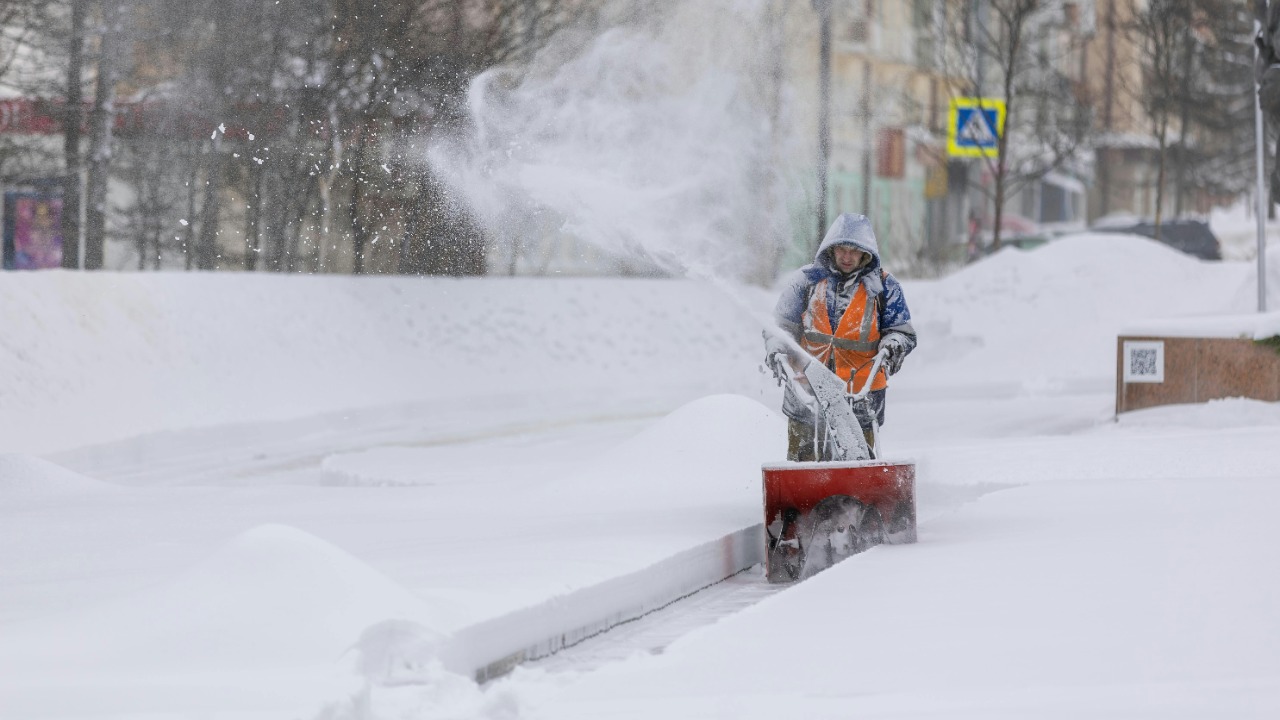

A once-in-a-decade Arctic blast is colliding with a sprawling winter system that now covers roughly half of the United States, from Texas through the Midwest and into the Northeast. Forecasters say the combination of extreme cold, heavy ice and record power demand is severe enough that the National Weather Service is warning of a realistic risk of cascading grid failures across multiple regions. While utilities insist they are better prepared than in past disasters, the scale of this storm means even a few critical weak points could ripple from local blackouts into a multi-state crisis.
The stakes are already visible on the ground: more than 14,000 flights have been canceled, more than a million customers have lost electricity at some point during the onslaught, and emergency declarations now stretch from the Gulf Coast to New England. The question is no longer whether the storm will be historic, but whether the country’s power and transportation systems can withstand a stress test that runs from Texas to the Northeast without tipping into a broader breakdown.
How a single storm put half the country on grid watch
What began as a deep trough over the Pacific has evolved into a textbook continental outbreak, with a massive low pressure system dragging Arctic air south and then east across the central United States. Meteorologists tracking the North American system describe a storm large enough to affect more than half the population at once, a rarity even in severe winters. As the cold dome settled in, bands of snow, sleet and freezing rain spread from the Plains into the Ohio Valley and up the Eastern Seaboard, creating a corridor of ice that is particularly dangerous for power lines and transformers.
By the time the core of the storm reached the central and eastern states, the impacts were already staggering. A powerful winter storm sweeping from east Texas to North Carolina forced the cancellation of more than 14,000 flights and cut power to hundreds of thousands of homes and businesses. A separate tally of the broader outbreak found that over 1 million customers lost electricity at some point as governors across multiple states declared emergencies. Federal officials at FEMA describe the event simply as a “severe winter storm” producing heavy snow, dangerous freezing rain and life-threatening wind chills, a combination that maximizes both demand spikes and physical damage to the grid.
Texas to the Northeast: a fragile chain under extreme stress
The southern end of this system is centered on Texas, where the memory of the 2021 grid collapse still shapes every cold snap. All 254 counties in Texas are under some form of winter alert, an extraordinary blanket warning that reflects how far the cold has penetrated into the Gulf region. State leaders have already declared a statewide emergency as a Storm Sweeping Across known as Winter Storm Fern drives a 45°F temperature crash in less than 48 hours, a rate of change that can catch both infrastructure and residents off guard. Texas Governor Greg Abbott has tried to reassure residents, saying there is “no expectation whatsoever” that the grid will fail as it did during the earlier disaster, but his comments on Thursday underscore how central power reliability has become to the state’s political and economic identity.
Farther north and east, the same Arctic air is colliding with Atlantic moisture to produce crippling ice from the Mid-South into New England. In the South, outages are particularly dangerous because the region is being hit by treacherous cold that the NWS warns could set records, while the same storm is hammering New York and Connecticut along its path. The National Weather Service has warned that heavy ice could cause “long-duration power outages, extensive tree damage, and extremely dangerous or impassable roads,” a message repeated in its alerts that The NWS expects conditions to remain hazardous even after the precipitation ends. With snow, sleet and freezing rain pelting the central United States and forecasters warning of “catastrophic impacts,” the corridor from Texas to the Northeast has effectively become a single, fragile chain of demand and damage that could transmit stress from one regional grid to another.
Why officials fear a cascading grid failure, and what is being done
Behind the rare alert language is a simple physics problem: record cold drives record demand at the same time that ice and wind physically knock out generation and transmission. Federal energy officials say the Department of Energy has issued an emergency order to help utilities manage the strain, with Department of Energy emphasizing that utility crews are working to restore power as quickly as possible even as conditions remain dangerous. The National Weather Service has gone further, issuing language about “potentially catastrophic” outcomes as it tracks Texas to the Carolas under a thousand-mile swath of snow and ice laid over bitterly cold air. When a single storm stretches that far, a failure in one region can force neighboring grids to export power they do not have, increasing the risk of a wider collapse.
More from Morning Overview