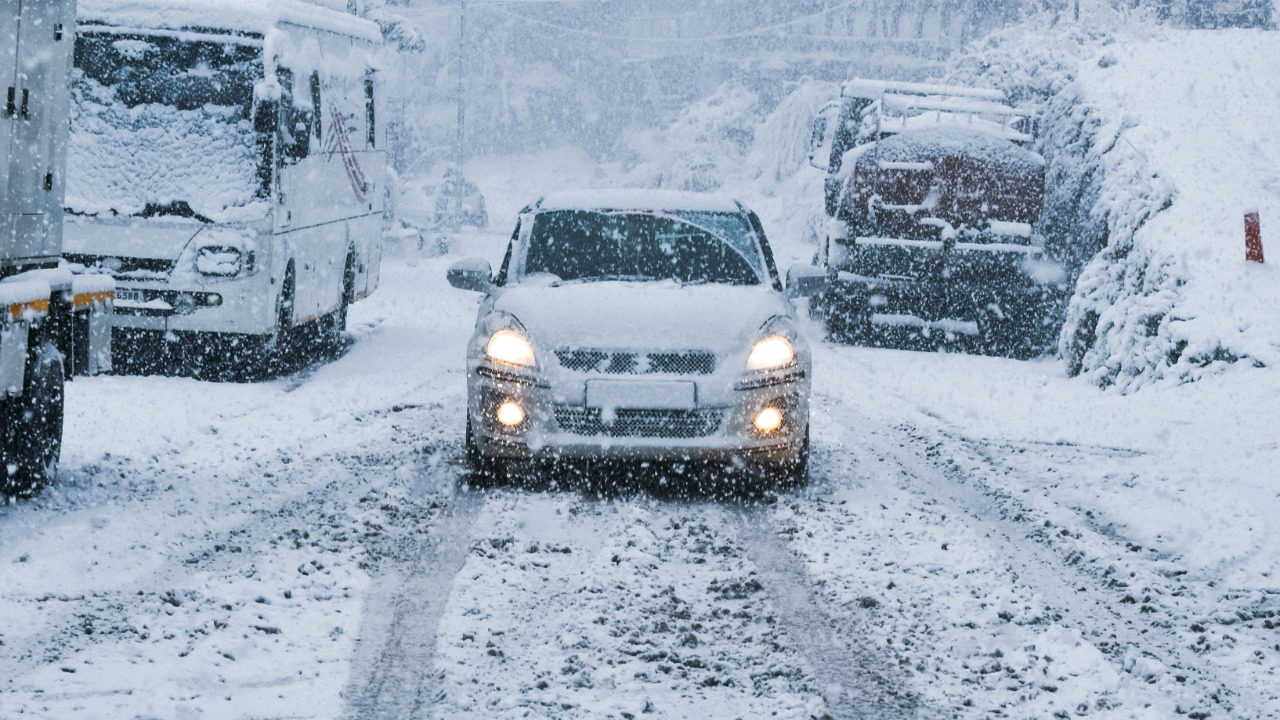

A sprawling winter system is knitting together across the country, poised to drop heavy snow, dangerous ice and brutal cold on a swath of the United States that stretches from the southern Plains to the Northeast. Forecasters warn that the storm’s reach and intensity could make it one of the most disruptive cold-season events in years, with impacts rippling from highways and airports to power grids and water systems. With a potentially historic ice and snow blast about to unload, the window for last-minute preparation is closing fast.
How big this storm could get
Meteorologists now describe the setup as One of the most extreme winter storms in years, a sprawling system expected to deliver damaging ice and heavy snow to nearly half the country. Forecast guidance shows a significant winter storm emerging in the southern Plains on Plains radar Friday and then sweeping across the South and into the East during the weekend and early next week. As it matures, the storm is projected to stretch roughly 2,000 miles, a footprint large enough to paralyze communities from Texas and Oklahoma through the Ohio Valley and up the Eastern Seaboard.
Forecasters tracking the Major Winter Storm say the threat zone now spans more than 35 states, with Winter Storm Watches and Warnings posted for a population that could exceed 175M+. The system is expected to slam the Potentially catastrophic mix of snow and ice into the Midwest and East Coast, with forecasters warning that the combination of weighty ice on trees and power lines and strong winds could fuel massive outages. Official briefings from the National Weather Service emphasize that this is not a localized event but a coast-to-coast pattern shift that will lock in dangerous cold behind the storm for days.
Snow, ice and record cold from Texas to the Northeast
What makes this system so dangerous is not just how far it reaches, but how many different types of winter hazards it delivers at once. Forecasts show Major snow bands setting up from Texas to the Carolinas, while a corridor of sleet and freezing rain cuts across the Deep South. At the same time, an extremely cold air mass is spreading frigid temperatures across much of the country, with Snow and ice expected to stretch from the South to the Northeast The storm’s wintry mix will likely push hazardous conditions into areas that rarely see prolonged ice, including parts of the Gulf Coast and lower Mississippi Valley, while heavy snow targets interior sections of the Mid-Atlantic and New England.
Behind the snow and ice, forecasters are increasingly confident that Record breaking cold is possible, with Dallas, Fort Worth and Raleigh, North Carolina, among the cities threatening to plunge as much as 40 degrees colder than average. Earlier this week, snow was already falling at Prospect Park in Brooklyn, New York, where a Photograph captured the early taste of winter that is now set to intensify from Baltimore and Philadelphia to New York and Boston. The cold blast is expected to blanket the Eastern US, with images already showing See a brutal cold blast icing fountains at the Westin Poinsett Hotel and prompting preventative measures against burst pipes.
Power grids, airlines and highways brace for impact
As the storm organizes, critical infrastructure operators are racing to get ahead of the worst scenarios. Energy providers across the southern US are mobilizing for a widespread ice storm and potentially historic snow, with Energy companies staging crews and equipment across the entire South in anticipation of downed lines and transformer failures. The concern is that a glaze of ice, followed by heavy, wet snow, could snap branches and powerlines, a risk that forecasters have already labeled 202 levels of potentially catastrophic for parts of the Midwest and East Coast. Utilities are urging customers to charge devices, stock up on batteries and prepare for outages that could last days in the hardest hit zones.
Travel networks are also bracing for a punishing stretch. Airlines have begun issuing waivers and preemptive cancellations as they track a historic snow storm expected to delay flights across the country, with carriers warning that Other airlines are following similar trends and that railroads are monitoring the situation closely. In Denver, a strong storm is forecast to bring several inches of snow to DEN, where Our snow team is already preparing to keep runways and roadways clear while urging passengers to confirm flight status with their airline. On the roads, state transportation departments from the southern Plains to New England are pre-treating interstates and warning that whiteout conditions, jackknifed trucks and multi-car pileups are likely once the heaviest bands move in.
States of emergency and local readiness
Governors and local officials are not waiting for the first flakes to fall before acting. In South Carolina, the governor has declared a state of emergency ahead of the winter storm, with South Carolina officials, including Author Tony Santaella, outlining plans to pre-position National Guard troops, open warming centers and coordinate with utility crews. A separate alert notes that a State of emergency has also been issued for North Carolina, with State of leaders in COLUMBIA and across the region warning that the storm is expected to impact the state this weekend. The South Carolina governor’s office has emphasized that residents should not be lulled by relatively mild conditions ahead of the front, since temperatures and road conditions are expected to deteriorate rapidly once precipitation begins.
Local National Weather Service offices are reinforcing that message. In the Atlanta region, a Winter Storm Warning is in effect, with meteorologists urging residents to Please monitor local media outlets and the National Weather Service for updated forecasts and potential upgrades. Farther north, maps show the storm’s snow and cold threat expanding from the southern Plains on Friday and moving across the South and into the East during the first half of next week, with Friday and the weekend flagged as the most treacherous travel window. Emergency managers are urging people to finish errands, refill prescriptions and check on vulnerable neighbors before conditions deteriorate.
Why this blast is so intense, and what to do now
Behind the scenes, scientists point to a familiar but still unsettling driver: the polar vortex. According to By SETH BORENSTEIN, AP Science Writer, Warm Arctic waters and cold continental land are combining to stretch the polar vortex and send frigid air surging south into the United States. That distorted pattern is helping to fuel the current outbreak, allowing Arctic air to undercut moist Gulf flow and supercharge the snow and ice machine from the South and Mid Atlantic to New England. Meteorologists caution that while individual storms are shaped by many factors, the broader backdrop of a warming Arctic is making these sharp, disruptive swings in winter weather more likely.
For residents in the path, the advice is blunt and immediate. Forecasters tracking the Saturday and Sunday evolution of the storm say this is the time to secure backup heat sources, gather nonperishable food and water, and plan for the possibility of being stuck at home for several days. Official guidance from the National Weather Service the South and Mid Atlantic stresses avoiding nonessential travel once precipitation begins, keeping phones charged, and having a way to receive alerts if the power goes out. With a potentially historic ice and snow blast about to unload, the communities that fare best will likely be those that treat the warnings as a call to act now, not a reason to panic later.
More from Morning Overview