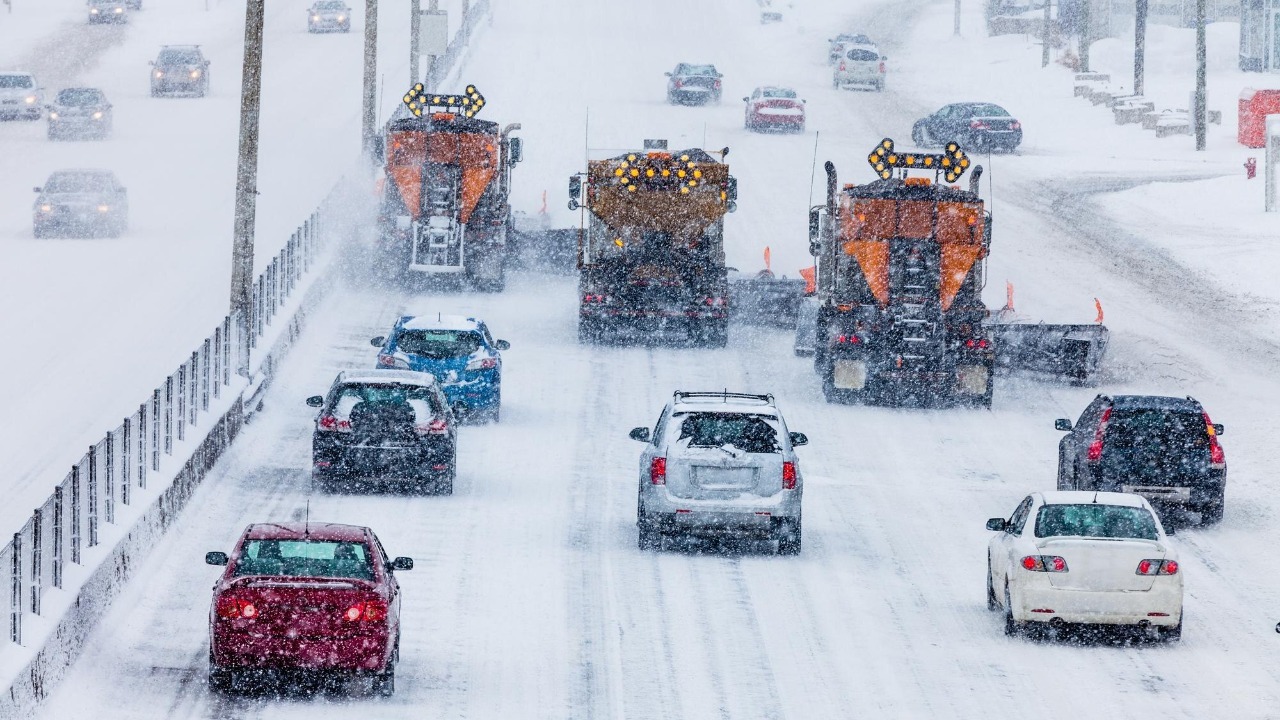

A historic winter storm has ripped across the United States, toppling trees, coating power lines in ice and leaving a trail of outages from the South to New England. Now a sharper danger is setting in: a post‑storm deep freeze that will drive heating demand to extremes and push already strained power grids to their limits. As temperatures plunge, the question is not whether the system is stressed, but how close it will come to outright failure.
Millions have already lost electricity at least once, and grid operators are warning that the coldest nights are still ahead. With a power grid for 67 m people flagged as at risk and economic losses projected in the tens of billions of dollars, the coming freeze is shaping up as a defining test of how well the country has learned from past winter disasters.
The storm’s damage sets the stage for a dangerous freeze
The first blow came from the storm itself, which knocked out power on a massive scale even before the deepest cold arrived. Roughly a million customers lost electricity as snow, sleet and freezing rain swept across the country, according to outage tallies that showed utilities scrambling while governors in multiple states activated their National Guard units to respond to the unfolding emergency, a picture captured in detail by Roughly compiled outage maps. The worst power outages were concentrated in Tennessee, Mississippi and Louisiana, where ice‑coated lines and fallen trees severed service to entire neighborhoods at the height of the storm, a pattern confirmed in reporting that singled out Tennessee, Mississippi and as particular trouble spots.
Those physical hits landed just as temperatures plunged to the coldest levels of the season, with at least 12 people dying in the deadly cold and tens of millions placed under winter weather alerts, according to a live briefing that summarized What forecasters covered about the storm’s reach. In some communities, roads were so slick and tree limbs so heavy with ice that they became, in the words of one account, “impassable,” a description echoed in coverage of how the South struggled as Som of the hardest‑hit counties coped with downed lines. That combination of infrastructure damage and lethal cold is exactly what makes the coming deep freeze so perilous: millions of people will be turning up their thermostats just as the grid’s physical backbone is at its weakest.
Emergency orders and grid operators running flat out
As the storm intensified, grid operators and federal officials moved into crisis mode, taking steps that are reserved for periods of extreme stress. The Energy Department said it issued emergency orders that authorized PJM to run power plants at maximum capability, temporarily relaxing some environmental and operating limits so generators could stay online through the worst of the cold, a measure described in detail in a report on how the Energy Department responded on Sunday. Separate analysis of federal filings underscored that Winter peak demand could hit new highs, prompting DOE emergency orders that allowed grid operators to run generators at levels they normally would not, a warning embedded in a technical review of how Winter reliability rules are being stretched.
Regional grid operators layered on their own emergency steps. MISO early Saturday declared a “level two emergency” for northern and central parts of its footprint through 11 a.m. EST, a move that allowed it to tap reserves and call on customers to conserve as MISO braced for surging demand. Later, as conditions worsened, MISO downgraded the grid to a maximum generation warning before returning to an energy‑emergency alert 2 in an effort to shore up reserves, a sequence that highlighted how close the system came to the brink, according to a detailed account of how MISO cycled through its alert levels. Utilities, for their part, had spent the last week reinforcing wires and cutting tree branches to prevent even worse disruption, a pre‑emptive effort described in coverage of how Utilities tried to harden their systems before the storm hit.
Regions on the edge, from the South to New England
The stress is not evenly distributed, and the geography of risk says a lot about the country’s energy choices. In the South, forecasters were already warning by Thursday that accumulation of ice could snap branches and take poles down with them, a scenario that played out across parts of the South as By Thursday state officials scrambled to update outage plans. In Texas, memories of the 2021 blackout loomed large as Austin was pictured covered in ice from the East Riverside neighborhood, while grid managers urged residents to conserve power through Tuesday to help prevent blackouts, a plea documented in coverage that showed how Austin and the rest of Texas navigated the freeze.
Farther north and east, the PJM Interconnection grid that stretches from Chicago to Washington DC warned late Sunday that it was bracing for seven straight days of extreme cold, a period in which it expected record winter demand from Illinois to New Jersey and farther afield, according to a briefing on how Chicago and the Mid‑Atlantic would fare. In New England, fuel oil generation has ramped up to help the region conserve natural gas, its primary fuel source, a shift that underscores how thin the margin for error has become in a region that relies heavily on imported fuels, according to dispatches that described how In New England operators leaned on oil‑fired plants. Across this vast footprint, one assessment warned that the power grid for 67 m people is at risk as the deep freeze follows the storm, a stark reminder, reported from Power desks, that the danger will linger through the end of the month.
Fuel mix, data centers and the economics of scarcity
Behind the emergency alerts lies a deeper story about what is keeping the lights on and what is driving demand. The PJM Interconnection, the largest power grid operator in the U.S. that serves parts of the Mid‑Atlantic and Midwest regions, was explicit that coal plants were stepping up to help carry the load during the historic winter storm, with operators arguing that coal remains a critical backstop, especially during the winter, a claim laid out in coverage of how The PJM Interconnection leaned on its legacy fleet. In parallel, analysts noted that power prices surged as the storm spiked demand in U.S. data hubs, with traders pointing to the rapid growth of data center electricity needs as a key factor in tightening supply, a trend highlighted in a market report that opened with the line “Follow your favorite stocksCREATE FREE ACCOUNT” before delving into how Follow the money now means following server‑farm demand curves.
The economic stakes are enormous. AccuWeather estimates this weekend’s winter storm could cause up to $115 billion in economic losses and damages, a figure that captures not just broken poles and spoiled food but also lost factory output, canceled flights and days of missed school, according to a video briefing that emphasized how $115 billion in costs could ripple through the economy. One regional assessment from Lawton, Oklahoma, framed the situation bluntly, noting that the power grid for 67 m people is at risk as the deep freeze follows the storm and warning that the threat would persist through the end of the month, a message carried in a dispatch datelined Lawton that described the National outlook as “a few clouds” Today but a long stretch of bitter cold ahead. When power becomes scarce, the costs are counted not only in dollars but in lives and in the resilience of communities that must find ways to cope.
What the freeze will mean for people on the ground
More from Morning Overview