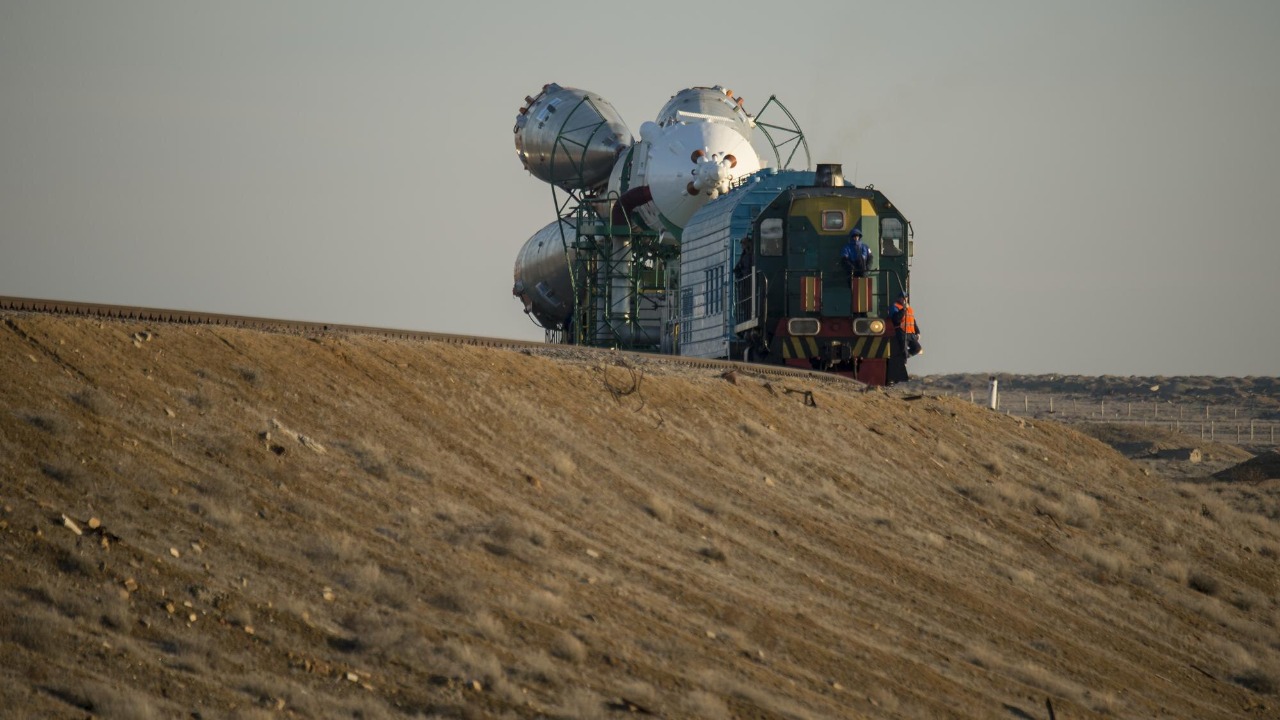

From Arctic research stations to isolated mine sites, the hardest places on the planet to power have long depended on diesel drums and fragile supply chains. A new generation of portable nuclear microreactors promises to swap those fuel convoys for compact, factory-built plants that can be shipped in standard containers and switched on almost anywhere. If the technology delivers, the end of the Earth could soon be lit by reactors small enough to fit on a truck yet powerful enough to anchor a modern microgrid.
Instead of sprawling concrete domes, these systems resemble industrial skids or oversized shipping crates, designed to run for years without refueling and with minimal on-site staff. Developers argue that such units could cut carbon, harden critical infrastructure, and bring reliable electricity to communities that have never had it, all while operating with passive safety features that keep the core cool without external power.
From concept to container: how microreactors went mobile
Microreactors started as a thought experiment in nuclear engineering departments, but they are now a defined class of very small reactors, typically producing up to tens of megawatts, that can be built in factories and transported by road, rail, or ship. Research groups describe how these compact systems can be assembled as complete power plants, then shipped to site in modules that slot together like industrial Lego. An Abstract on the technology notes that entire units can be loaded into containers, a design choice that underpins their promise of rapid deployment and retrieval.
International bodies now treat microreactors as a distinct subset of small modular reactors, emphasizing their tiny footprints and simplified safety systems. Guidance from one nuclear agency highlights that these units can rely on natural circulation, gravity, and self-pressurization, with microreactors designed to serve as backup power in emergencies or to replace diesel generators outright. That shift from bespoke, site-built plants to standardized, movable hardware is what makes it plausible to talk about nuclear power at the literal end of the road.
Radiant, Kaleidos and the race to replace diesel
Among the most aggressive challengers to diesel is Radiant, a California startup that is building a portable plant it calls Kaleidos. The company describes Kaleidos as a Portable Nuclear Microreactor that Replaces Diesel Generators, marketed with a blunt call to “Reserve Now,” and designed so that all equipment ships from the factory for streamlined deployment. Radiant’s chief executive officer and founder, Doug Bernauer, has framed the goal in starkly practical terms, saying that by 2028 the company aims to roll out the first factory-built nuclear generators that can be trucked to remote sites and installed in a day.
Radiant is backing that ambition with bricks and mortar. The firm has chosen an Oak Ridge site for what it bills as a world-first factory for portable microreactors, and it is also moving ahead with a first unit at a historic Tenn Manhattan Project site, a symbolic choice that links the microreactor era to the earliest days of nuclear research. On its own homepage, Radiant pitches Kaleidos as a compact unit that can be built in the factory for streamlined deployment, reinforcing the idea that the company wants to make nuclear power feel more like ordering industrial equipment than commissioning a megaproject, a message it repeats in its Jun presentation about building a nuclear “superpower” on Earth.
Westinghouse, XENITH and the industrial heavyweights
Legacy nuclear players are not ceding the portable market to startups. In the Pittsburgh suburb of Etna, Westinghouse engineers are developing a miniature, transportable reactor called eVinci that is explicitly designed to be moved by truck and to serve remote locations. Company materials describe the eVinci unit as a Microreactor that uses a Lead-cooled Fast Reactor design, with an Overview that stresses Advanced Technology and economic performance. Westinghouse says it is currently developing the eVinci Microreactor as a reactor for decentralized remote applications, a point it repeats in its Innovation materials.
Another entrant, X-energy, is positioning its Introducing XENITH system as an advanced mobile micro nuclear reactor solution that can deliver reliable, clean power anywhere it is needed, from remote communities to critical military installations. The XENITH design emphasizes flexible power output and enhanced redundancy, signaling that the company sees a market not only in frontier outposts but also in hardened infrastructure that must stay online during disasters. Analysts tracking small modular reactors note that, While the SMR market is crowded, microreactor offerings like eVinci and XENITH are carving out a niche at the very small, highly mobile end of the spectrum.
Military bases, Arctic outposts and molten-salt experiments
Defense planners have been among the earliest champions of portable nuclear power, arguing that truck-sized reactors could cut the fuel convoys that expose troops to attack. In April, the US Department of Defense approved Project Pele, an initiative to lower carbon emissions by developing a microreactor that can be transported in shipping containers. Separate reporting on America’s Nuclear Microreactors describes them as Clean Power the Size of a Truck While massive nuclear plants take decades to build, underscoring how different these systems look from traditional baseside reactors. Advocates argue that such units could also support civilian disaster relief, a point echoed in an engineering analysis that says portable microreactors could revolutionize recovery efforts in hurricane-hit areas and bolster remote communities, framing them as a game-changing option.
Other countries are experimenting with alternative fuels and extreme environments. A Chinese project highlighted in a Jun social media post describes a microreactor that uses molten thorium salts, a safer, more abundant alternative to uranium, operating at low pressure to reduce the risk of leaks. The same project is detailed further as a unit that uses molten thorium salts to stay portable, safe, and scalable, with the design pitched as a way to serve remote zones that are hard to reach with conventional grids, according to a second description. In the Arctic, the Independent Barents Observer has chronicled how small transportable nuclear reactors for remote corners of the region are not a new invention, but it warns that Russia’s latest mini-reactor plans are causing concern, noting that the Independent Barents Observer has previously reported on the security implications of putting more fissile material on floating or remote platforms.
Remote communities, Saskatchewan and the economics of going small
For isolated communities, the appeal of microreactors is as much economic as environmental. A project promoted on social media describes how a California startup raised funding for a Canadian deployment valued at $80 m, noting that the project, valued at $80 million CAD, is designed to meet Saskatchewan’s unique energy needs while contributing to a greener, more efficient system with reduced carbon emissions. That framing positions microreactors as a way for regions like Saskatchewan to leapfrog straight to low-carbon baseload without waiting for long-distance transmission lines. It also hints at a business model in which developers sell not just hardware but long-term power contracts, bundling fuel, maintenance, and eventual decommissioning into a single service.
International agencies stress that microreactors have smaller footprints than conventional plants and can be sited close to demand, which could be transformative for villages that currently rely on imported diesel, according to the Furthermore guidance. Analysts of the broader small modular reactor sector point out that, While the SMR market is full of many innovative companies, microreactors occupy a distinct corner focused on ultra-remote and mobile use cases, as summarized in a Jan overview. That distinction matters for regulators and financiers, who must weigh not only the cost per kilowatt but also the value of resilience and energy sovereignty in places that have never had either.
More from Morning Overview