
A proposal to build what backers describe as the tallest statue in the Western world has collided with the internet’s favorite accelerant: Elon Musk’s attention. The plan, pitched as a patriotic landmark for America’s 250th anniversary, has turned a niche monument campaign into a viral flashpoint over scale, symbolism and spectacle. As the project’s supporters court donors and its critics question priorities, the online reaction shows how quickly a single tweet from one of the world’s most watched figures can reshape the trajectory of a local idea.
The monument’s boosters are not just promising height, they are promising a new icon that would stand taller than the Statue of Liberty and recast the skyline of its chosen site. Their pitch arrives at a moment when giant sculptures, from religious figures to tech mogul effigies, are proliferating across the United States, and when the line between public art and influencer content is thinner than ever.
The race to build the tallest statue in the West
The current proposal centers on a colossal figure intended to mark the nation’s semiquincentennial, framed by organizers as a once in a generation chance to create a new symbol of national identity. Earlier reporting described a plan for a monument known as The Guardian of Liberty, envisioned as the tallest statue in the Western Hemisphere and explicitly designed to eclipse existing landmarks in both height and visibility. Supporters have tied the project to America’s 250th anniversary, arguing that a towering structure would give physical form to the country’s founding ideals and draw visitors for decades, a pitch that echoes in coverage of the planned anniversary monument.
That ambition is part of a broader trend in which private groups and startups are increasingly driving monument building, often with explicit promises to outdo existing icons. One Texas based venture, for example, has promoted a stainless steel 500-foot Statue of George Wa that would surpass the Statue of Liberty in height and be funded through a mix of traditional donations and digital tokens. In a separate video clip, a short explainer notes that the same George Washington concept would overshadow the Statue of Liberty by nearly 345 feet and is proposed for Ches, underscoring how the “tallest” label has become a central selling point rather than a side effect of design.
Elon Musk’s viral spotlight and the politics of attention
Into this already charged landscape stepped Elon Musk, whose social media posts can turn obscure projects into global talking points within hours. Coverage of the current monument plan notes that his engagement helped propel the “tallest statue in the West” idea into a wider conversation, with one report describing how a story about the proposal drew Musk’s interest and then ran into a Media Error that interrupted video playback. A related account of the same episode similarly highlights how Musk’s attention collided with a Media Error, a small but telling reminder that even viral moments can be shaped by the quirks of the platforms that host them.
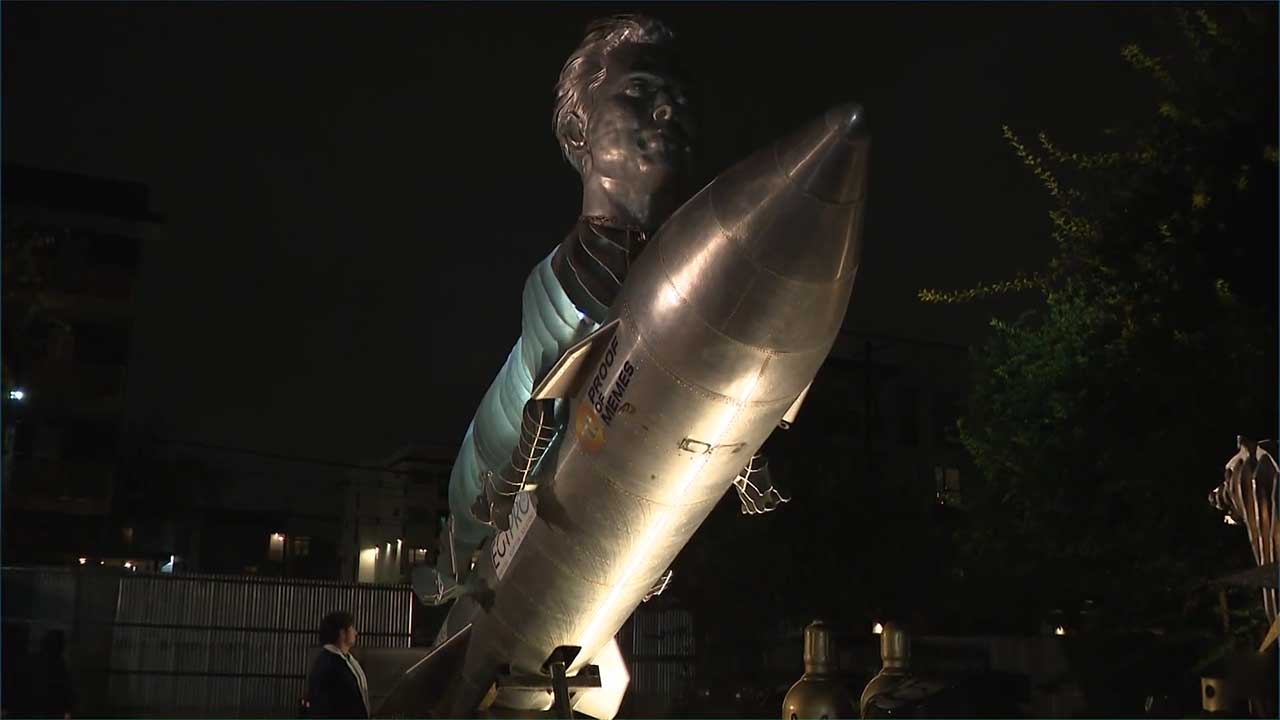
Musk’s relationship with monumental art is not theoretical. Over the past year, a giant sculpture of his likeness has been hauled around national parks, turning highways and overlooks into impromptu galleries. One account describes how a large statue of Elon Musk was seen driving around Arches National Park, with reporter Kevin Lind noting that the spectacle unfolded on a Fri morning at 11:42 AM PDT and quickly drew crowds. Another report recounts how, On Saturday, a massive Elon Musk head appeared on a trailer in Yellowstone National Park, where the creator explained the project as a kind of roving commentary on technology and the outdoors. When the same figure who inspires such mobile monuments amplifies a plan for a permanent colossus, it blurs the line between civic landmark and influencer era stunt.
From George Washington to Prometheus: a new monument economy
The “tallest statue in the West” proposal is not an isolated outlier, it is part of a new monument economy in which height, cost and virality are central to the pitch. The Texas based company More Monuments has been explicit about this strategy, promoting an Austin rooted effort to design a 500-foot statue of George Washington that would be mounted on a pedestal and marketed as a destination in its own right. In that account, More Monuments is described as Austin based, with backers arguing that a stainless steel George Washington would attract tourism and investment even as critics dismiss the plan as a monument al waste of time. The same project is outlined in another report that identifies the group as a Texas startup called More Monuments, which wants its Statue of George Wa to stand taller than the Statue of Liberty and to be financed in part by a digital coin that would, in the company’s words, fuel the monument.
Other entrepreneurs are pushing the logic even further. In San Francisco, Denver based cryptocurrency figure Ross Calvin has floated a plan for a colossal Prometheus figure on or near Alcatraz Island, with a projected budget of $450 million and a height around 50% taller than the State of Liberty. In that vision, the statue would double as a crypto marketing vehicle and a statement about human innovation, a combination that mirrors the way the “tallest statue in the West” proposal mixes patriotic rhetoric with the promise of social media buzz. When height and spectacle become core to the business model, the boundary between public art and branded infrastructure starts to erode.
How other giant statues frame the debate
Supporters of the new Western colossus often point to other large scale artworks to argue that size alone does not cheapen meaning. In Manhattan, for instance, a nearly 30 foot Buddha is set to tower over the High Line in 2026, part of an installation by artist Tuan Andrew Nguyen titled The Light That Shines Through. That project is framed not as a record setting stunt but as a meditation on memory and diaspora, with the Buddha figure overlooking the High Line and inviting passersby into a space of reflection. The scale is significant, yet the emphasis is on how the work connects to remembrance and preserves culture rather than on whether it is the tallest of its kind.
By contrast, the Western monument proposal and its George Washington and Prometheus cousins lean heavily on superlatives, promising to be the tallest, the most visible or the most technologically advanced. That framing shapes public expectations and criticism. When a project is sold primarily on its height, skeptics are more likely to question whether hundreds of millions of dollars and years of engineering should be devoted to a single figure instead of to parks, transit or housing. The Buddha on the High Line, the mobile Musk sculptures at Arches and Yellowstone, and the planned Guardian of Liberty each show different ways large scale art can function, from quiet contemplation to road trip spectacle to patriotic branding, and they provide the context in which Musk’s latest viral endorsement lands.
What a viral monument says about power, patriotism and platforms
When I look at the “tallest statue in the West” plan through the lens of these other projects, what stands out is not just the ambition but the dependence on attention as a form of currency. The organizers are not only courting donors and local officials, they are courting figures like Elon Musk whose posts can turn a fundraising campaign into a cultural flashpoint overnight. The fact that coverage of his involvement is intertwined with a Media Error glitch is almost symbolic, a reminder that the same platforms that can elevate a monument can also distort or derail the story around it.
More from Morning Overview