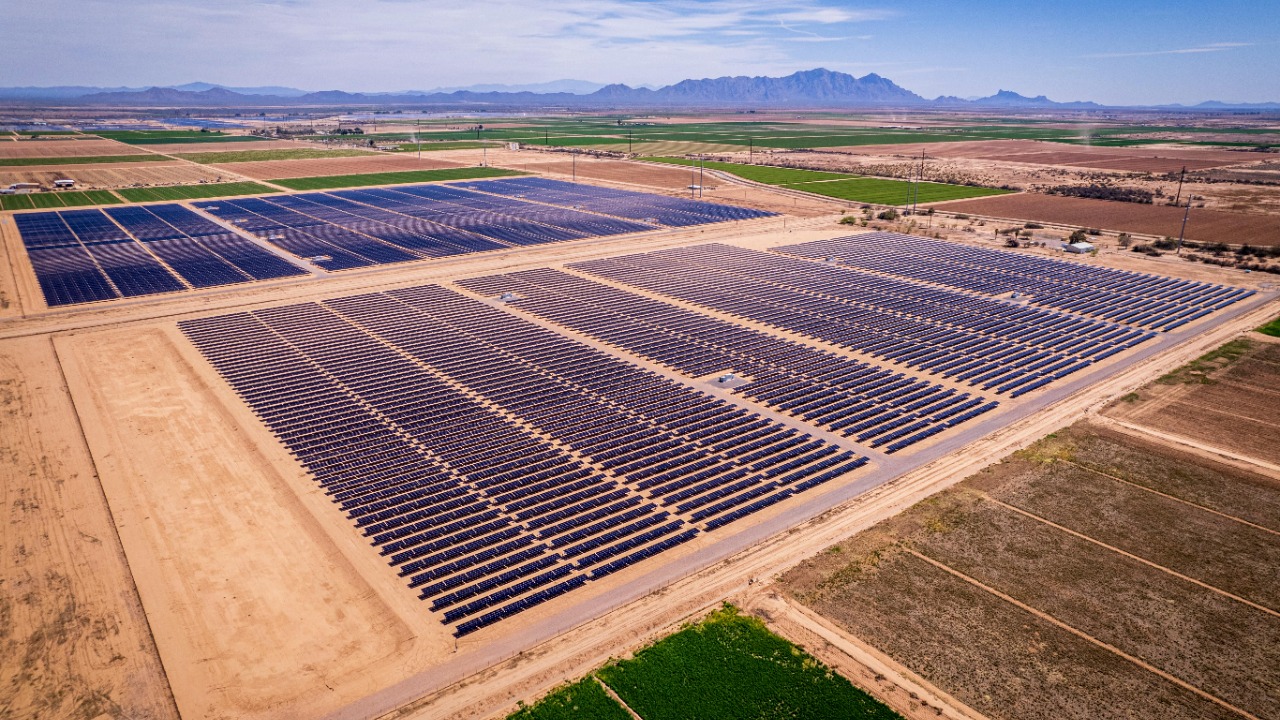

Across the rural United States, the fight over who controls farmland is colliding with the race to build clean energy. Local officials are freezing projects, federal agencies are pulling back support, and neighbors are turning on one another over fields that might host solar panels instead of soybeans. The fear that renewable energy will pave over the heartland is now powerful enough to slow projects that could bring new income to farmers and cheaper power to their communities.
Yet the data on land use tell a more complicated story, and the policy response is increasingly out of step with it. I see a widening gap between the perception that renewables are swallowing cropland and the evidence that they still occupy a tiny fraction of U.S. agricultural acres, even as real estate development quietly eats far more.
Farmland anxiety meets a tiny energy footprint
At the center of the backlash is a simple, potent idea: every acre of panels is an acre lost to food. Critics argue that solar and wind projects are now displacing productive fields at an accelerating pace, warning that energy developers, driven by subsidies and mandates, are stripping away rich soil. In Virginia, one prominent critic said he changed his mind about renewables after learning how much land they require, citing work from Princeton University to argue that large solar arrays hasten the loss of farmland.
The numbers from federal researchers, however, undercut the scale of that threat. A 2024 analysis by the USDA found that about 424,000 acres were used for wind and solar, roughly 0.05 percent of the 897 m total rangeland and crop acres in the country. Separate research from the USDA’s economic arm found that agricultural land near new projects usually remained in agriculture after development. In other words, the footprint of rural renewables is real but still marginal compared with the vastness of U.S. farmland.
Policy whiplash from Washington to county boards
Despite that small footprint, federal policy has swung sharply toward restricting renewables on cropland. In Lebanon, Tennessee, Secretary of Agriculture L. Rollins stood alongside Tennessee Governor Bill and announced that taxpayer dollars would no longer support solar panels on prime farmland, arguing that the top concern for farmers is access to land. Soon after, the USDA cut off funding for solar and wind energy projects on farmland, a shift that farm groups learned about through USDA communications and regional news coverage. On June 30, the same agency abruptly canceled the fiscal year 2026 application window for the REAP program that was supposed to run from July 1 to September 30, leaving rural businesses and co-ops that had been counting on REAP grants scrambling.
Congress is now weighing whether to lock that stance into law. The No Solar Panels on Fertile Farmland Act of 2025 would exclude expenses for certain property and facilities placed into service on high quality cropland from multiple energy related tax credits, effectively steering developers away from the most productive soils by rewriting the tax code, as detailed in the text of the No Solar Panels Fertile Farmland Act 2025. At the same time, Republican lawmakers who once championed on farm solar are retreating, sowing doubt among growers who had started to see panels as a hedge against volatile commodity prices, a shift that has been documented in reporting on the GOP retreat from solar and in follow up coverage of the American Farmland Trust warning that as much as two thirds of U.S. farmland is likely to change hands in the next 20 years.
Local flashpoints and the power of a single opponent
National policy shifts are landing in communities already riven by local fights. In Oregon, one retired teacher has become a symbol of how a determined critic can stall projects across an entire region. Irene Gilbert has spent years challenging permits and testifying against large solar farms, and this year lawmakers rejected a bill to promote solar that coexists with cropland after sustained pressure from opponents like her, as described in detailed accounts of how one woman has slowed green energy projects and in follow up reporting on Research at Oregon State University that found solar can be compatible with crops. That Oregon State University work suggests that with the right design, panels can shade sensitive plants and reduce water use, but the political momentum is running the other way.
Similar dynamics are playing out far from the Pacific Northwest. In rural Virginia, opponents cite the visual impact of large arrays and the fear of soil degradation, arguments amplified by commentary that solar installations are hastening the loss of farmland and by references to Jul analyses of land requirements. In many counties, planning boards are now adopting moratoriums or strict caps on project size, often after contentious hearings where residents invoke stories of failed farmland deals and warn that outside investors will leave behind a legacy of disaster and pain. A final, key factor in those failures, as one global review put it, is local opposition that cannot be overlooked and needs to be recognized as a real constraint on land intensive projects.
What is really eating farmland?
When I look at the land use data, the mismatch between what people fear and what is actually happening is stark. In the Carolinas, for example, most agricultural redevelopment is not going to turbines or panels at all. Developed areas, particularly low density residential development (LDR), comprise 78 percent of agricultural redevelopment, a figure that dwarfs the share tied to energy projects, according to regional analyses of Developed land and LDR growth. In Tennessee, an Aug. 19 news release cited that the state had lost 1.2 m acres of farm ground in the last 30 years and is expected to lose 2 million more by 2050, yet only a sliver of that has been converted to solar projects, a point underscored by advocates who argue that renewables are being scapegoated in An Aug policy debate.
The broader economic backdrop is also pushing farmers to look for new revenue streams. As much as two thirds of U.S. farmland is likely to change hands in the next 20 years, according to the American Farmland Trust, and many heirs are more interested in cash flow than in running a combine. Grain markets remain volatile, a reality that farm advisers highlight each spring when they remind clients that March is historically choppy for prices and that projections from The USDA Outlook Forum are strictly based on economic models, not guarantees. Against that uncertainty, a 25 year solar lease can look like a lifeline, which is why some row crop farmers who once championed renewables are now frustrated to see federal and state policies pull the rug out from under projects they had already penciled into their long term plans.
Rural communities caught between climate goals and local control
On the ground, the result is a patchwork of stalled projects and mixed messages. In many Rural Areas, local officials are hearing from residents who have read stories about solar farms muscling into U.S. farmland as energy needs spike, including accounts of how Increasing demand from electric vehicles and data centers is driving developers to seek large tracts of land. Row crop farmers who once saw panels as a side business now worry that, as one report put it, Row operations could be squeezed if too much acreage is locked into long term energy contracts. But those same stories also highlight emerging models where solar arrays are designed to produce energy and support agriculture at the same time, a concept known as agrivoltaics that is gaining traction in research and pilot projects.
More from Morning Overview