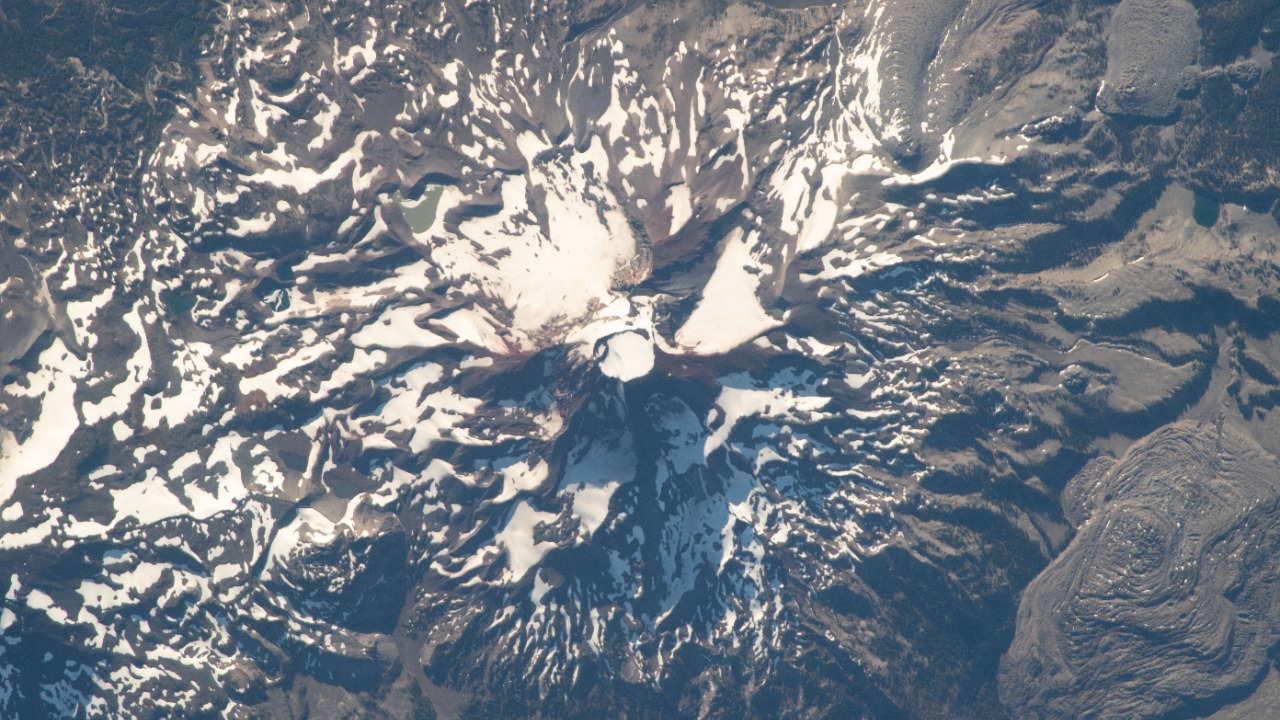

Buried beneath the high desert on the Oregon–Nevada line, an ancient volcanic scar is suddenly being talked about in the same breath as Saudi oil fields. Researchers say the McDermitt Caldera holds what could be the world’s largest lithium resource, with estimates pegging its value at roughly $1.5 trillion, a figure that would make it the biggest single stash of the metal ever identified in the United States. For a country racing to electrify everything from family SUVs to data centers, the idea that a dormant volcano in Oregon might anchor the next energy era is no longer science fiction, it is a live policy and investment question.
At stake is far more than a new mine. The scale of the discovery suggests a reshaping of global supply chains, a new front in the competition with China over battery materials, and an environmental test case for how far the United States is willing to go to secure critical minerals at home. I see McDermitt as a stress test of the clean energy transition itself: can the country tap a super-sized resource without repeating the worst habits of past mining booms.
The supervolcano hiding a $1.5 trillion prize
The McDermitt Caldera is not a household name, but in geological circles it is now shorthand for abundance. Multiple research teams describe a vast lithium-rich basin formed when a massive volcanic system erupted, then collapsed into itself, leaving behind a broad depression that gradually filled with mineral-laden sediments. One assessment of the basin’s clay-rich deposits concludes that the contained lithium, if fully developed, could be worth about $1.5 trillion, a figure that would eclipse any other known U.S. source and rival the largest deposits globally, with one World scale estimate putting the buried wealth at nearly that level.
Geologists trace the deposit to a sequence of volcanic and hydrothermal events that concentrated lithium in fine-grained clays across the caldera floor. Detailed Geologic work on the McDermitt Caldera describes how repeated eruptions, hot fluids and sedimentation over millions of years created an unusually thick, laterally extensive blanket of lithium-bearing minerals. That is what sets this basin apart from the brine flats of South America or the hard rock deposits of Australia: instead of a single rich vein, the entire volcanic bowl appears to be infused with economically attractive grades of Lithium.
From obscure basin to “world’s largest” lithium deposit
The story of McDermitt’s rise from obscurity to global headline begins with field campaigns that quietly ramped up several years ago. As exploration drilling expanded, Geologists working the Nevada–Oregon border started to argue that the caldera might host the largest single lithium accumulation yet documented, a claim that has since been echoed in technical reports and investor presentations. One early analysis framed the find as the potential world’s largest deposit, a label that has stuck as more data have come in.
Subsequent coverage has reinforced that framing, describing a dormant volcanic basin in Oregon that hides a lithium trove valued at $1.5 trillion and highlighting how the McDermitt Caldera in Oregon is drawing intense interest from researchers and policymakers alike. One recent synthesis of the science and economics notes that the Caldera is now viewed as a strategic asset, not just a geological curiosity. That shift in language matters, because it signals that the debate has moved from “is this real” to “how fast can it be brought into production and on what terms.”
Why McDermitt matters for EVs, China and U.S. supply chains
The timing of this discovery could hardly be more consequential. Analysts tracking battery metals expect the global lithium market to swing from surplus to deficit starting in 2026 as electric vehicle sales and grid storage projects accelerate, a trend that one Jan market review links directly to accelerating battery demand. In that context, a single basin that could supply a significant share of global needs for years looks less like a curiosity and more like a pressure valve for the entire clean energy transition.
There is also a geopolitical edge. One assessment of the McDermitt Caldera estimates that it contains 40 million tons of lithium, a volume that could represent a double digit share of known global resources and materially reduce U.S. dependence on China for refined supply. Reporting on the deposit explicitly frames it as a way for the United States to be less dependent on China, a country that currently dominates processing and cathode production. If even a portion of McDermitt’s clay can be converted into battery-grade chemicals at scale, it would give U.S. automakers and energy companies a domestic anchor for long term contracts, from mass market EVs like the Chevrolet Equinox EV to heavy duty storage systems feeding data centers.
How a 16‑million‑year‑old volcano became a modern gold rush
To understand why so many companies are suddenly staking claims in a remote desert, it helps to look back 16 million years. Geological reconstructions describe how the McDermitt Caldera formed when a massive volcanic complex erupted, then collapsed, leaving a depression roughly 28 miles long and 22 miles wide along what is now the Nevada–Oregon border. Over time, mineral rich volcanic ash and hydrothermal fluids settled into this basin, concentrating lithium in clays that now blanket the area, a process that detailed Caldera studies link directly to the present day resource.
That deep time story is now colliding with a very contemporary rush to secure supply. Commentators have described the emerging mine plans as a modern gold rush, noting that a lithium operation has already been identified within the McDermitt Caldera on the Nevada side and that the structure stretches across both Nevada and Oregon. Legal and environmental analyses of the project emphasize that the Caldera is roughly 28 miles long and 22 miles wide, a footprint that hints at why companies and regulators alike see it as a once in a generation opportunity. Another account of the “wonderful McDermitt Caldera discovery” stresses that researchers first flagged the basin in 2023 and that the resulting mine could put China at a disadvantage by supplying enough material for hundreds of thousands of EVs per year, a point underscored in coverage that highlights how the Caldera could feed a thousand EVs per year per processing line.
Federal fast‑tracking, local pushback and the Oregon front
As the scale of the find has become clearer, federal agencies have moved to accelerate exploration on the Oregon side of the border. Interior officials are weighing streamlined approvals for early stage work in southeast Oregon, a shift that has alarmed conservation groups. One report notes that The Reno based nonprofit that reviews mine proposals and works to protect habitat in the region is urging caution, with its representative Hadder arguing that the government should require full environmental review before opening the door to large scale extraction in Oregon. That tension between speed and scrutiny is likely to define the next phase of the project.
At the same time, industry and government are quietly building the scaffolding for a regional lithium hub. A renewed geological assessment of the McDermitt Caldera on the Oregon–Nevada border has confirmed that the site holds what could be a record deposit, and federal summaries describe how this assessment is being used to benchmark McDermitt against other domestic sources. One detailed account of the government’s strategy explains that the United States has set its sights on this extraordinary $1.5 trillion find in two states and that recent evaluation work is helping officials decide what kind of infrastructure and incentives the government is looking for, a process laid out in coverage that highlights how evaluation of battery grade lithium carbonate prices is feeding directly into policy.
More from Morning Overview