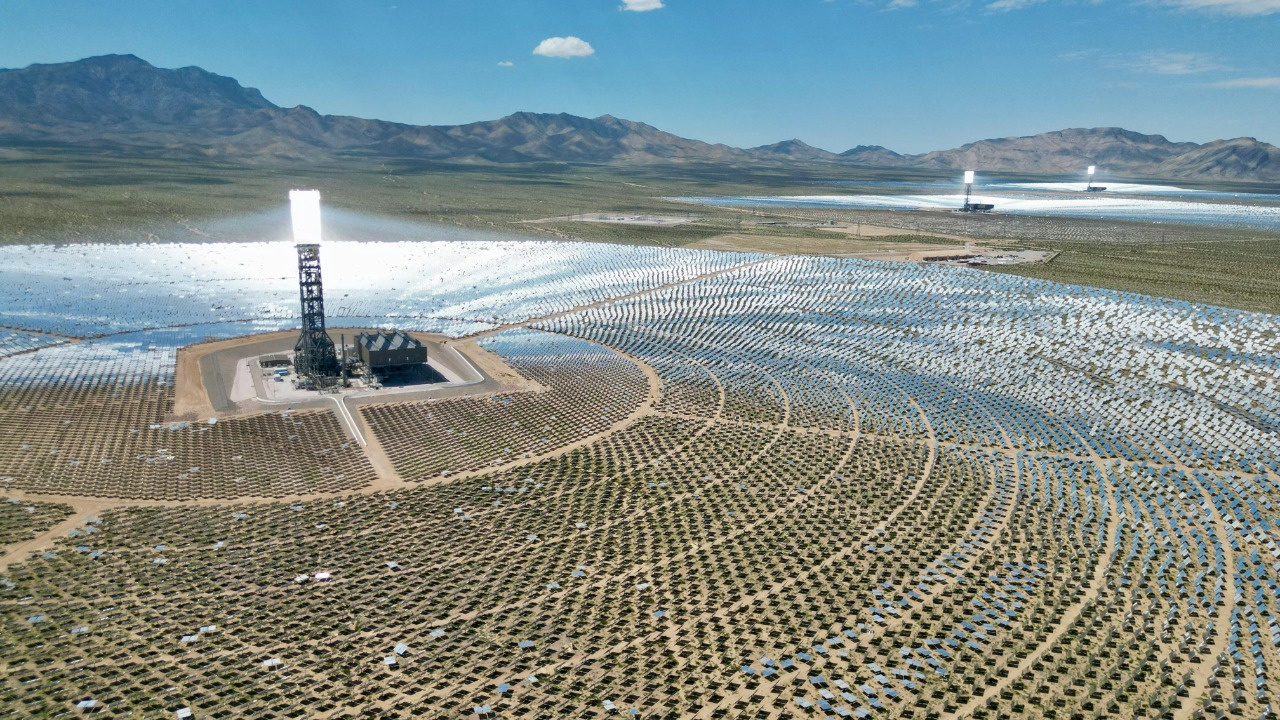

Across a swath of parched farmland in California’s Central Valley, one of the world’s biggest solar farms is moving from idea to reality, promising to turn fallowed fields into a new kind of power plant. The project is designed not just to generate vast amounts of electricity but to store it, reshaping how the state keeps the lights on after dark. If it succeeds, it will redefine what large scale clean energy looks like in the United States and test whether solar can anchor a more resilient grid.
The stakes are unusually high. California is already a global symbol of both climate risk and climate ambition, and this mega project will unfold in a region that has been squeezed by drought, water cutbacks, and economic uncertainty. The outcome will help determine whether solar can deliver durable prosperity to rural communities while backing up a grid that is under pressure from heat waves, wildfires, and rising demand.
The 21 GW bet on Westlands’ water‑parched fields
The heart of California’s next solar leap sits inside the Westlands Water District, a vast irrigation area that has seen large tracts of land taken out of production as groundwater rules tighten and surface supplies shrink. Rather than let those acres sit idle, the district has approved an enormous clean energy buildout that would cover former farm fields with panels and batteries. The plan is to turn a liability, land that can no longer reliably grow crops, into an asset that can generate power and lease revenue for decades.
Earlier this month, Jan reporting detailed how the district signed off on a staggering 21 gigawatts of combined solar and battery capacity, a scale that would make it the largest solar‑storage complex in the country once fully built. A companion account noted that Westlands Water District gigawatts on water‑parched fields in the Central Valley, with construction expected to stretch over roughly a decade. That long runway reflects both the engineering challenge and the need to phase in transmission, interconnection, and financing for a project that rivals the output of a fleet of conventional power plants.
How a Central Valley mega farm could reshape power and local economies
For Fresno County and its neighbors, the solar buildout is not just an energy story, it is an economic one. Large parts of the Central Valley have been hammered by groundwater restrictions and crop shifts, leaving farmworkers and small towns exposed to job losses and shrinking tax bases. By converting retired fields into energy infrastructure, local leaders are betting that construction work, long term operations jobs, and new property tax revenue can soften the blow of a changing water regime.
Coverage of the project’s arrival in Fresno County has emphasized that more electricity on the grid could eventually ease utility bills while expanding the local tax base. The same reporting underscored how, as more generation comes online, that utility power could become cheaper and, furthermore, how the county stands to gain from new assessments on high value energy assets. Plus, the project gives farmers a way to keep earning income from land that can no longer reliably support thirsty crops, a shift that could stabilize communities that have been whipsawed by drought.
California’s broader solar‑plus‑storage buildout
The Westlands plan does not exist in isolation. It is part of a statewide wave of solar‑plus‑storage construction that is rapidly changing how California generates and manages electricity. Across the state, developers are pairing large photovoltaic arrays with battery‑energy storage systems so that solar power can be shifted into the evening hours when demand peaks and the sun is down. That shift is essential if the grid is to rely on renewables without leaning heavily on gas plants after dark.
Industry data show that California’s renewable‑generation projects under construction already include billions of dollars in solar power and battery‑energy storage systems, often referred to as BES, with many slated to come online around the end of 2025. One flagship example is the Eland Solar‑plus‑Storage project, a $2 billion complex developed in two phases, Eland 1 and Eland 2, to help keep the lights on in Los Angeles when reliable electricity is most critical. Eland 1 reached commercial operation in December 2024 and Eland 2 is scheduled to enter service soon, illustrating how quickly large hybrid plants are moving from blueprint to reality.
Lessons from the desert: scale, land, and political risk
California’s push into mega solar has not been smooth, and the state’s deserts offer a cautionary tale about both scale and technology choices. In the Mojave, developers have proposed projects that stretch across thousands of acres, raising questions about habitat, cultural resources, and visual impact. At the same time, some of the earliest big bets on concentrated solar power have struggled to meet expectations, giving critics ammunition and forcing regulators to rethink how they evaluate risk.
One current proposal, AES’s Bellefield Solar + Storage Project, would be Even larger than many existing plants, with a planned capacity of 1.5 G and a footprint that could extend across as much as 8,371 acres in unincorporated desert. On the other side of the ledger sits the Ivanpah facility, a concentrated solar plant in $2.2 billion project in California that is scheduled to be turned off after years of underperformance and criticism that it Never lived up to its promises to efficiently generate solar energy. Together, these examples highlight the fine line between ambitious innovation and costly misstep, a line the Westlands project will have to navigate carefully.
From top‑ten lists to grid backbone
When analysts first began tallying the largest solar farms in the country, the numbers looked impressive for their time but modest by today’s standards. A decade ago, lists of the top installations in the United States highlighted projects whose output hovered around 75 megawatts, enough to power tens of thousands of homes but nowhere near the multi‑gigawatt scale now on the table. The Westlands plan, at 21 gigawatts, would eclipse those early landmarks by two orders of magnitude, signaling how quickly solar has moved from niche to backbone resource.
That shift is already visible on the grid. In Kern County, a Major clean power plant has gone fully online, combining solar and storage to serve Los Angeles even as national politics swirl around its future. At the same time, climate‑focused outlets such as Good Climate News have highlighted the 21 GW Solar Project in California, with writer Daniel Barkeley noting how a single water district’s decision can ripple across markets and policy debates. As these mega projects stack up, they are no longer curiosities, they are becoming the infrastructure that will determine whether California can meet its climate goals while keeping power reliable and affordable.
More from Morning Overview