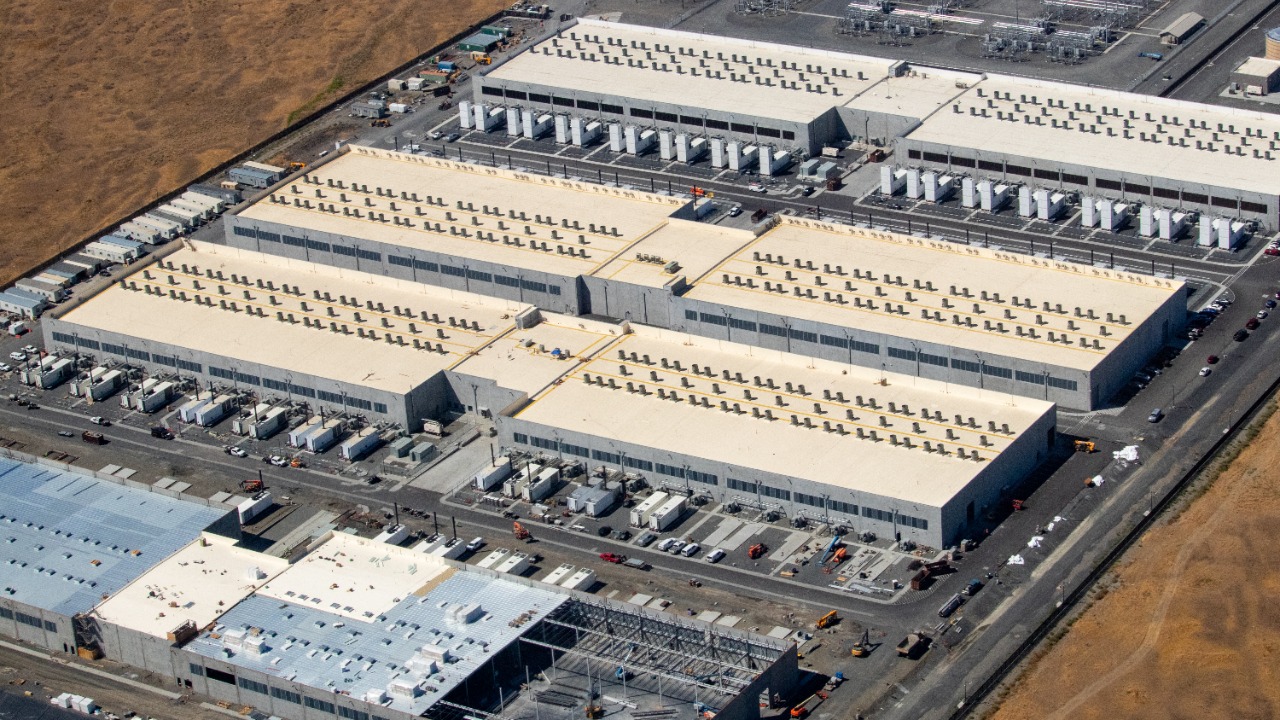

In a fast-growing suburb outside Columbus, parents are learning that the power behind the cloud may be coming from their own backyard, just beyond the school fence. A massive fuel cell power plant tied to an Amazon Web Services data center has been cleared near a local school without a direct vote from residents, leaving families furious at how little say they had. The fight in Hilliard, Ohio, has become a test of how far state law and big tech can go in reshaping local neighborhoods over community objections.
At the center of the dispute is a 73-megawatt industrial energy project that would sit next to classrooms and playgrounds, serving a private data center rather than the town’s homes. Parents and city leaders argue they were sidelined by a state-level process that bypassed local zoning and public consent, even as they now scramble to challenge permits and organize opposition. Their anger is not only about what is being built, but about who gets to decide what risks a community must live with.
The quiet rise of a data center town
Hilliard has long marketed itself as a family-friendly corner of central Ohio, an “All-American” suburb where subdivisions back up to parks and school campuses. That image is now colliding with the reality that the town has become a strategic hub for Amazon Web Services, with large data centers rising behind backyard fences. In one widely shared clip, an All-American Hilliard neighborhood is shown ending in a park, while just beyond the fence line sits an Amazon data complex that residents say they never expected to see so close to their homes.
Amazon Web Services, the cloud arm of Amazon, has been expanding its footprint in the region to power everything from streaming video to corporate software. The company’s infrastructure is energy hungry, and the new fuel cell system is designed to provide on-site power to one of these facilities rather than feed the local grid. For many residents, the transformation of Hilliard into a data center corridor was gradual enough to escape broad public debate, until the power plant proposal near a school made the stakes impossible to ignore.
A 73-megawatt plant next to a school
The flashpoint is a proposed 73-megawatt fuel cell installation that would sit on the grounds of an Amazon data center under construction on Scioto Darby Road, close to a local school campus. City documents describe the project as an on-site system meant to provide supplemental power to the facility, not a traditional utility plant serving households. The city’s own appeal notes that the 73-megawatt scale is far beyond what residents expected to see next to classrooms, and it seeks to block the fuel cell system that would support the Amazon data center on Scioto Darby Road.
State filings and company materials describe the project as a fuel cell array that converts methane into electricity, a technology often promoted as cleaner and more efficient than traditional combustion engines. Reporting on the plan notes that these fuel cells are intended to run on natural gas, with the power routed directly into the data center’s systems rather than into neighborhood lines. For parents, the technical details matter less than the basic fact that a 73-megawatt industrial power source would operate within sight of school buildings, raising questions about air quality, noise, and emergency planning that they say have not been fully answered.
How state law cut Hilliard out of the decision
What has inflamed local anger is not only the size of the project, but the way it was approved. City leaders say a recent change in State law effectively stripped Hilliard’s planning bodies of their usual power to review and modify the site plan for the AWS fuel cell system. In a public explanation, the city said that state regulators, not local boards, now control key approvals for this type of energy infrastructure, leaving Hilliard officials to watch from the sidelines as the project advanced.
That shift has turned a zoning dispute into a broader fight over home rule. Residents argue that decisions about whether a 73-megawatt plant belongs next to a school should be made in Hilliard, not at a distant state office. City communications staffer Andrea Litchfield framed the issue as one of local oversight, explaining that the AWS fuel cell system was treated as a modification to its site plan that the city could not fully control. For families who assumed that something this consequential would trigger public hearings and a local vote, the revelation that state law had overridden their city’s review process felt like a betrayal.
Parents, petitions and a social media revolt
In the absence of a formal vote, Hilliard residents have turned to organizing and social media to make their objections impossible to ignore. A local Facebook group describes a growing Controversy regarding the Amazon Web Services fuel cell system in Hilliard, Ohio, urging neighbors to demand that the project be addressed at the local level. Posts in that group and others share maps, permit documents and photos of the school’s proximity to the data center, arguing that the community was never given a fair chance to weigh the risks.
Local activists have rallied under the banner “RISE-UP HILLIARD! PLEASE SIGN THE AMAZON PETITION,” using television segments and social posts to drive residents to a petition site. One broadcast clip shared online shows a chyron reading RISE-UP HILLIARD! PLEASE SIGN THE, directing viewers to sign the petition against the project. Another station’s post repeats the call to action, with the same “RISE, HILLIARD, PLEASE, SIGN, THE, AMAZON” language urging residents to get involved through HILLIARD-branded organizing. For parents who feel shut out of the formal permitting process, these petitions and viral videos have become a substitute for the public hearing they never got.
City hall pushes back as national spotlight grows
City leaders, facing the same state constraints as residents, have begun to push back through legal channels. Hilliard has filed an appeal of the Ohio Environmental Protection Agency’s decision to permit the fuel cells, explicitly seeking to block the 73-megawatt on-site system that would power the data center on Scioto Darby Road. The appeal argues that the project’s scale and location near a school warrant a more cautious review, and it frames the challenge as a defense of the city’s ability to protect its own neighborhoods, according to the city’s appeal summary.
As the legal fight unfolds, national attention has begun to focus on the human stakes. Coverage shared through Ohio-focused reports describes Residents of a small town watching a huge Amazon power plant near a school move forward without local consent. One widely read story, which drew 57 comments and cited timestamps of 08:38 EST and 08:40 EST, portrayed Hilliard as a town of nearly 40,000 grappling with the tradeoffs of hosting a global tech giant. In that account, By JAMES CIRRONE, US NEWS REPORTER, the narrative is clear: Residents of Hilliard are being asked to shoulder the environmental and safety risks of a private energy project that primarily benefits a distant corporate customer.
More from Morning Overview