
Across the United States, officials are racing to blunt the impact of soaring electricity and gas prices with a new generation of large scale energy projects. From nuclear fuel production in the Pacific Northwest to sprawling solar and transmission builds in the Midwest and West, the focus is shifting from short term bill credits to structural changes that can permanently lower costs.
The latest wave of announcements promises to cut utility bills for millions by pairing massive infrastructure with targeted state level reforms. I see a clear pattern emerging: governments and private companies are betting that cheaper, cleaner power and smarter grids can deliver both affordability and resilience in an era of volatile energy markets.
A nuclear scale bet on cheaper power
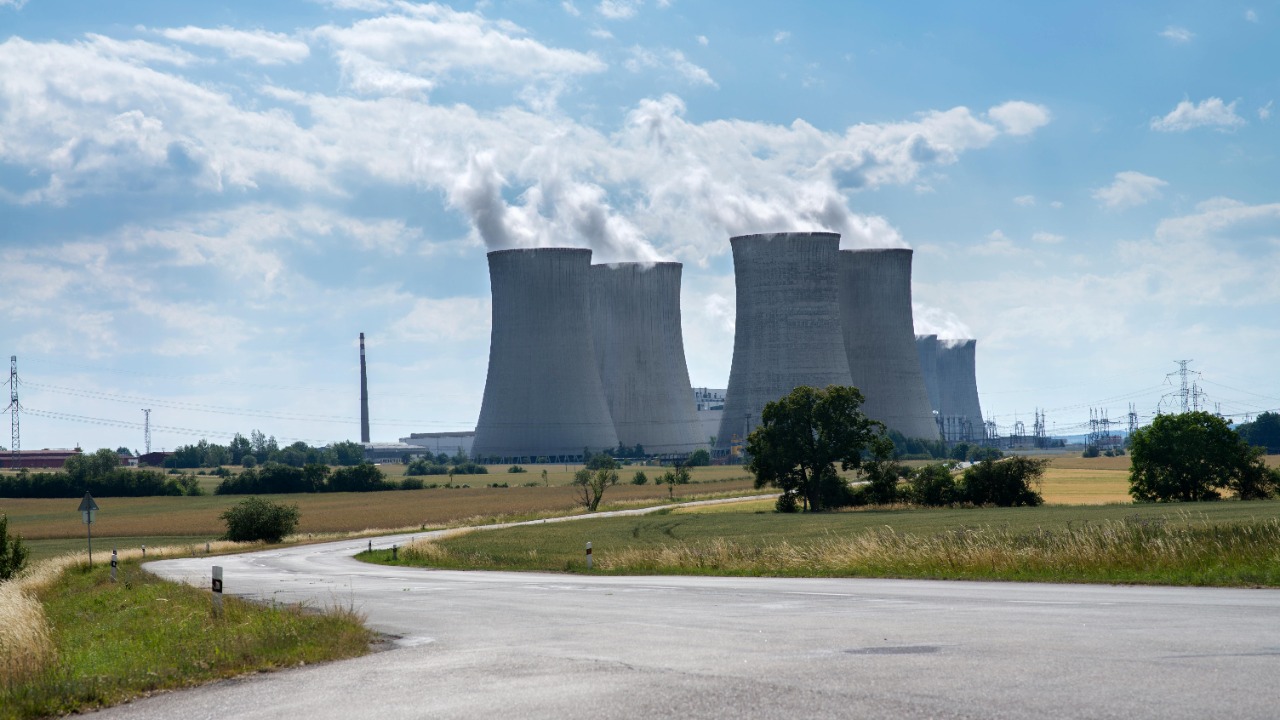
One of the most consequential moves is unfolding at the Hanford site in Washington state, where federal officials have assigned a new mission aimed at what they describe as an American nuclear renaissance. The plan centers on repurposing a Hanford facility to support advanced nuclear fuel production, a shift that federal leaders frame as critical to long term energy security and to keeping future electricity prices in check. The initiative is being positioned as part of a broader push to expand reliable, carbon free baseload power that can stabilize grids as more intermittent renewables come online, with the Department of Energy casting the project as a cornerstone of that strategy in its new mission.
Behind that shift is a complex supply chain effort that includes specialized fuel known as HALEU, or high assay low enriched uranium, which advanced reactors are expected to use. Federal officials have awarded work not only at Hanford but also to companies such as Centrus Energy subsidiary American Centrifuge Operating, which is being supported to expand HALEU enrichment capacity as part of a trio of awards described in nuclear fuel reporting. The logic is straightforward: if the United States can secure its own advanced fuel supply and deploy reactors that run more efficiently and flexibly, it can reduce exposure to global gas price spikes that have driven recent bill shocks.
The nuclear buildout is also being framed as part of a resilience agenda shaped by extreme weather and geopolitical risk. Federal guidance around Winter Storm 2026, which urged households to Visit the FEMA website for updates on Winter Storm Fern and to Visit USA.gov for broader federal resources, explicitly linked grid reliability to national preparedness in materials tied to the Winter Storm response. In that context, the Hanford pivot is not just about kilowatt hours, it is about insulating households from the cascading costs that follow blackouts and fuel shortages.
States move from bill patches to structural reform
While nuclear projects will take years to fully materialize, governors are under pressure to deliver relief now, and some are trying to marry short term help with long term change. In ANNAPOLIS, Governor Wes Moore has put forward the Lower Bills and Local Power Act as part of the Moor administration’s answer to rising utility costs, pitching it as a way to cut monthly charges while building more community based energy resources. The proposal, detailed in a Published announcement, would expand local generation and storage while targeting the fixed fees and rate structures that have quietly driven bills higher for Maryland families.
Governor Wes Moore has also highlighted the politics of affordability, with Gov Moore Introduced Legislation To Lower Utility Bills in ANNAPOLIS and used local outlets such as WBFF to promote the Lower Bills message as part of a broader Next Generation Energy Act vision. In that coverage, the Governor Wes Moore team has framed the package as a way to deliver direct bill rebates and to modernize procurement so that new projects are competitively sourced and quickly built, as outlined in Gov materials. Parallel legal analysis of Maryland’s resource adequacy challenges notes that the overall legislative package includes comprehensive measures for expedited competitive procurement of a diversity of energy storage and generation resources, along with measures to facilitate siting of these projects, according to a detailed resource adequacy review.
Rate cuts, rebates and the politics of pain
Other states are leaning on direct subsidies and rate design experiments to cushion households while bigger infrastructure comes online. In Massachusetts, Massachusetts Gov Maura Healey has rolled out a $180 million plan to temporarily slash residential electric bills by 25 percent and natural gas charges as part of a broader affordability push. The package, described as a $180 m intervention in social media summaries, is framed as a bridge that buys time for deeper reforms while acknowledging the political pressures created by high winter heating costs, according to reporting on the $180 million plan.
In California, a lawmaker is pushing to cut electricity rates by roughly a quarter, arguing that households should not be asked to shoulder the full cost of wildfire hardening and grid upgrades through their monthly bills. Coverage of that proposal notes that a California Democrat wants to slash energy rates by 25 percent and has sparked debate over how utilities recover the cost of wildfire related work, as described in reporting by Noah Baustin that highlights the affordability push in California. A separate version of that coverage underscores that Noah Baustin, whose byline appears twice along with a Copy to clipboard note and an EST timestamp, has focused on how the proposal would reshape cost recovery for wildfire related work in Copy tagged material.
Pennsylvania is taking a different tack by targeting what officials describe as excess utility profits and opaque charges. Governor Shapiro has publicly pointed the finger at the regional grid operator PJM for higher electricity costs, arguing that market rules and capacity payments have padded company revenues while customers struggle. In one detailed account, Shapiro also took aim at PJM over decisions that he said contributed to rate hikes, a critique laid out in Shapiro focused coverage. A separate version of that report, which again names Shapiro and PJM, emphasizes his plan to crack down on so called junk fees and to extend caps on certain charges, as detailed in a follow up PJM analysis.
Gargantuan plants, new lines and the grid of the future
Behind the politics, the physical grid is being reshaped by projects that would have seemed improbable a decade ago. In the western United States, Officials have unveiled a gargantuan energy plant spanning multiple sites and backed by Meta, with supporters arguing it will Enhance energy security and independence for data centers and surrounding communities. Reporting by Catherine Wilkins notes that the Sun belt location is designed to tap some of the country’s best solar resources while pairing them with storage and long term contracts that can stabilize prices, according to detailed coverage of the Officials announcement.
In the Midwest, grid companies are proposing a new generation of high voltage lines to move that kind of power where it is needed. In MINNEAPOLIS, Great River Energy, ITC Midwest and Xcel Energy have jointly proposed a 765 kV transmission line project, filing an application for a certificate of need that would unlock a series of new electric highways across the region. The plan, outlined in a corporate Newsroom release, is pitched as essential to integrating new wind and solar projects and to reducing congestion costs that show up on customer bills. A separate filing from the same companies underscores that Great River Energy, ITC, Midwest and Xcel Energy see the 765 kV build as a backbone for future reliability and affordability, as described in a follow on transmission summary.
More from Morning Overview