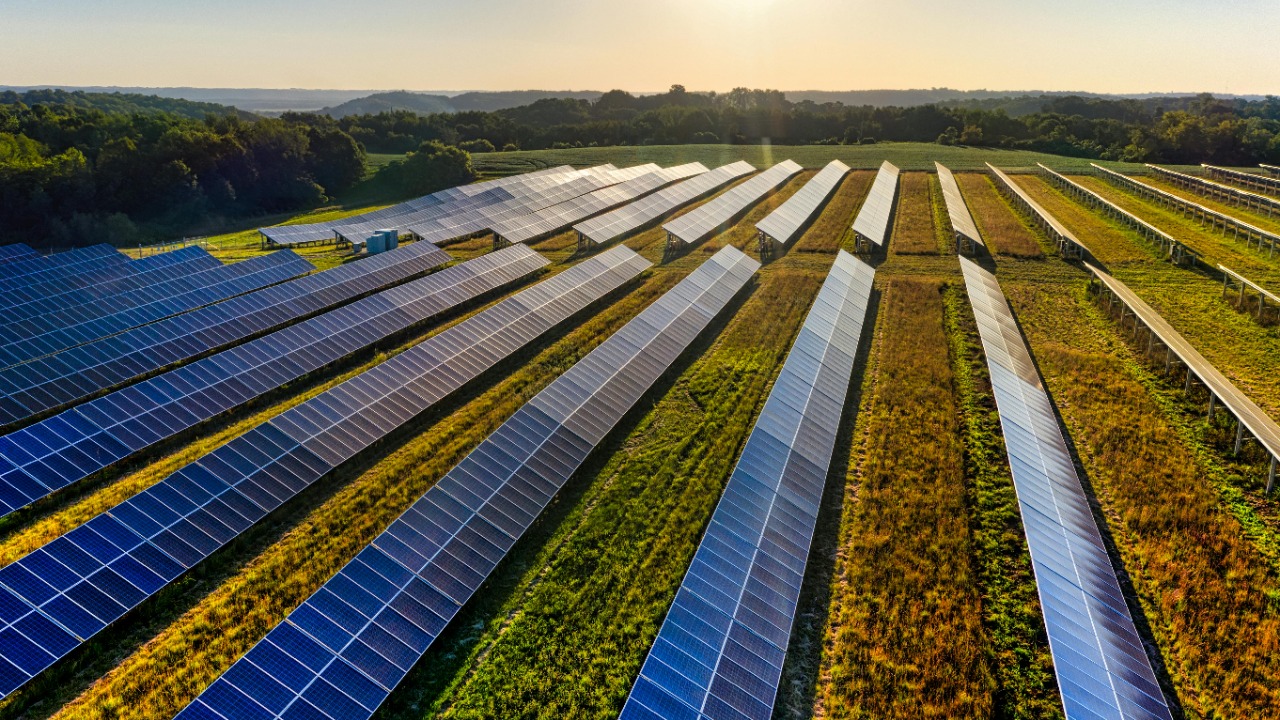

Across the country, political leaders are racing to blunt a surge in power prices that has hit households and small businesses with higher monthly bills. From the White House to state capitols, officials are now converging on a strikingly aggressive strategy: use public policy to unlock a wave of ultra cheap energy, pairing big new power plants with neighborhood-scale solar and storage so millions of customers see relief.
The emerging blueprint is not a single law or program, but a stack of coordinated moves that stretch from federal nuclear investments to state-level reforms of utility rules. Taken together, they amount to one of the most ambitious attempts in years to reset how Americans pay for electricity, and who benefits from the next generation of energy infrastructure.
Big federal bets on cheap, firm power
At the center of the federal push is a quiet but consequential shift inside the Department of Energy, where Jan marked one year of an agenda built around lowering costs and shoring up reliability. Officials at DOE have taken numerous actions to accelerate next generation nuclear technology and restore domestic supply chains, arguing that firm, around the clock power is essential if cheap electricity is going to be more than a slogan. One flagship project is a new advanced reactor that is expected to deliver 850 megawatts of electricity, a scale that can anchor regional grids and help flatten wholesale prices.
The financial backbone for that strategy is laid out in the DOE FY 2026, which frames access to domestic sources of affordable and reliable energy as the foundation of a prosperous, secure, and powerful America for decades to come. By steering billions toward grid modernization, storage and nuclear demonstration projects, the plan aims to compress the cost of capital for technologies that can run when wind and solar are not available. In practical terms, that means federal taxpayers are absorbing early risk so that ratepayers can benefit from lower long term prices once projects are operating.
The Trump administration’s return to big power plants
While DOE leans into advanced reactors, the political spotlight has swung to President Trump and a renewed embrace of large scale fossil and nuclear plants as a direct tool to cut bills. According to a recent fact sheet, TRUMP ADMINISTRATION IS in the Mid Atlantic more affordable and reliable by clearing the way for new big power plants and reversing earlier policies that had forced the shutdown of existing capacity. The administration argues that concentrating generation at large, dispatchable facilities will decrease the risk of blackouts and give grid operators more leverage to keep wholesale prices in check.
That federal posture is already shaping state level debates. Reporting by Tamir Kalifa for The New York Times, in a piece written By Ivan Penn and Rebecca F. Elliott, describes how President Trump and Democratic and Republ lawmakers are now converging on the idea that new power plants, if structured correctly, could bring down energy costs a lot sooner than incremental efficiency programs alone. I see a clear political calculation in that alignment: big projects are visible, promise jobs, and can be sold as a direct answer to voter anger over soaring bills.
Congressional blueprints for ultra cheap energy
On Capitol Hill, lawmakers are trying to translate those broad goals into detailed consumer protections and targeted subsidies. In WASHINGTON, Today, Congresswoman Kristen McDonald Rivet introduced the Affordable Food and Energy Act of 2026, which is designed to make it easier for low income families to receive full assistance on both grocery and utility costs. By tying energy relief to broader affordability measures, the bill treats electricity not as a luxury but as a basic input to household stability, and it signals that Congress is willing to use direct transfers alongside infrastructure spending.
Another major effort is emerging under the banner of the Cheap Energy Agenda. In Sep, Reps. Mike Levin and Sean Casten Unveil the Cheap Energy Agenda, a Roadmap to Lower Energy Costs for American Families that was rolled out in Washington. Their plan centers on the Cheap Energy Act, which, according to a separate policy document from Sep, would Restore the historic tax credits for cheap energy that Congress enacted in 2022 and revoked in 2025, and Ensure competition and consumer choice in energy. I read that as a bet that unleashing more private investment, underpinned by predictable tax policy, can drive down prices faster than direct rate regulation alone.
States race to localize cheap power
Even as Congress debates national frameworks, governors and state legislators are moving ahead with their own rescue plans. In New Jersey, a detailed proposal described as a rescue plan for surging electric costs urges reforms for PJM, stricter data center accountability, limits on utility profits and smarter electric vehicle charging rules, all aimed at stabilizing costs for ratepayers. The theory is straightforward: if the regional grid operator and large industrial users face tighter guardrails, households will not be left holding the bag when demand spikes or speculative projects drive up capacity prices.
Maryland is going a step further by directly financing neighborhood scale clean energy. In Jan, Governor Moore announced the Lower Bills and Local Power Act, promising to finance shovel ready solar plus storage projects so utilities are held accountable and the most cost burdened communities see benefits first, according to a statement from the governor’s office that framed the legislation as a way to deploy affordable local energy. The same initiative, as detailed in a separate report, would create a $70 m Solar and Energy Storage Gap Financing Program to fund community projects, building on earlier efforts that delivered $200 million in energy rebates. I see that as a test case for whether targeted public finance can rapidly scale rooftop and community solar in ways that directly show up as lower bills.
Unlocking low cost energy for millions of households
The most explicit promise to deliver ultra cheap energy is emerging in state legislatures that are rewriting the rules for who can buy and sell power. In Jun, Lawmakers in The Pennsy region approved a bill that could unlock low cost energy for millions of households, with supporters calling it a critical moment and stressing the importance of acting now. The measure is designed to open access to cheaper wholesale power and community generation projects, effectively letting ordinary customers tap into the same markets that large industrial users have long used to secure better rates.
Those structural changes are unfolding alongside more targeted affordability programs. The Lower Bills and Local Power Act, as described in the governor’s announcement, would channel $70 million into closing financing gaps for solar and storage, while the Affordable Food and Energy Act of 2026 would ensure that low income families receive full assistance rather than partial relief that erodes as prices rise. Taken together with federal nuclear investments and the Cheap Energy Act’s focus on restoring tax credits and competition, these moves amount to a bold, if still untested, plan to rewire the economics of the grid so that cheap energy is not just produced in bulk, but actually reaches the people who need it most.
More from Morning Overview