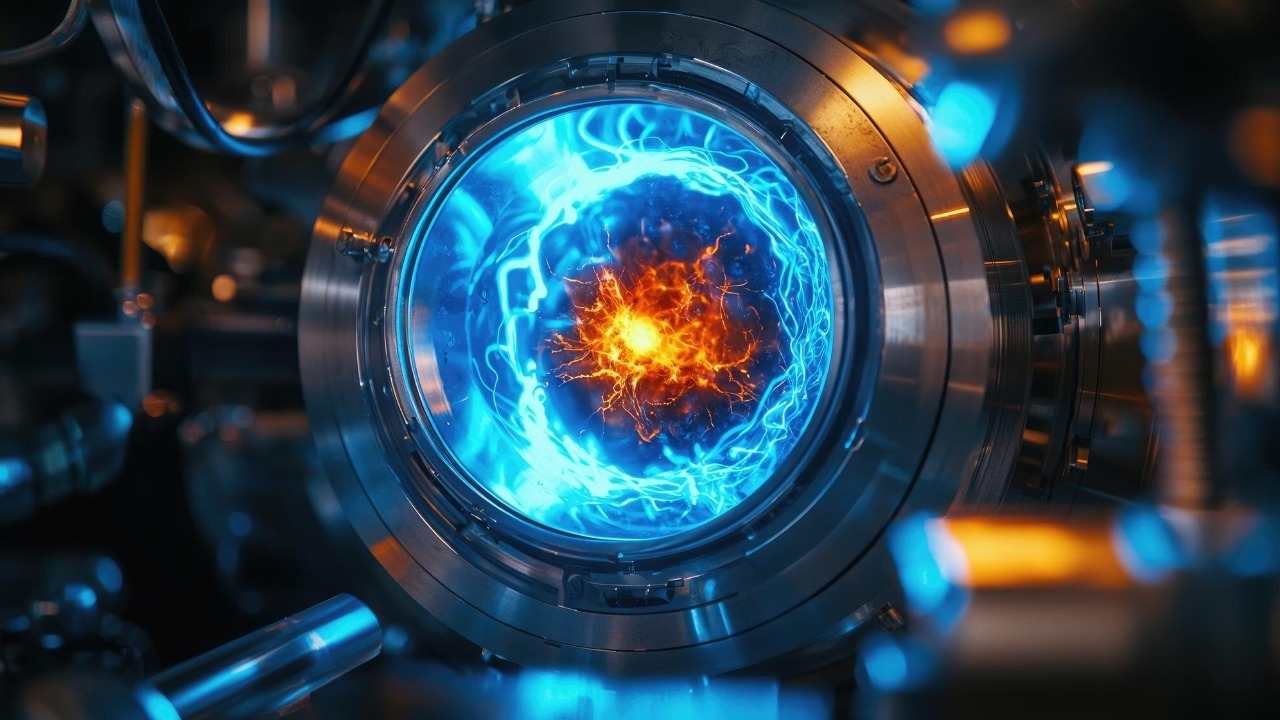

Nuclear fusion has long promised virtually limitless low carbon power, but the machines that might deliver it are notoriously hard to build and even harder to fix. A new generation of “plug and socket” magnets is now tackling that problem directly, turning what used to be a near permanent installation into hardware that can be unplugged, lifted out and replaced. By making the most delicate parts of a fusion reactor remountable, engineers are trying to turn experimental science into something that looks much more like a serviceable power plant.
The first tested remountable magnets are arriving just as fusion developers race to prove that their designs can run reliably for years, not just for record breaking pulses. The shift is subtle but profound: instead of treating superconducting coils as one off monuments, projects are starting to design them as modular components that can be swapped, upgraded and inspected on a regular schedule.
The STEP plug and socket breakthrough
At the United Kingdom’s STEP program, short for Spherical Tokam, engineers have now tested the first remountable fusion magnets that can be disconnected and reattached like a giant industrial plug. The concept is simple in outline and brutally complex in execution, because the joints must carry enormous currents while surviving intense neutron bombardment and cryogenic temperatures. According to reporting on the UK effort, the new approach is intended to turn the magnets in a future power plant from a once in a decade intervention into equipment that can be unplugged and removed with planned downtime rather than heroic maintenance campaigns, a shift that directly targets the slow, complex and expensive repair work that has dogged earlier machines such as large tokamaks and stellarators STEP magnets.
The same work is described as a repair boost for future reactors, because it allows the most stressed coils to be treated as consumable modules rather than irreplaceable infrastructure. Engineers at STEP are effectively betting that the only way to make fusion commercially credible is to design for failure from the start, building in joints, access paths and lifting points so that a damaged magnet can be swapped in something closer to a turbine outage than a multi year rebuild. In that sense, the plug and socket design is less a clever trick than a statement about what a fusion power station must look like if it is ever to compete with gas plants or offshore wind on availability and cost repair boost.
Why remountable coils matter for fusion economics
From an economic perspective, the ability to unplug a magnet is as important as squeezing a few extra percent of performance out of the plasma. Traditional superconducting coils are buried deep inside shielding and structural steel, so any fault can mean months of disassembly and reassembly, with cranes, remote manipulators and bespoke tooling. By contrast, a remountable design treats the magnet more like a generator rotor in a gas plant, something that operators expect to remove on a schedule, refurbish or replace and then return to service, a mindset that directly addresses the slow, complex and expensive maintenance that has limited uptime in earlier fusion experiments maintenance challenge.
That shift also matters for investors and grid planners who need to know whether a future fusion plant will behave like a reliable baseload asset or an experimental facility that spends long stretches offline. If magnets can be swapped in modular fashion, operators can plan outages, stock spare coils and even upgrade to improved designs as materials and manufacturing advance. In practical terms, remountable coils could turn fusion from a bespoke megaproject into a repeatable product line, with standardized magnet modules shipped to multiple sites and replaced in a way that looks familiar to anyone who has ever scheduled a major overhaul on a combined cycle gas turbine.
High temperature superconductors raise the stakes
The plug and socket idea is arriving just as high temperature superconductors, or HTS, are transforming what fusion magnets can do. At Tokamak Energy, engineers have been developing HTS coils that can run at higher fields and temperatures than traditional low temperature materials, which allows more compact reactors with stronger confinement. In its Demo4 program, Tokamak Energy has reported that its HTS magnets can generate the high fields needed for a power plant scale device, a result that underpins the company’s plan to build spherical tokamaks that are smaller than conventional designs but still capable of reaching the conditions required for net energy gain Tokamak Energy.
Those Demo4 results, which confirm that Tokamak Energy’s HTS coils can sustain the fields essential for a fusion power plant, are being followed by further testing with results due in early 2026, a timeline that underscores how quickly HTS technology is moving from laboratory prototypes to industrial scale hardware. The company’s work shows that high field magnets are no longer a distant aspiration but a near term engineering reality, and it is precisely that kind of robust, high performance coil that stands to benefit most from being remountable, since operators will want the option to replace or upgrade expensive HTS modules over the multi decade life of a plant Demo4 results.
Magnet races from CFS to GA
Commonwealth Fusion Systems, or CFS, has been pursuing a similar HTS path, but with its own distinctive technology stack built around what it calls PIT VIPER cables. In its CSMC program, The CSMC magnet has been used to demonstrate that CFS can secure an HTS supply chain, manufacture PIT VIPER conductors at scale and integrate them into a large coil that meets the field and stability requirements for its planned SPARC and ARC devices. The same work has highlighted the need to manage mechanical and thermal stresses that could damage the magnet if not addressed, a reminder that high field performance and long term durability must go hand in hand if fusion is to move from demonstration to commercial operation PIT VIPER.
In parallel, General Atomics has completed what it describes as the world’s largest and most powerful pulsed superconducting magnet for fusion energy, a coil built to support large scale experiments that probe the limits of plasma performance. That magnet, which pushes the boundaries of size and field strength, illustrates how far conventional, non HTS technology can still be stretched, but it also underlines the maintenance challenge, because such a massive coil is not something that can be easily removed once installed. The contrast with remountable designs is stark: where a monolithic pulsed magnet is effectively a fixed part of the building, a plug compatible HTS module can be treated as a replaceable asset, a difference that will matter as operators weigh lifetime costs and upgrade paths pulsed magnet.
From heroic experiments to serviceable power plants
Seen together, the STEP plug and socket coils, the HTS breakthroughs at Tokamak Energy and the CSMC work at CFS point to a fusion sector that is finally thinking like a power industry rather than a physics lab. Engineers are not just chasing higher fields or longer pulses, they are designing joints, connectors and cable architectures such as PIT VIPER that can be manufactured, inspected and replaced at scale. The fact that The CSMC has already been used to validate HTS supply chains and cable production, while STEP’s Spherical Tokam concept is testing remountable joints, suggests that the sector is converging on a model where magnets are modular products, not one off sculptures CSMC program.
More from Morning Overview