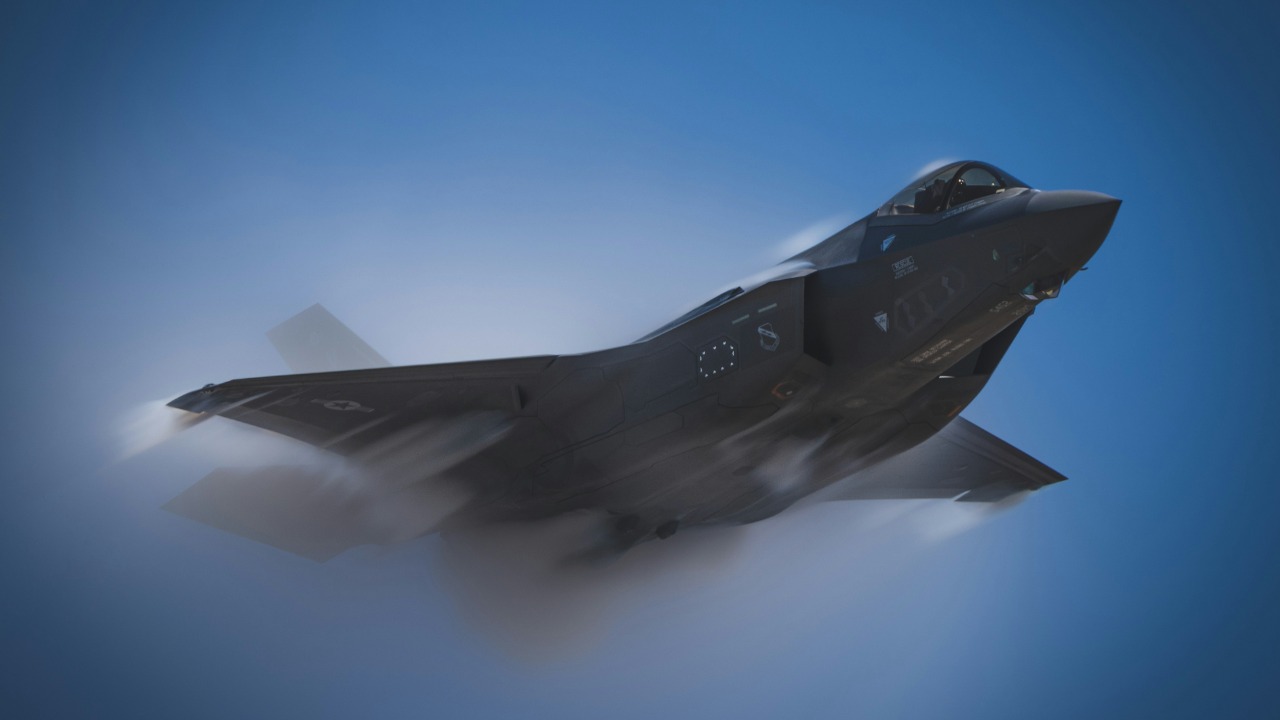

Military technology is pivoting from incremental upgrades to systems that fundamentally change how wars are fought, blending software, sensors and exotic physics into a single battlespace. From artificial intelligence that rewrites battle plans in real time to hypersonic engines and megawatt-class lasers, the next wave of inventions is less about bigger firepower and more about smarter, faster and harder-to-stop capabilities. I see a clear pattern emerging: the most disruptive systems are those that fuse digital brains with new forms of energy and motion.
AI as the new battle staff
Artificial Intelligence is no longer a lab curiosity for defense planners, it is becoming the organizing principle for how modern forces detect, decide and act. The War Department is already fielding new AI capabilities to sift through sensor feeds, classify targets and help commanders defeat unmanned threats, a shift that turns algorithms into a kind of always-on battle staff that never sleeps and never stops learning, as highlighted in a recent Artificial Intelligence overview. That same analysis notes that as the U.S. prepares for more contested environments, AI is being wired directly into command and control networks so that machines can help prioritize which threats to engage first and which assets to protect, compressing decision cycles that used to take minutes into seconds.
The stakes around this acceleration are underscored by broader geopolitical competition in advanced algorithms, where Evidence of AI suggests that improvements are becoming self reinforcing and could give leading nations a six to twelve month edge over rivals. Inside the Pentagon, that urgency is reflected in the Fiscal Year planning process, where The Fiscal Year 2026 National Defense Authorization Ac is being used to hardwire AI into acquisition priorities and create new structures to test and field these tools faster, as described in a separate What Are the Quick Guide. I see this as the quiet revolution behind the flashier hardware: whoever integrates AI most deeply into logistics, electronic warfare and air defense will likely dictate the tempo of any future conflict.
Hypersonic speed and the race to intercept it
Hypersonic weapons have moved from theoretical to operational, and the race is now on to make them more efficient and harder to stop. Earlier this year, Lockheed Martin and GE Aerospace demonstrated a novel ramjet engine for hypersonic weapons, a design that promises sustained high speed flight and more flexible trajectories, according to a detailed note on Lockheed Martin, GE. Military strategy heavily benefits from operational speed capabilities, and weapon developers that achieve reliable hypersonic performance gain valuable strategic leverage, a point underscored in a broader survey of Military emerging technologies. I read these developments as a signal that hypersonics are shifting from boutique programs to a core part of long range strike planning.
That shift is forcing an equally aggressive push on defenses designed to spot and stop ultra fast threats that can maneuver in the upper atmosphere. Recent reporting on hypersonic weapons defense notes that Artillery and Missile Systems are being rethought to cope with gliding warheads that do not follow predictable ballistic arcs, while Lockheed Martin Completes First 90-Degree Vertical JAGM Quad Missi test work hints at new intercept geometries. At the same time, digital transformation programs in the aerospace and defense sector are pouring investment into robotics and autonomous systems, with one analysis projecting that in 2026 robotics and autonomous platforms in this domain will grow at a CAGR of 7.3 percent, as described in a set of Key Takeaways. In my view, pairing hypersonic interceptors with autonomous tracking and cueing systems is what will ultimately determine whether defenses can keep pace with the offensive side of this race.
Directed energy, from tactical lasers to EPIC effects
Directed energy weapons are finally edging out of the prototype phase and into real tactical use, promising engagements at the speed of light and magazines limited only by power supply. Tactical lasers are now being fielded on ground vehicles and ships, with one recent account by By David Szondy describing how high energy systems are moving from prophecy to fully integrated battlefield tools that can burn through drones and incoming rockets. The Missile Defense Agency is also looking at how non kinetic capabilities like directed energy, electronic warfare and cybersecurity could be layered into future missile defense architectures, with The Missile Defense Agency director, Vice Adm. Jon Hill, explicitly exploring these options for boost phase and midcourse interception, as outlined in a recent missile defense briefing. I see this convergence of lasers and electronic attack as a sign that future air and missile defense will rely as much on frying circuits as on blowing things up.
On the more secretive end of the spectrum, reports have surfaced of a U.S. system known as EPIC, short for Electromagnetic Interdiction, which may have incapacitated guards loyal to Nicolás Maduro without visible injuries, according to a detailed reconstruction of the EPIC incident. However, that same account notes that while one guard believed the weapon was sonic, it may have been a form of electromagnetic pulse that can reach through walls and other obstacles, hinting at a class of non lethal, line of sight independent weapons that could disable personnel or electronics without traditional kinetic signatures. In parallel, naval planners are eyeing far more powerful shipboard lasers, with the Navy’s Top Officer discussing how Trump Class Battleships Could Get Megawatt Lasers and how the USN is studying power and cooling requirements for such systems, as described in a focused look at Trump Class Battleships. Taken together, these developments suggest that directed energy is evolving into a full spectrum toolkit, from subtle crowd control to ship killing beams.
Smarter ships, stronger shields
Surface fleets are quietly being redesigned around these new energy and sensing concepts, with the Trump class battleship at the center of a debate over how to protect both combatants and the support ships that keep them fueled and armed. One analysis argues that Solutions exist to make logistical support ships great again by leveraging the tried and true sensors and weapons systems already aboard Arleigh Burke destroyers, effectively turning auxiliaries into better defended nodes through shared targeting and hardening, as laid out in a detailed look at Solutions and Arleigh Burke options. I read this as a recognition that in a missile saturated environment, the soft underbelly of any fleet is its tankers and ammunition ships, and that next generation designs must treat them as high value assets rather than expendable background players.
At the same time, the Navy is planning a steep jump in laser power, moving from today’s tens of kilowatts to systems in the hundreds and beyond. However, the Navy plans to move toward much more powerful lasers, between 300 and 600 k watts, and is even studying the adoption of megawatt class weapons on future large Trump class surface combatants, according to a technical overview of these Navy plans. For me, the most striking implication is logistical: such weapons could, in theory, give a single ship thousands of shots against drones, small boats and even incoming missiles, provided the power generation and thermal management challenges can be solved at sea.
More from Morning Overview