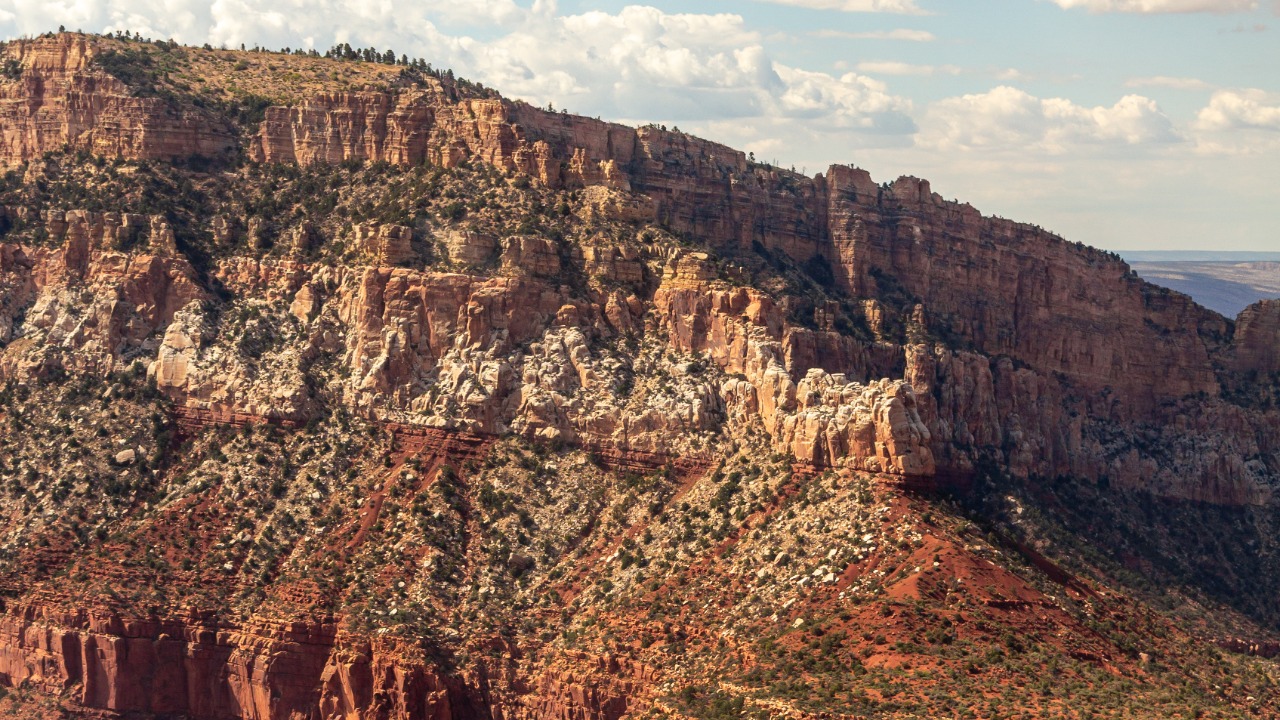

The Grand Canyon has long been held up as a textbook example of slow, steady erosion carving a young gorge into ancient rock. New research is now challenging that familiar storyline, suggesting the canyon’s birth was neither simple nor singular and that its key chapters unfolded far earlier, and in more complex ways, than many visitors have been taught. As geologists refine the canyon’s age and the forces that shaped it, they are not just updating a few numbers, they are rewriting how I understand one of Earth’s most iconic landscapes.
The canyon’s origin story was never settled science
For generations, school diagrams have portrayed the Grand Canyon as a straightforward product of the Colorado River slicing downward over about 5 million to 6 million years, a neat narrative that fit comfortably into geology textbooks and park signage. That tidy picture has been under pressure for more than a decade, as new dating techniques and field evidence have suggested that at least some segments of the canyon may be tens of millions of years older than that familiar timeline implied, and that its formation involved multiple pulses of erosion rather than a single, continuous cut.
Recent coverage of a new study on the canyon’s “true” beginnings underscores how unsettled the story remains, with researchers arguing that key stretches of the gorge were carved long before the modern Colorado River linked them into a single chasm, and that older paleocanyons were later reoccupied and deepened by younger flows. That work, described in reports on the true origin story, builds on earlier debates rather than closing them, but it does push the consensus away from a one‑age‑fits‑all explanation and toward a more layered, region‑by‑region history.
New tools are exposing hidden chapters in the rocks
The shift in thinking is driven less by fresh scenery than by fresh tools, as geologists probe the canyon’s walls with increasingly precise methods. Thermochronology, which tracks how minerals cool as rocks are exhumed toward the surface, has allowed researchers to reconstruct when different parts of the canyon were lifted and eroded, revealing that some segments cooled and were cut far earlier than others. Combined with detailed mapping of unconformities and sedimentary layers, these techniques show that the canyon’s rock record preserves multiple cycles of uplift, river incision, and landscape rearrangement rather than a single, simple downcutting event.
Researchers have also been reexamining the canyon’s ancient strata, including the deeply buried Vishnu Schist and overlying sedimentary packages, to understand how tectonic forces and shifting drainage patterns prepared the stage for canyon carving. Work highlighted in a report on geologists uncovering new secrets in those layers emphasizes that the rocks themselves encode a far longer and more intricate story of mountain building, sea incursions, and erosion than the visible gorge alone suggests, and that any credible origin narrative has to account for that deep-time context.
How old is the Grand Canyon, really?
When I look at the age debate, what stands out is not a single number but a growing recognition that “How old is the Grand Canyon?” is the wrong question. Different segments of the canyon appear to have different ages, with some western reaches potentially carved more than 50 million years ago while eastern portions may be closer to the traditional 5 million to 6 million year estimate, and the modern, through‑going Colorado River only integrating those pieces into one continuous canyon relatively late. That mosaic view helps reconcile conflicting data sets that once seemed irreconcilable, and it reframes the canyon as a composite landscape stitched together over time.
The controversy over an “older” canyon erupted publicly when thermochronology studies suggested that at least part of the gorge might date back tens of millions of years, a claim that drew sharp scrutiny from field geologists who pointed to younger river terraces and volcanic flows as evidence for a more recent incision. Reporting on that clash of interpretations, including a detailed account of how one study stirred controversy, shows how the scientific community has been forced to grapple with the possibility that both sides captured pieces of the truth, and that the canyon’s age depends on which segment and which phase of carving one is talking about.
From “valueless” chasm to scientific touchstone
The Grand Canyon’s scientific importance is all the more striking given how little value some early Euro‑American observers saw in it. Nineteenth‑century officials and promoters sometimes dismissed the region as barren and economically useless, a dramatic contrast to the way it is now celebrated as a natural laboratory for understanding Earth history. That reversal reflects not only changing aesthetics but also the way geologists came to realize that the canyon’s exposed strata, stacked more than a mile deep, offered an unparalleled cross‑section through nearly 2 billion years of crustal evolution.
Historical research on the park’s transformation from a supposedly “valueless” place into a protected icon traces how explorers, scientists, and conservationists gradually reframed the gorge as a site of wonder and knowledge. That shift helped secure national park status and, over time, turned the canyon into a benchmark for debates about deep time, climate change, and the pace of geological processes, making the current rethinking of its origin story not just an academic exercise but a reappraisal of a symbol that has shaped public understanding of Earth itself.
Competing narratives: deep time versus young Earth
As new research pushes parts of the canyon’s history deeper into the past, it also sharpens the contrast with young‑Earth interpretations that compress the entire gorge into a timescale of only a few thousand years. Advocates of a recent, catastrophic origin often argue that the canyon was carved rapidly by retreating floodwaters, reading the same cliffs and side canyons as evidence of a global deluge rather than multi‑stage river incision. That view rejects the mainstream geologic timescale and instead treats the canyon as a monument to a singular, short‑lived event.
Materials promoting that perspective, including detailed young‑Earth summaries of Grand Canyon “facts,” present the gorge as a showcase for rapid sediment deposition and swift erosion, in direct tension with the multi‑million‑year framework used by most researchers. The clash between these narratives is not just about numbers on a timeline, it is about what counts as evidence, how to interpret rock layers and fossils, and whether the canyon’s complexity is better explained by repeated cycles of uplift and river incision or by a single, catastrophic flood.
What the layers really reveal about Earth’s past
When I focus on the rocks themselves, the case for a long, episodic history becomes hard to ignore. The canyon’s walls display a carefully ordered sequence of formations, from the ancient Vishnu Schist at the bottom through the Tapeats Sandstone, Bright Angel Shale, and younger limestones and sandstones near the rim, each preserving distinct environments such as shallow seas, coastal plains, and desert dunes. The presence of multiple unconformities, where older layers were eroded before younger ones were laid down, points to repeated cycles of uplift and erosion that unfolded over vast spans of time.
Geoscientists who have spent years mapping and sampling those layers describe how subtle shifts in grain size, fossil content, and mineral composition record changing climates and sea levels, turning the canyon into a vertical archive of Earth’s environmental history. A synthesis aimed at building a deeper understanding of the canyon emphasizes that its strata capture everything from ancient microbial mats to complex marine ecosystems, and that the vertical stack of rocks, not just the horizontal cut of the gorge, is central to decoding how and when the landscape evolved.
Public fascination and online debate
The rethinking of the canyon’s origin is not confined to academic journals; it is playing out in real time across social media, video platforms, and informal discussion groups. Enthusiasts share drone footage, field photos, and animated reconstructions of ancient rivers, using short clips and threads to argue for older or younger ages, or to highlight new research that challenges long‑held assumptions. That online conversation can be messy, but it also shows how deeply the canyon’s story resonates far beyond geology departments.
In one active community, members trade links to new studies and personal observations from the rim and river, turning a Facebook discussion into a running seminar on canyon science and lore. Elsewhere, a concise Twitter thread distills the age debate into a few sharp points, while a widely shared Instagram reel uses sweeping visuals to contrast the traditional “young canyon” narrative with emerging evidence for older segments, illustrating how digital platforms are reshaping who gets to weigh in on what the rocks are really saying.
How video and field guides shape what visitors learn
For most people, the first detailed explanation of the canyon’s origin comes not from a scientific paper but from a ranger talk, a visitor center exhibit, or a documentary playing on a hotel television. Those narratives tend to simplify, presenting a single age and a single river story that can fit into a few minutes of screen time or a short interpretive sign. As research evolves, the challenge is to update those materials without overwhelming visitors, and to acknowledge uncertainty while still conveying the core insights that decades of fieldwork have produced.
Educational videos that walk viewers through the canyon’s geology are starting to grapple with that complexity, using animations to show how ancestral rivers may have carved separate gorges that were later linked, and how uplift of the Colorado Plateau set the stage for rapid incision once a through‑going river formed. One widely viewed YouTube explainer leans on that kind of visualization, helping non‑specialists picture how a landscape can be both ancient in its rocks and relatively young in its present form, and how new dating methods are refining, rather than erasing, the big picture.
Why the new research matters beyond the canyon
What is unfolding at the Grand Canyon is part of a broader shift in how geologists think about landscapes, rivers, and tectonic uplift. The idea that major canyons can be assembled from older segments, reoccupied valleys, and reorganized drainage networks has implications for how scientists interpret other great gorges around the world, from the Himalayas to the Andes. By showing that a single canyon can record multiple, overlapping histories, the new work encourages a more nuanced view of how topography responds to climate, tectonics, and internal feedbacks over time.
That perspective is filtering into popular science coverage, where writers and researchers alike are emphasizing that the canyon’s story is not a simple before‑and‑after snapshot but an evolving narrative with unresolved chapters. A recent feature on how geologists are rewriting textbooks based on Grand Canyon evidence highlights how the same tools used there are being applied to other landscapes, from deeply incised plateaus to buried paleovalleys, suggesting that the canyon’s revised origin story may become a template for reinterpreting rugged terrain worldwide.
The next questions scientists are chasing
Even as new studies clarify parts of the canyon’s past, they also expose fresh gaps in knowledge that researchers are eager to fill. One key question is how and when the Colorado River captured and integrated older drainage systems, turning a patchwork of ancestral valleys into the continuous canyon we see today. Another is how climate shifts, including changes in precipitation and glaciation far upstream, influenced the pace of incision and sediment delivery, potentially speeding or slowing the river’s cutting power at different times.
Field campaigns and modeling efforts are now targeting those uncertainties, combining detailed mapping of river terraces and volcanic deposits with simulations of how water and sediment move through evolving landscapes. Long‑form explainers that aim for a deeper understanding of the canyon’s dynamics stress that resolving these questions will not only refine the gorge’s own timeline but also improve forecasts of how modern rivers might respond to ongoing climate and tectonic changes, linking the canyon’s ancient story to the environmental challenges unfolding today.
More from MorningOverview