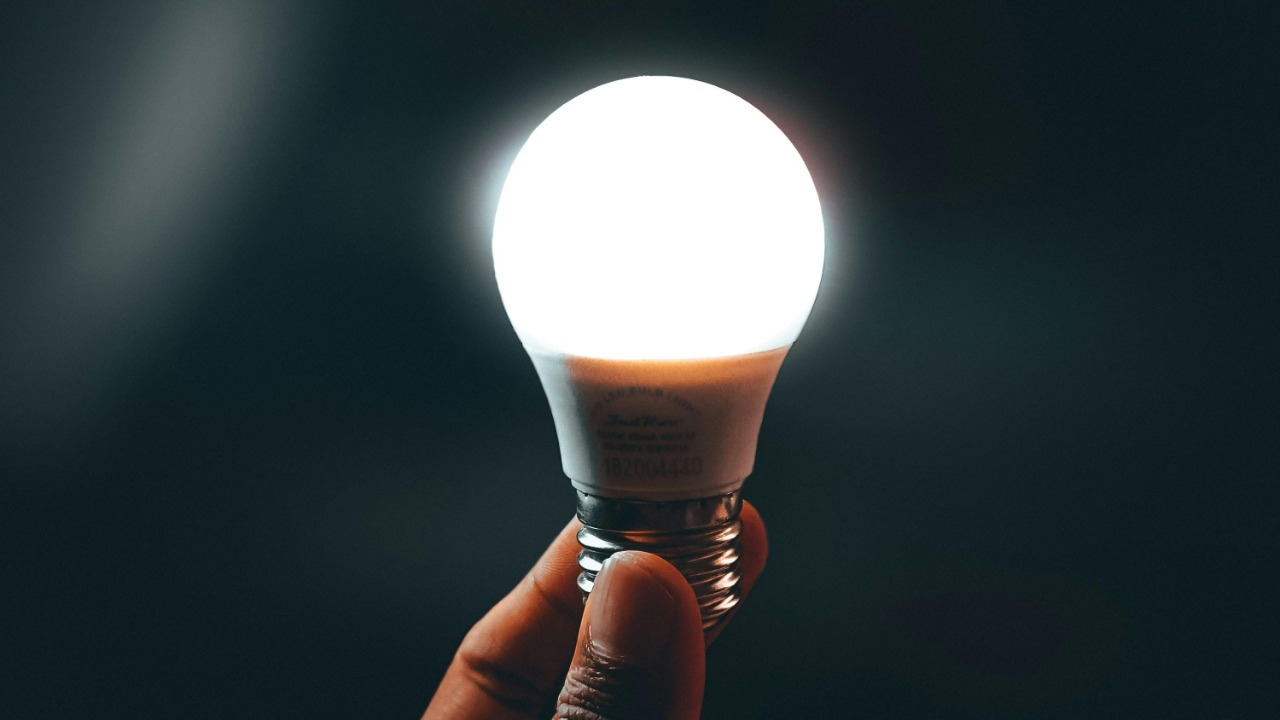

Light emitting diodes have quietly become the backbone of modern life, from phone screens and stadium billboards to the headlights on a 2025 Toyota Prius and the smart bulbs in a Brooklyn studio. Now a new class of devices built from reengineered nanoparticles and hybrid materials is promising a step change in how efficiently we can turn electricity into light, and even how we move energy back and forth between lighting and solar power. If the early lab results scale, the shift could feel abrupt to consumers, even though it rests on years of painstaking physics and chemistry.
At the center of this moment are two intertwined breakthroughs: a way to make previously “useless” nanoparticles conduct electricity cleanly enough to serve as ultra‑pure light sources, and a hybrid organic–inorganic structure that solves a long‑standing insulation problem in LED materials. Together they hint at lighting that wastes far less power as heat, lasts longer, and can be tuned with surgical precision, while also feeding a new generation of solar technologies that harvest energy from both sunlight and artificial illumination.
Why LEDs were already winning the lighting race
Before I can explain why this new work matters, it is worth remembering how dominant LEDs already are. Over the past decade, they have replaced incandescent and compact fluorescent bulbs in homes, offices, and streetlights because they convert a far higher share of electrical energy into visible light, often using around 75 percent less power for the same brightness and lasting tens of thousands of hours. That efficiency edge is why LEDs now underpin everything from the largest TV screens you can buy to the tiny indicator lights on a router, and why automakers have embraced them for daytime running lights and adaptive headlamps.
Yet even with that progress, today’s commercial LEDs are compromises. They rely on crystalline semiconductors and phosphor coatings that can introduce defects, color impurities, and wasted energy as heat, especially when manufacturers push for higher brightness or more saturated colors. As Jan has pointed out in coverage of the latest research, the devices that surround us are built on materials that were never designed to be perfect light sources at the molecular level, which is why scientists have kept searching for ways to coax more performance out of nanoscale structures that, on paper, should be capable of nearly lossless emission.
The “impossible” fix: turning an insulator into a light engine
The most striking advance comes from a team that tackled what many in the field had quietly written off as an impossible problem. Certain nanoparticles and quantum dots can emit exceptionally pure colors, but in their native form they behave like electrical insulators, which means they cannot easily carry the charges needed to drive an LED. Dec and colleagues attacked this by building an organic–inorganic hybrid structure, attaching an organic layer directly onto an inorganic nanoparticle so that the organic molecules could shuttle charges into a core that had previously been electrically dead.
To overcome the insulation problem, they engineered this interface so that electrons and holes could move through the organic shell and recombine inside the inorganic center, turning a material that once blocked current into an efficient light engine. The result is a platform that can host a wide range of emitters, including quantum dots, while still behaving like a conventional diode when wired into a circuit, as described in the report on the organic–inorganic hybrid structure. By solving the charge injection bottleneck at the molecular scale, Dec and the team have opened a path to LEDs that combine the best of both worlds: the spectral purity of nanocrystals and the robustness of established semiconductor devices.
From “useless” nanoparticles to ultra‑pure LnLEDs
In parallel, another group has been rethinking how to wire up light emitting nanoparticles so that they no longer need to be wrapped in thick insulating shells. Traditional designs embed nanocrystals in matrices that protect them but also make it hard to inject charges efficiently, which is why many promising materials have languished as lab curiosities. Nov and collaborators flipped that logic with a new LnLED architecture that injects electrical charges directly into 9‑ACA molecules, using those organic units as the active light emitters rather than treating them as passive ligands around a core.
In the new LnLED design, electrical charges are injected directly into the 9‑ACA molecules, bypassing the nanoparticle shells that once blocked current and turning ACA chemistry into the heart of the device. That approach transforms previously “useless” nanoparticles into scaffolds that help organize the emitting molecules while leaving the conduction pathways clear, which in turn yields exceptionally narrow emission lines and color purity that rivals or beats quantum dots and other rivals, according to the detailed description of the LnLED design. By letting 9‑ACA molecules carry the current and emit light directly, Nov’s team has shown that the line between organic and inorganic LEDs can be redrawn in favor of cleaner spectra and potentially simpler manufacturing.
What “ultra‑pure” light means for displays and color
For consumers, the phrase “ultra‑pure” light can sound abstract, but it has very concrete implications for how screens and lamps look and feel. When an LED emits a narrow band of wavelengths, a TV or smartphone can mix red, green, and blue channels more precisely, which translates into richer colors, deeper contrast, and better coverage of standards like Rec. 2020 without resorting to complex filters that waste energy. In a living room, ultra‑pure white light built from tightly controlled primaries can make skin tones look more natural and printed photos on a wall appear closer to how they looked outdoors, all while using less power than a comparable broad‑spectrum bulb.
LnLEDs that rely on 9‑ACA molecules and hybrid structures that host quantum dots inside conductive organic shells both push in this direction, because they reduce the spectral “leakage” that plagues many phosphor‑converted LEDs. When Nov’s architecture injects charges straight into ACA emitters, and when Dec’s hybrid interface allows quantum dots to be driven efficiently, the resulting devices can be tuned to emit in very specific windows with minimal sidebands. That is why researchers are already talking about applications in high‑end monitors, augmented reality headsets, and professional lighting rigs where color accuracy is paramount, building on the same physics that lets the new nanoparticles compete directly with established LEDs that are everything from billboard tiles to home bulbs.
Efficiency gains and the quiet revolution in energy demand
The other side of this story is energy. Lighting still accounts for a significant slice of global electricity use, and even small percentage gains in efficiency can translate into power plants’ worth of savings when multiplied across billions of fixtures. By turning previously insulating nanoparticles into active emitters and by streamlining charge injection into 9‑ACA molecules, the new devices cut down on non‑radiative recombination, the process where excited electrons fall back to lower energy states without emitting photons, which shows up as waste heat instead of useful light.
If hybrid LEDs can maintain their lab‑scale performance in commercial products, I would expect them to reduce the wattage needed for everything from warehouse high‑bay lights to the backlights in 16‑inch laptops, easing strain on grids that are already juggling electric vehicles and heat pumps. The same materials could also enable more efficient micro‑LED arrays for augmented reality glasses and automotive heads‑up displays, where every milliwatt matters for battery life and thermal management. While exact efficiency figures for the new LnLEDs and hybrid quantum dot structures are still emerging, the underlying physics of better charge transport and cleaner emission suggests a trajectory that aligns with the broader push to squeeze more lumens out of every joule.
Nighttime solar and the feedback loop with advanced LEDs
The LED breakthroughs do not exist in isolation, they are part of a broader rethinking of how we move energy between light and electricity. Researchers at Stanford University have demonstrated solar panels that can generate electricity at night by exploiting the temperature difference between the panel and the surrounding air, using thermoradiative processes to harvest energy even in the absence of sunlight. Those nighttime devices rely on extremely sensitive detection of infrared radiation and careful control of emissivity, both of which benefit from the same kind of spectral engineering that underpins ultra‑pure LEDs.
As Researchers at Stanford University refine their nighttime solar panels, the line between a light source and a light harvester becomes more fluid. A building outfitted with next‑generation LEDs could, in principle, feed some of its waste infrared radiation into rooftop panels tuned to capture that spectrum after dark, closing a loop where lighting and solar systems are co‑designed rather than treated as separate silos. The same nanostructuring that lets Dec’s hybrid devices and Nov’s LnLEDs emit in narrow bands could be applied in reverse to panels that absorb specific wavelengths more efficiently, pointing toward architectures where every photon is either put to work or carefully recycled.
Indoor solar that thrives under LED illumination
Another emerging technology that meshes naturally with advanced LEDs is indoor solar, which targets the relatively low light levels found in offices, factories, and homes. Solar experts in Taiwan have been experimenting with cell molecular structures that are optimized not for direct sunlight but for the spectra produced by artificial lighting, particularly the cool white and warm white peaks common in LED fixtures. By tailoring the bandgaps and absorption profiles of their materials, they can harvest energy from indoor illumination that would otherwise be wasted, powering sensors, Internet of Things devices, and low‑power electronics without the need for batteries.
As Solar experts in Taiwan refine these indoor solar technologies, the quality of the light source becomes even more important. Ultra‑pure LEDs with tunable spectra can be matched precisely to the absorption peaks of indoor cells, maximizing the energy captured per lumen while still delivering comfortable illumination for people. In a warehouse filled with wireless asset trackers or a hospital with networks of environmental sensors, that synergy could translate into maintenance‑free devices that sip power from the overhead lights, a model that becomes more attractive as the LEDs themselves grow more efficient and longer‑lived.
From lab benches to smart cities and consumer gadgets
Translating these breakthroughs into everyday products will not happen overnight, but the pathways are already visible. In consumer electronics, display makers are hungry for any technology that can deliver brighter, more color‑accurate panels without burning through battery life, which makes LnLEDs and hybrid quantum dot structures natural candidates for future OLED replacements or micro‑LED backlights in devices like the iPhone and Samsung Galaxy series. Because the new designs build on familiar semiconductor processing steps, they can, in principle, be integrated into existing fabrication lines with targeted upgrades rather than wholesale reinvention.
At the city scale, municipalities that are already swapping out sodium vapor streetlights for LED fixtures could see a second wave of retrofits that layer in smarter control electronics, indoor solar harvesting, and even nighttime energy recovery through thermoradiative panels. A smart pole on a Chicago avenue might one day host ultra‑efficient white LEDs based on Dec’s hybrid structures, sensors powered by indoor‑optimized cells tuned to those spectra, and a small panel that trickles power back into the grid after dark using techniques pioneered by the Stanford team. For building owners and city planners, the appeal is straightforward: lower operating costs, reduced maintenance, and a tighter integration between lighting, sensing, and energy systems.
The roadblocks: materials, manufacturing, and trust
For all the promise, I do not expect the incumbent LED industry to be swept aside without friction. Scaling organic–inorganic hybrids and 9‑ACA based LnLEDs from carefully controlled lab samples to millions of identical devices is a nontrivial challenge, especially when small variations in molecular alignment or interface quality can have outsized effects on performance. Manufacturers will need to prove that these new structures can survive the thermal cycling, humidity, and electrical stress that come with real‑world use, from the heat of a car headlamp assembly to the constant dimming and brightening of a smart home bulb.
There is also a trust gap to bridge with regulators and consumers who remember early compact fluorescent lamps that failed prematurely or produced unpleasant color casts. To win over lighting designers, architects, and everyday buyers, the next generation of LEDs will have to demonstrate not just headline efficiency numbers but consistent color rendering, flicker‑free operation, and compatibility with existing dimmers and control systems. That is where the connection to established platforms, such as the quantum dots and nanoparticles already used in premium TVs and monitors, becomes an asset, because it allows companies to build on known materials while quietly swapping in the improved charge transport and emission schemes pioneered by Dec, Nov, and their peers.
More from MorningOverview