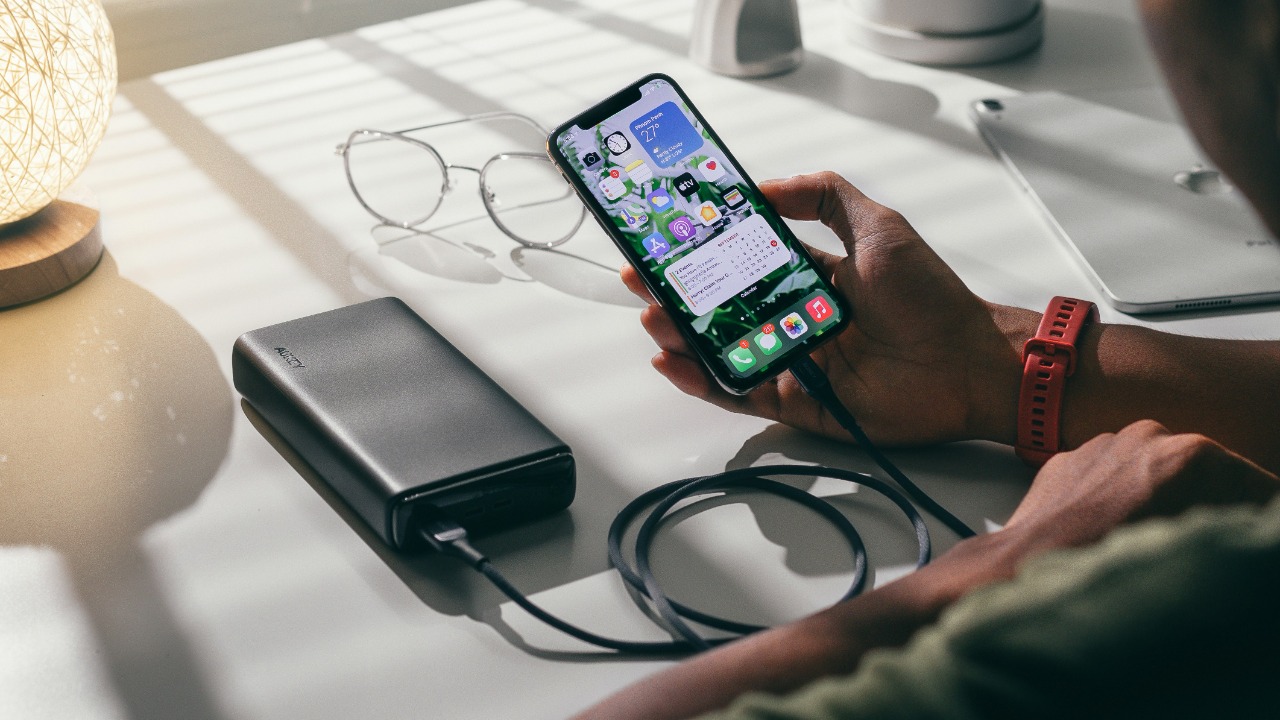

When the lights go out or a long travel day stretches on, the difference between a minor inconvenience and a genuine problem often comes down to whether your backup power actually delivers. Experts who test batteries for a living are increasingly clear on one point: the “right” portable solution depends less on brand loyalty and more on matching capacity, output and features to how you live.
I look at backup power in three tiers, from pocket-size phone savers to rolling batteries that can keep a fridge humming. Across those tiers, recent lab testing and hands‑on reviews point to a handful of standout devices that consistently perform as advertised, even under stress.
Everyday pocket power: slim banks that actually last
For daily carry, the priority is a compact battery that can revive a dead phone without turning your bag into a toolbox. Reviewers who cycle through dozens of models keep coming back to simple, high quality power banks with enough capacity to charge a modern smartphone at least twice, fast output for laptops or tablets and reliable safety circuitry. One detailed guide to the best power bank options highlights how much real world performance can vary even when two batteries list the same milliamp hours, which is why I pay close attention to tested runtimes and not just the label.
Capacity around 10,000 mAh has become the sweet spot for commuters, and that is exactly where the Anker Nano sits, with “10,000 m” cited as the practical balance between pocketability and enough reserve to get through a heavy day of navigation, streaming and hotspot use. Independent testing ranks that Anker Nano as the Best overall pick in its class, in part because it supports modern fast charging standards while staying small enough to slip behind a phone. A separate round‑up of the best portable charger models reinforces that conclusion, putting compact, high density packs at the top of the list for most people who just need to keep a phone and earbuds alive.
Budget and magnetic tricks: when features matter more than logos
Price still matters, especially if you are kitting out a family or just want a spare battery for emergencies. In that space, experts flag the Iniu Pawsible P41L‑E2 Power Bank as the Best budget portable charger, a unit that proves you do not have to overspend to get dependable USB‑C output and enough capacity to top up multiple phones. Another guide to the top portable chargers singles out the Anker MagGo Power Bank (10K, Slim) as “Our favorite1.” for iPhone users, precisely because its magnetic attachment and Slim profile make it feel like part of the phone rather than a separate brick you have to juggle.
Feature innovation is moving quickly in this category, and some of the most interesting ideas are coming from hybrid designs that combine wired and wireless charging. One of the more striking examples is a magnetic unit praised as One of the few power banks that finally nails the all‑in‑one brief, with wireless charging, a built‑in USB‑C cable and strong magnets that keep it locked to the back of a phone. For anyone who works on the go with a laptop and external display, that kind of compact battery pairs neatly with the best portable monitors, which are designed to run from USB‑C power and can turn a single USB‑C port on a battery into a full dual‑screen setup in a hotel room or train seat.
Stepping up to power stations: from campsite to storm prep
Once you move beyond phones and laptops into appliances, you are in power station territory, where watt hours and inverter quality matter more than pocket size. Testers who focus on outdoor gear describe the current crop of portable stations as a “world fraught with ballyhooed market” claims, which is why they put units through controlled loads before recommending them. A comprehensive review of the best portable power notes that Jun and However are not just throwaway words in marketing copy but part of a broader pattern where brands promise whole‑home capability that only a few models can actually sustain.
Independent lab testing of the best power station units finds that The Jackery 2000 v2 is the best power station for those who need additional power for multi‑day off‑grid camping or an extended outage, with enough capacity to run high draw devices while staying portable enough to move around a campsite. Another ranking of the best overall portable puts the Jackery Explorer 2000 Plus at the top, highlighting that this Jackery Explorer model, sold as a Plus unit, can be had for $1,099 and offers expansion options that make it viable for more than just weekend trips.
EcoFlow and Jackery: heavy hitters for serious backup
For households that treat backup power as insurance rather than a camping accessory, the conversation increasingly centers on EcoFlow and Jackery. The EcoFlow Delta 2 is marketed as a Portable power station ideal for any home that puts power security and comfort first, with the manufacturer urging buyers to Ensure they are prepared with a unit that can bridge short outages. A separate listing for the same Portable model repeats that Ensure language, underscoring how central the idea of home readiness has become in this category.
EcoFlow’s newer Delta 3 Plus raises the stakes with a Delta 3 Plus Portable Charging Station that advertises 1024 Wh High power output, 1800 W continuous power and 3600 W overvoltage capability for short bursts. A second listing for the same Plus Portable Charging repeats those Wh High details, making clear that this is aimed at users who want to run multiple appliances at once rather than just charge devices. Expert round‑ups of portable power stations point to the EcoFlow Delta 3 Plus as a Best overall choice, praising its Fast charging and noting that it remains usable for those in colder climates where battery performance can sag.
Whole‑home ambitions and solar‑ready systems
At the top of the market, portable power stations are starting to blur into full home backup systems. The EcoFlow DELTA Pro 3 is sold as a DELTA unit with a base capacity of 4 kWh, expandable to 48 kWh, which provides days of backup power for essential appliances and can even support heavy loads like HVAC systems in a single unit. That kind of capacity is overkill for a weekend camping trip but makes sense for households in outage‑prone regions that want a cleaner, quieter alternative to a gasoline generator.
Jackery is pursuing a similar strategy with its expandable systems. The Jackery Explorer 2000 Plus Portable Power Station is described as The Jackery Explorer 2000 Plus Portable Power Station, a high‑capacity, expandable power solution built to meet heavier demands. A parallel listing for the same Plus Portable Power reinforces that positioning, emphasizing its role in solar generator kits that can recharge from panels during extended outages. Analysts who survey the best portable power for adventures note that in this fast‑moving scene, You need systems that stay charged and ready to roll, which is exactly what these solar‑ready stations are built to do.
More from Morning Overview