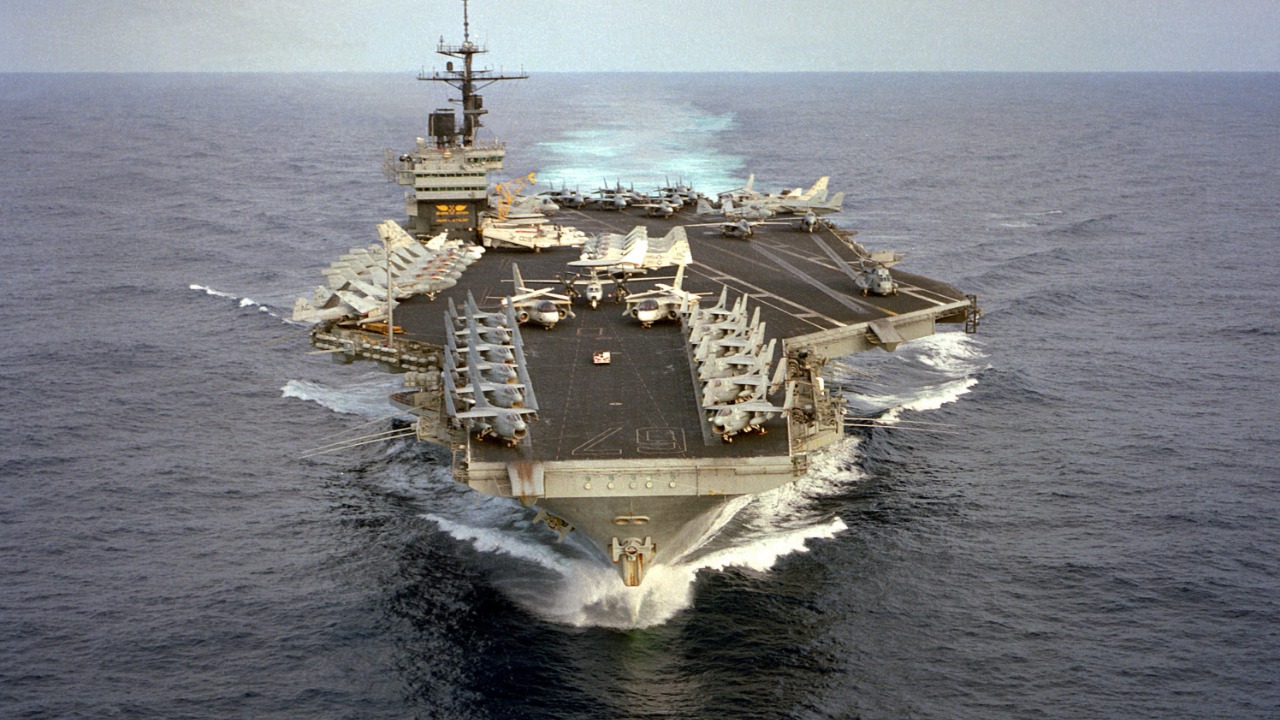

The Navy’s newest supercarrier has finally left the pier and headed for open water, a milestone that turns years of construction and testing into a live trial of American sea power. The future USS John F. Kennedy, the second of the Ford-class carriers, is now in the Atlantic for builder’s trials that will determine whether the ship is ready to join the fleet as planned in 2027. For the Navy and the ship’s crew, this first stretch at sea is less a ceremonial cruise than a high‑stakes shakedown of the most complex warship the United States has ever built.
The departure caps a long build in Virginia and marks the moment when design choices, new technologies, and billions of dollars in investment meet the unforgiving reality of salt water and heavy weather. It is also the clearest signal yet that the Ford-class program, after a troubled start with its lead ship, is beginning to mature into the backbone of the carrier force that will eventually replace the aging Nimitz-class hulls.
The Kennedy finally leaves Newport News
The future USS John F. Kennedy, designated CVN 79, got underway from NEWPORT NEWS, Va., as The Navy’s newest aircraft carrier to begin sea trials under its own power. The ship, named for USS John F. Kennedy, is leaving the Newport News Shipbuilding yard for the first time, a moment that transforms it from a waterfront construction project into an operational vessel in the making. For the crew, many of whom have spent years preparing pier-side, the move into open water is the first chance to operate the ship’s propulsion, navigation, and basic combat systems in real conditions.
From the waterfront in NEWPORT NEWS, the carrier’s departure is also a visible payoff for the industrial base that has supported its construction. The Navy expects the future USS John F. Kennedy to be delivered and fully commissioned around 2027, a timeline that depends heavily on how these initial trials unfold. If the ship performs as planned, the service can move more confidently into the next phases of testing and training that will turn the hull into a deployable asset rather than a symbol of schedule risk.
Second of the Ford-class, heir to the Nimitz era
John F. Kennedy is the second ship in The Ford-class line of supercarriers, the follow-on to the lead ship USS Gerald R. Ford and the template for the Navy’s future big-deck fleet. The Ford-class supercarriers are intended to gradually replace the in-service Nimitz-class carriers, a process that will take decades as older hulls retire and new ones come online. That long overlap means the Navy will be operating mixed generations of carriers for years, with John F. Kennedy serving as an early test of how smoothly the transition from Nimitz to Ford can actually run in practice.
The Ford-class design is meant to deliver more sorties, reduced crew size, and lower life-cycle costs compared with Nimitz, but those promises only matter if the ships can be built and brought into service on something like their planned schedules. Reporting on the program notes that the Ford-class will be the Navy’s capital ships well into the middle of the century, which makes the performance of this second hull a bellwether for the entire effort. As Richa and other analysts have pointed out, the class is not a boutique experiment but the core of the future carrier force, and any systemic flaws that appear on John F. Kennedy will echo across every subsequent ship.
Builder’s trials and what the Navy is testing
The US Navy’s second Ford-class aircraft carrier is now in the Atlantic to begin builder’s sea trials, a phase in which The US Navy and the shipbuilder push the vessel through a scripted series of tests. During these trials, USS John F. Kennedy must demonstrate that its propulsion plant, steering, electrical systems, and basic combat suites work together under load, not just in isolated pier-side checks. The ship is underway on its own power, which is a critical benchmark for any nuclear-powered carrier and a prerequisite for more advanced testing later in the schedule.
These builder’s trials are also where the Navy validates that lessons from the first Ford-class ship have been applied throughout the Ford class, from maintenance access to software integration. Engineers and inspectors will be looking for vibration issues, power quality problems, and integration glitches that could echo the early difficulties on Gerald R. Ford. The goal is not perfection on this first trip but a clear understanding of what must be fixed before the ship can move on to acceptance trials and, eventually, full operational testing.
New technology, from EMALS to combat systems
John F. Kennedy carries the same new generation of launch and recovery technology that defined the lead ship, including the Electromagnetic Aircraft Launch System that replaces the steam catapults used on earlier carriers. In the years before heading to sea, the ship first tested her Electromagnetic Aircraft Launch System in 2022 and her combat system in 2023, a sequence that allowed engineers to work through early integration issues while the hull was still at the yard. In the same period, the U.S. Navy refined its plan to bring the ship into service in March 2027, tying the technology milestones directly to the broader schedule.
Those land- and pier-side tests are now giving way to at-sea checks of how the launch and recovery gear, sensors, and weapons interact in a dynamic environment. The move to electromagnetic launch is central to the Ford-class promise of higher sortie rates and more flexible air wing operations, but it also introduces new failure modes that must be understood before the ship can deploy. By the time John F. Kennedy completes its trials, the Navy expects to have a much clearer picture of how these systems behave over long periods at sea, and whether any design changes are needed for later Ford-class hulls.
From first underway to full sea trials
Before this current phase, Kennedy Gets Underway for First Time Ahead of Builder, Trials marked the ship’s initial move away from the pier, a shorter evolution focused on basic propulsion and navigation. That earlier underway gave the crew and shipyard teams a chance to verify that the reactors, shafts, and rudders responded as designed, and that the bridge and engineering teams could coordinate safely. It also served as a rehearsal for the more demanding builder’s trials now in progress, where the ship will spend longer periods at sea and face a broader range of tests.
For the sailors assigned to USS John F. Kennedy, that first brief trip was a psychological turning point, shifting their daily work from construction support to true ship operations. It also allowed the Navy to validate some of the training pipelines and manning models specific to the Ford-class, which differ from legacy Nimitz practices. With that experience in hand, the crew is better positioned to handle the tempo and complexity of the current sea trials, where every evolution is scrutinized for data that will shape the ship’s path to commissioning.
More from Morning Overview