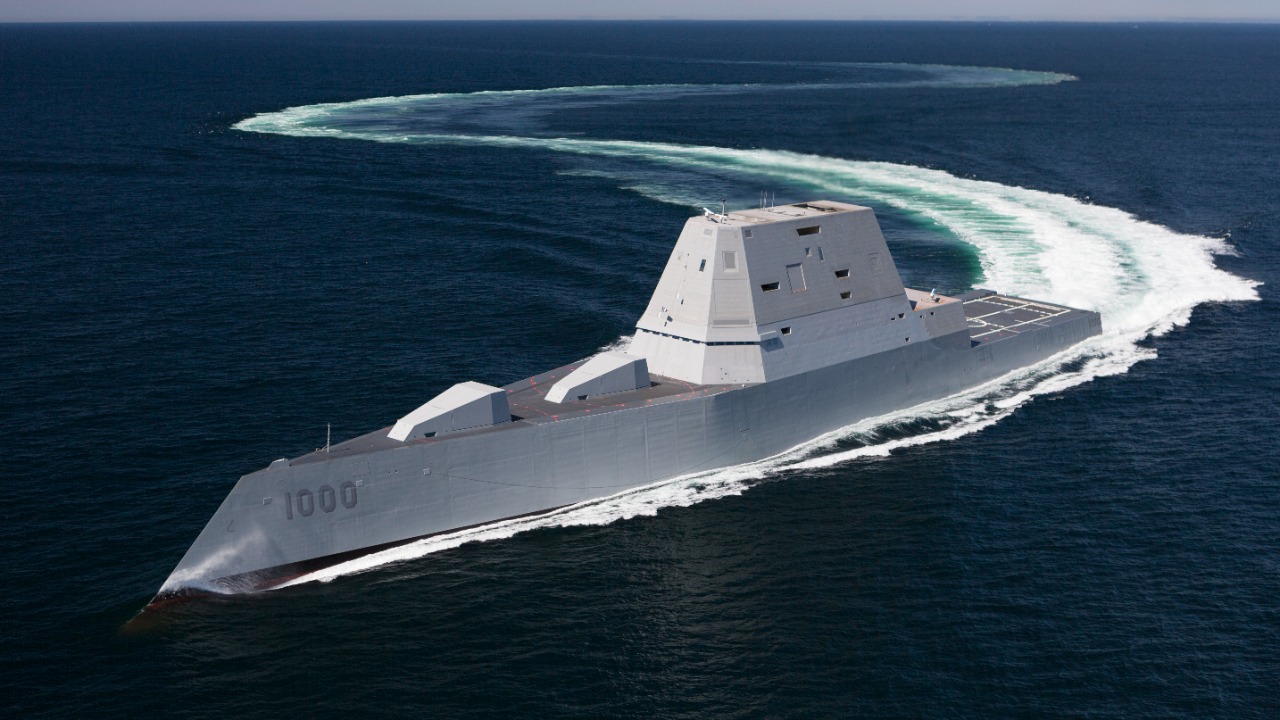

The United States is bringing back something it is calling a battleship, but the defining feature of the new Trump class is not armor and big guns. It is magazine depth, the sheer number of missiles and future weapons the hull can carry and power. In practice, the proposed USS Defiant and its sisters are less about nostalgia and more about turning a single ship into a floating mega-battery that can feed the rest of the fleet with firepower.
That shift reflects how naval warfare has changed since the last battleships left service in the early 1990s. Instead of trading salvos of heavy shells at close range, the Navy now expects to fight at long distances with hypersonic weapons, lasers, and swarms of drones, and it wants a platform that can host and sustain those systems at scale.
The Trump class and the politics of bringing back battleships
The modern battleship revival began when President Donald Trump announced plans for a new generation of warships as part of his Golden Fleet initiative, describing them as a return of the big-gun era even as the design centers on missiles. In late December 2025, President Donald Trump framed the program as a symbol of renewed American naval dominance, and the Navy was cast as the service that would turn that political vision into steel. The lead ship, the USS Defiant, quickly became the public face of what supporters call the Trump class, a label that ties the vessels directly to the White House.
Behind the branding, the Navy has been clear that the new platform is meant to solve a practical problem: it is running out of space to put missiles on existing destroyers and cruisers. Reporting on the Golden Fleet concept describes a class of large surface combatants that would be integrated into carrier strike groups and other formations, not stand apart from them. In that sense, the Trump class is less a vanity project and more an attempt to answer the same capacity questions that have been driving Congressional debates over surface forces, including in recent research on large combatant programs.
From DDG(X) to BBG(X): a destroyer program that grew
The Trump class did not appear in a vacuum. The Navy had already been working on the DDG(X) program, a next generation destroyer intended to replace the Arleigh Burke line and carry more advanced sensors and weapons. Officials have said the requirements for the new battleship grew directly out of that effort, with the Navy DDG work on power, cooling, and crew size informing what a much larger hull could support. In parallel, analysts have described how the DDG(X) concept was always meant to be flexible, with room to grow as new technologies matured.
Background material on the DDG(X) effort lays out how Introduction documents for Congress explicitly connect that destroyer line to what is now called the BBG(X) program. The Navy wanted a common design language and shared systems so that the battleship variant would not be an orphan. That linkage is also evident in the way the service talks about the two programs together, with The US Navy describing a family of ships that can all host similar weapons, from conventional missiles to future hypersonic systems.
A 40,000 ton magazine: what the Navy actually wants
When Navy leaders talk about the Trump class, they focus less on prestige and more on volume. The service has described a need for new 30,000 to 40,000-ton battleships that are considerably larger than today’s destroyers, specifically to carry more vertical launch cells and other weapons. In that framing, the hull is essentially a logistics solution, a way to put more missiles to sea without building an unsustainable number of smaller ships. The Navy has also linked the Golden Fleet concept to integrated air and missile defense, saying the new platform will be able to play a traditional role in protecting other units while also hosting emerging systems like counter drone platforms.
According to the Navy, the new ship is expected to operate as part of a networked force, sharing targeting data and fire control with other vessels and aircraft rather than acting alone. Official descriptions of the Golden Fleet note that the battleships will work alongside carriers, submarines, and smaller surface combatants, with the big hulls providing magazine depth and power for high end systems. That is why According to the Navy, the platform is being designed from the start to integrate air and missile defense, hypersonic strike, and at least two counter drone systems on a single hull.
Integrated Power System: the mega-battery behind the missiles
The key to turning a 40,000 ton hull into a floating arsenal is not just space, it is power. The Navy has already signaled that its next generation destroyer will trade traditional gas turbines for an Integrated Power System similar to the one on the Zumwalt class, and that same logic is now being applied to the battleship. An Integrated Power System routes all the ship’s generated electricity into a common pool that can be allocated between propulsion, sensors, and weapons, which is essential if the Navy wants to field high powered lasers and railgun like systems alongside large missile batteries.
Technical descriptions of the DDG(X) design emphasize that the IPS will support advanced radars and energy intensive weapons such as high powered lasers. The same reporting explains How Will It in practice, with The DDG designed as a flexible platform that can grow with new technologies rather than being locked into a fixed weapons fit. By extension, the BBG(X) battleship is being cast as the ultimate expression of that approach, a ship whose electrical plant is sized not just for today’s missiles but for tomorrow’s directed energy and hypersonic systems.
BBG(X) on paper: what Congress is being told
While the Trump class has dominated headlines, the formal label that appears in Congressional documents is BBG(X), a notional designation for a future large surface combatant. A recent report transmitted by the Congressional Research Service and summarized by Naval Institute Staff describes BBG(X) as a guided missile battleship concept that would be larger than current destroyers and cruisers, with a primary mission of carrying and employing long range weapons. That report also notes that the Navy is still refining how many ships it wants and how they would be phased into the fleet.
Separate analysis of the surface combatant portfolio indicates that the Navy is considering buying 12 to 13 vessels in the new class, a figure attributed to Naval analyst Bryan Clark in discussions about the largest U.S. surface combatant since World War II. That same reporting underscores that the Navy sees these ships as part of a broader effort to expand missile capacity, not as a replacement for carriers or submarines. For lawmakers, the question is whether the cost and industrial base demands of building such large hulls can be justified by the additional firepower they bring.
More from Morning Overview