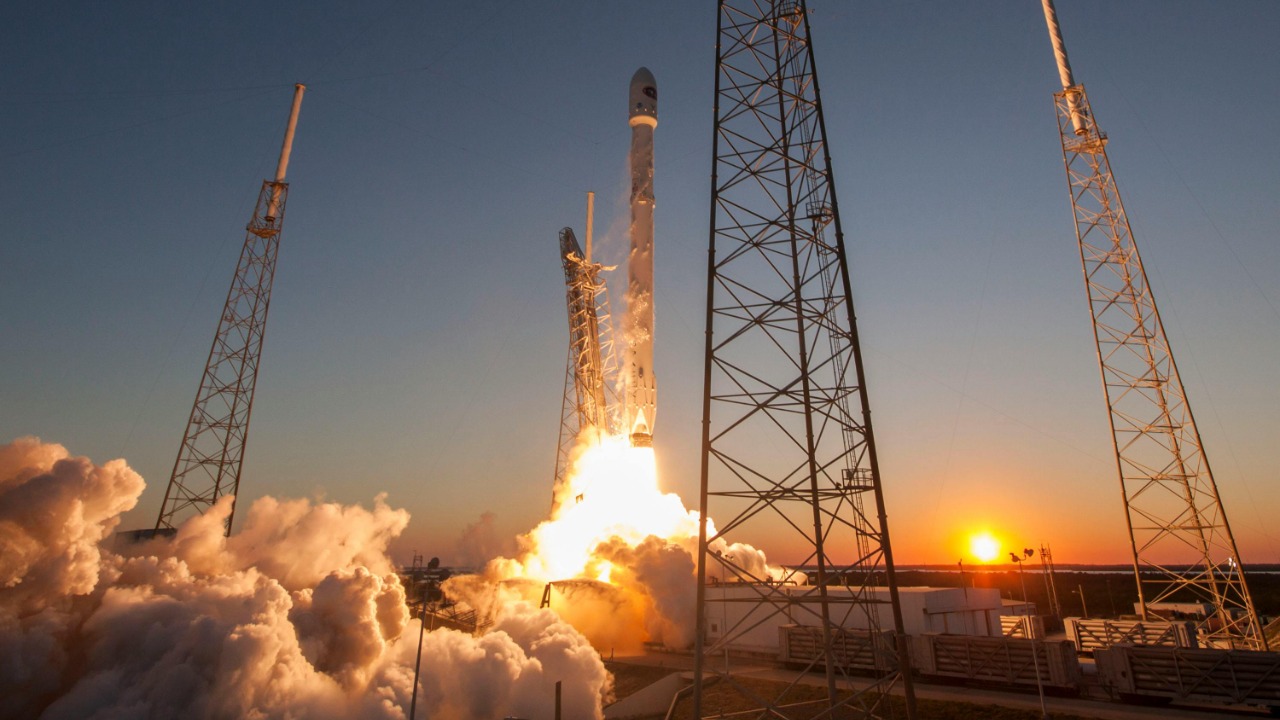

The towering Space Launch System rocket for NASA’s first crewed Artemis mission is about to leave the hangar and begin its slow crawl toward the Florida coast. As the Artemis II stack prepares to roll out to the launch pad, the move signals that the agency’s long‑planned return of astronauts to the Moon and back is shifting from paperwork and test data to hardware in the open air.
The rollout is more than a photo opportunity. It is a full‑scale rehearsal of the systems that will have to work together to send the Orion spacecraft and its crew on a 10‑day journey around the Moon and safely home, a dress rehearsal that will unfold in full view of the public and the global spaceflight community.
The rocket that will carry astronauts back to the Moon
At the heart of this rollout is NASA’s Artemis II SLS, the Space Launch System rocket that stands roughly 322 feet tall and is designed as an American super heavy‑lift launch vehicle capable of sending crew and cargo beyond low Earth orbit. Earlier work with the Artemis 1 mission proved that the Space Launch System The core design could survive the stresses of launch and deep space, and the current integrated stack pairs the SLS with the Orion spacecraft that will carry astronauts around the Moon and back to Earth. The combined vehicle, often described as an 11 million pound SLS rocket in public briefings, is now fully assembled with its boosters, core stage, upper stage and crew capsule secured for the journey to the pad.
The crewed spacecraft at the top of the stack is the Orion capsule, built around the Orion spacecraft Integrity and its European Service Module for the Artemis II mission, which will provide propulsion, power and life support during the flight. According to mission documentation, Artemis II is a planned 10‑day flight that will send Orion and its crew on a free‑return trajectory around the Moon and back, a key step in the establishment of the Artemis program as a sustained presence in cislunar space. The mission profile requires Orion to leave Earth, loop around the Moon and then re‑enter Earth’s atmosphere on a precise path that protects the crew and tests the heat shield for later landings.
From Vehicle Assembly Building to Launch Pad 39B
Before any of that can happen, the rocket has to make one of the most delicate journeys in modern engineering, a slow roll from the Vehicle Assembly Building to the coastal launch complex. NASA’s Crawler‑transporter 2, a tracked platform originally built for Apollo and now upgraded for Artemis, has already been seen moving toward the Vehicle Assembly Building at NASA’s Kennedy Space Center in Florida on Friday, Jan, a sign that rollout preparations are entering their final phase. The same Crawler is integral to the Artemis missions, carrying the fully stacked rocket and mobile launcher along the crawlerway toward the Atlantic.
Much of the Apollo infrastructure is being reused for Artemis, including Launch Complex 39, the VAB and the Crawler Transporter that will carry the rocket to Launch Pad 39B. NASA is getting ready to rollout Artemis II to Launch Pad 39B at Kennedy Space Center as soon as Jan 17, with Teams closing out final checks on the mobile launcher, umbilicals and ground support systems before the move. Local briefings have described how NASA plans a rocket rollout to reach Launch Pad 39B on Saturday, Jan, with the slow journey expected to take up to several hours as the Crawler inches along at walking speed.
Inside the final rollout preparations
In the cavernous assembly bay, technicians have been methodically transforming a construction site into a flight‑ready vehicle. All work platforms are retracted from around NASA’s Artemis II SLS, the Space Launch System rocket and Orion spacecraft, secured to the mobile launcher and cleared for transport out of the building. That retraction marks a key milestone, since it means access arms are folded away, protective covers are removed and the rocket is structurally ready to handle the vibrations and loads of the rollout itself.
NASA’s integrated SLS, the Space Launch System rocket and Orion spacecraft for the Artemis II mission is in the final stages of pre‑rollout testing at Kennedy Space Center, with engineers checking avionics, communications links and environmental control systems that will keep the vehicle within strict temperature and humidity limits during the move. Public updates have framed the coming operation as Artemis II Rollout This Weekend, with an 11 Million Pound SLS Rocket Moving to Pad 39B, and internal schedules describe how NASA will roll the Million Pound SLS Rocket Moving to the Pad as part of a carefully choreographed sequence that includes ground power transfers, umbilical retractions and weather reviews.
Why the rollout timing matters for launch
The timing of the rollout is not just about crowd‑pleasing visuals, it is tightly linked to the launch window calculations for the first crewed Artemis flight. Mission planners have explained that the launch date must support a trajectory that allows for the proper entry profile planned during Orion’s return to Earth, and that suitable opportunities exist within a launch period defined by the alignment of Earth, Moon and the spacecraft’s free‑return path. Those constraints mean that any delay in getting the rocket to the pad, completing fueling tests and resolving issues can ripple into the available launch dates and push the mission deeper into the calendar.
Independent analyses of NASA launch dates for Artemis II suggest that the agency’s Artemis II mission to send astronauts round the Moon and back could launch as early as a set of windows in early spring, with specific days such as 7, 8, 9 and 11 March identified as candidates. Public mission summaries for Artemis II note that the flight is planned no earlier than February 6, 2026, and that the 10‑day mission will build directly on the uncrewed test flight that validated Orion’s systems in lunar orbit. Those schedules remain subject to change, but the rollout is a visible sign that NASA is working to align hardware readiness with the narrow set of days when the Moon and Earth geometry will support the required free‑return and re‑entry corridor.
Public spectacle and broader lunar ambitions
For NASA, the rollout is also a public moment, a chance to showcase the scale of the Artemis hardware and the legacy infrastructure that supports it. Coverage plans describe how Kennedy Space Center will host media and invited guests as NASA’s Crawler moves the rocket toward the pad, with live commentary and a crew event streamed online. Spaceflight enthusiasts have been tracking every update, from early notes that Friday, Jan would bring new images of the Artemis 2 rocket as NASA prepared to move the giant moon launcher, to social posts showing NASA’s Crawler approaching the Vehicle Assembly Building and describing the transporter itself as an engineering marvel by itself.
Local outlets have summarized the coming move in The Brief, noting that NASA plans a rocket rollout to reach the Launch Pad on Saturday and that the spectacle will dominate the skyline along the Space Coast for hours. Enthusiast communities have amplified those details, with threads labeled Artemis II Rollout This Weekend discussing how the Million Pound SLS Rocket Moving to the Pad will be covered live on YouTube and other platforms. The broader context is that Artemis, supported by Additional commercial lunar missions that have already seen a lunar lander separate from a SpaceX Falcon 9 rocket, is intended to create a sustained presence in deep space, and the sight of the SLS and Orion heading to the pad is a concrete reminder that the Moon and beyond are once again within reach.
More from Morning Overview