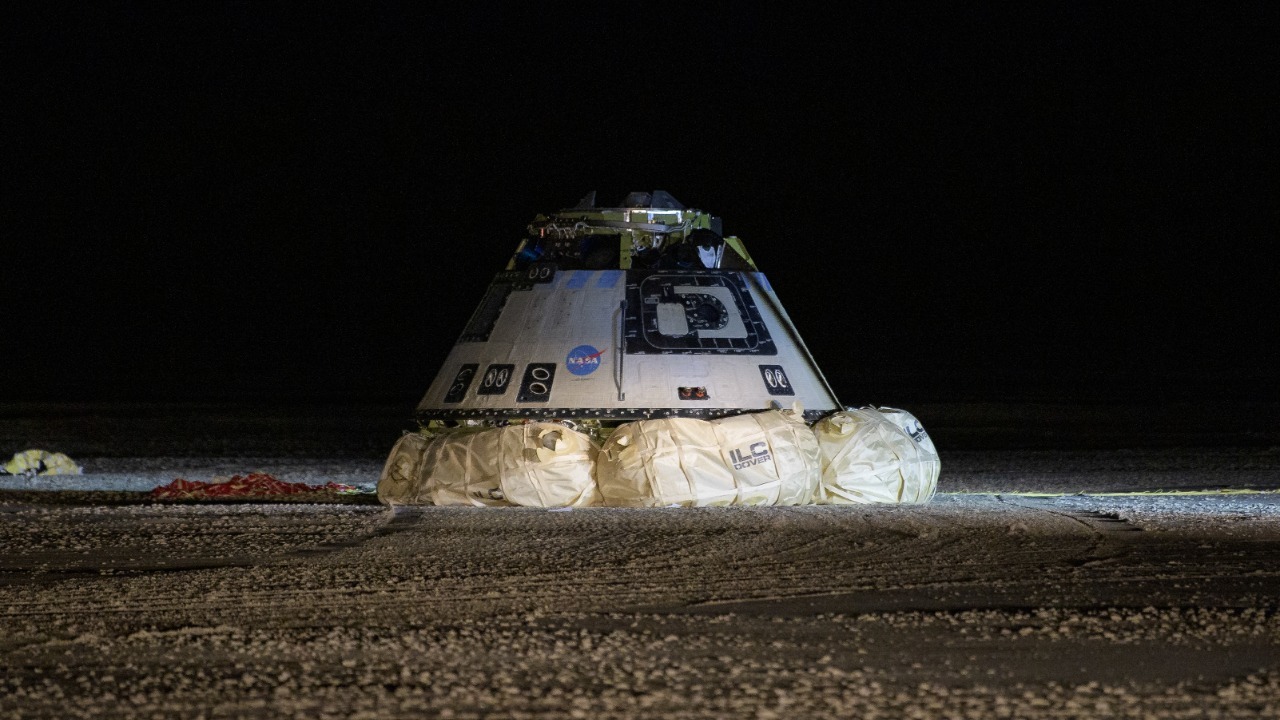

NASA has quietly but decisively reset the trajectory for Boeing’s troubled Starliner capsule, targeting an uncrewed cargo and systems test to the International Space Station in April 2026 instead of rushing back into crewed flight. The shift turns what was once billed as a second commercial crew workhorse into a more cautious, stepwise program that now has to re‑earn trust with hardware, data, and time on orbit rather than bold timelines.
I see this new schedule as less a retreat than a forced recalibration, one that reflects how much went wrong on Starliner’s first crewed mission and how much NASA still needs a reliable second vehicle alongside SpaceX’s Crew Dragon. The 2026 test is now the hinge point: if Boeing can prove the capsule can fly safely and usefully without astronauts on board, the company may yet salvage a meaningful role in low‑Earth orbit operations.
NASA’s new 2026 target and what it really signals
By setting April 2026 as the target for Starliner’s next flight, NASA is effectively declaring that schedule pressure will no longer outrun engineering reality. The agency has framed the mission as an uncrewed visit to the International Space Station that will carry cargo and exercise the spacecraft’s systems in a configuration closer to routine operations than a short‑duration test hop. According to detailed contract and schedule updates, the mission is being treated as a full‑fledged ISS flight, not a quick demo, which underscores how much NASA wants operational data before it considers putting astronauts back inside the capsule.
The new date is not just a calendar entry, it is the product of a formal contract adjustment that redefines Starliner’s near‑term purpose. NASA and Boeing have modified their commercial crew agreement so that the next flight is explicitly an uncrewed ISS mission targeted for 2026, with April identified as the working month for launch from Florida on an Atlas V, a change that is spelled out in updated contract language and schedule planning. That adjustment, paired with NASA’s public confirmation that the next Starliner will not carry astronauts, marks a clear pivot from crew transport to risk‑reduction and cargo capability in the near term.
From crewed test flight to uncrewed “second chance”
The decision to fly Starliner empty on its next outing is rooted directly in the problems that surfaced during its first crewed mission to the station. That flight, which was supposed to validate the spacecraft for regular astronaut rotations, instead exposed helium leaks and thruster issues that forced NASA and Boeing to rethink how quickly they could certify the vehicle for long‑duration crewed use. In the aftermath, NASA officials confirmed that the next Starliner mission would not carry astronauts, a point that has been reiterated in reporting that the capsule “won’t carry NASA astronauts” on its upcoming flight because of the outstanding technical and certification work that remains to be done on the service module and propulsion system, as detailed in coverage of the post‑flight assessment of the crewed test.
Instead of shelving the program outright, NASA has framed the 2026 mission as a “second chance” for Starliner to prove its value in a safer configuration. The agency is giving Boeing an opportunity to demonstrate that the capsule can reliably rendezvous and dock with the ISS, handle cargo logistics, and complete a full mission profile without the added risk of human passengers. Reporting on the revised plan describes the uncrewed ISS flight as a way to give Boeing’s spacecraft a “2nd chance” to show it can meet NASA’s needs after the earlier setbacks, with the mission recast as a cargo and systems test that could still feed into future crewed work if the data are convincing, a framing that appears in analysis of NASA’s decision to reorient Starliner’s next flight.
How the contract was reshaped and what Boeing actually gets
Behind the scenes, the shift to an uncrewed 2026 mission is anchored in a formal reshaping of Boeing’s commercial crew contract. NASA has reduced the number of planned Starliner flights under the agreement and reclassified the next mission as a cargo‑focused test rather than a standard crew rotation. The modified deal now envisions four Starliner flights in total under the updated structure, with the uncrewed ISS visit counted among them, a change that has been highlighted in program updates that describe how NASA’s contract with Boeing “has been modified to four Starliner flights” as part of the new plan, a detail captured in a widely shared summary of the contract modification.
For Boeing, that means the company still has a path to fly Starliner multiple times, but with less guaranteed crew business than originally envisioned and more pressure to prove the spacecraft’s reliability and utility. NASA has also adjusted the mission mix so that the 2026 flight is explicitly an uncrewed ISS mission, with the remaining flights expected to focus on crew transport only if the capsule meets the agency’s stringent safety and performance thresholds. Local and national reporting on the contract change notes that NASA and Boeing have “adjusted” the agreement to accommodate the first uncrewed ISS mission targeted for 2026, confirming that the April 2026 flight is now baked into the formal program plan rather than treated as an ad hoc workaround, as described in coverage of the revised commercial crew arrangement.
Why NASA is stepping back from routine crew transport for now
NASA’s choice to keep astronauts off the next Starliner flight is not just about fixing specific leaks or thrusters, it is about recalibrating risk in a program that was supposed to provide redundancy for crew access to the ISS. The agency has already signaled that it is cutting back the number of astronaut trips it expects to buy on Starliner, leaning more heavily on SpaceX’s Crew Dragon for near‑term crew rotations while Boeing works through its issues. Reporting on the updated plan notes that NASA has “cut astronaut trips” on Boeing’s capsule and that the next mission will be a test cargo flight scheduled for April 2026, a shift that underscores how the agency is prioritizing proven crew transport while still trying to keep a second provider in the game, as laid out in analysis of NASA’s reduced reliance on Starliner for astronaut transport.
In practice, that means SpaceX will continue to shoulder the bulk of ISS crew rotations while Starliner’s role shifts toward demonstration and contingency capacity. NASA’s calculus is shaped by the reality that Crew Dragon has already flown multiple successful crewed missions, while Starliner is still working through the fallout of its first crewed test and earlier uncrewed anomalies. The agency’s willingness to reclassify the next Starliner flight as uncrewed and to trim the number of astronaut seats it plans to buy reflects a sober assessment that redundancy is only useful if both systems are genuinely ready, a point that is reinforced in coverage of how NASA is balancing its contracts with Boeing and SpaceX in light of the revised Starliner mission schedule.
Technical troubles that forced a reset
The technical backdrop to all of this is stark. Starliner’s first crewed mission to the ISS revealed multiple helium leaks in the spacecraft’s propulsion system and thruster performance issues that raised questions about long‑term reliability. NASA officials have since described the capsule as “busted” in the sense that it cannot be treated as operational for routine astronaut transport until those problems are fully understood and corrected, a characterization that appears in reporting that details how NASA “says Boeing busted Starliner” and is requiring extensive fixes before any future crewed flights are approved, as outlined in coverage of the post‑mission technical review.
Those issues come on top of earlier software and hardware problems seen in Starliner’s first uncrewed orbital test, which had already forced Boeing to repeat that mission before moving on to the crewed demonstration. The cumulative effect is a program that has burned through time and money while still not delivering the fully certified, routine crew transport capability NASA originally sought. The uncrewed 2026 mission is therefore not a luxury but a necessity, giving engineers a chance to validate fixes to the propulsion system, docking hardware, and flight software in a real ISS mission profile without the added risk of human passengers, a need that is underscored in detailed accounts of the engineering challenges that emerged on the crewed test.
What the 2026 uncrewed ISS mission will actually test
The April 2026 flight is being designed as more than a simple repeat of earlier uncrewed tests. NASA and Boeing plan to load Starliner with cargo for the ISS, exercise its guidance and navigation systems through rendezvous and docking, and then bring the capsule back for a full post‑flight teardown to inspect every subsystem that caused concern on prior missions. Reporting on the new mission format notes that the next Starliner flight will be uncrewed and focused on cargo and systems testing, with NASA confirming that the capsule will fly to the ISS without astronauts as part of a newly defined mission profile, a description that appears in coverage of NASA’s confirmation of the uncrewed mission format.
From a programmatic standpoint, this mission is a bridge between Starliner’s troubled test history and any future operational role. If the capsule can complete a full ISS mission without major anomalies, NASA will have a much stronger basis for deciding whether to proceed with additional crewed flights under the modified contract. If new issues emerge, the agency will at least have contained the risk to hardware and cargo rather than human lives. Analysts following the program have emphasized that the 2026 flight is a critical data‑gathering opportunity that will either validate Boeing’s fixes or expose deeper design problems, a framing that is echoed in reporting that describes the uncrewed ISS mission as a key “next flight” in the revised Starliner mission sequence.
Local and industry reaction to Starliner’s changing role
In Houston and other spaceflight hubs, the shift in Starliner’s trajectory has been met with a mix of disappointment and pragmatic acceptance. For communities that had expected a steady cadence of Boeing‑operated crew missions to the ISS, the move to an uncrewed cargo and systems test in 2026 underscores how far the program has fallen short of its original promise. Local reporting from Houston, where NASA’s Johnson Space Center and many ISS operations are based, has detailed how Boeing’s Starliner will now fly uncrewed on its next mission, highlighting the impact on astronaut training plans and the broader ecosystem that had geared up for a second regular crew vehicle, as described in coverage of the uncrewed Starliner mission’s implications for Houston.
Within the industry, the reaction is more analytical than emotional. Spaceflight watchers note that while Boeing’s delays have been costly, NASA still benefits from having a second capsule in development, even if its near‑term role is limited to cargo and contingency missions. The contract modification that locks in four Starliner flights, including the uncrewed 2026 mission, is seen as a compromise that keeps competitive pressure on SpaceX while recognizing that Starliner is not yet ready to share the crew rotation load. Commentators have pointed out that the uncrewed mission gives Boeing a chance to rebuild credibility with data rather than promises, a perspective that aligns with local and national analysis of the program’s evolving expectations.
How schedule slips and delays reshaped the timeline
The move to an April 2026 target did not happen in a vacuum, it followed a series of schedule slips as engineers grappled with Starliner’s issues. Earlier plans had envisioned a quicker turnaround from the first crewed test to a follow‑on mission, but each new technical finding pushed the timeline further out. Reporting on the revised schedule notes that NASA and Boeing “delayed their next Starliner mission” into April 2026, reflecting the cumulative impact of propulsion system investigations, hardware inspections, and the contract renegotiation that reclassified the flight as uncrewed, as detailed in coverage of the delay of the next Starliner mission to April 2026.
Each delay has ripple effects across NASA’s broader ISS planning. Crew rotations must be scheduled around available vehicles, cargo manifests have to be reshuffled, and ground teams must juggle training and certification timelines that were originally built around a more aggressive Starliner ramp‑up. The April 2026 date now serves as a new anchor point for those plans, but it also carries the weight of past slips, which is why NASA has been careful to frame it as a target rather than an ironclad commitment. Analysts tracking the program have emphasized that the delay reflects a deliberate choice to prioritize thorough testing over speed, a point that is reinforced in reporting on how NASA and Boeing jointly decided to push the mission into 2026 to accommodate the necessary work.
What NASA’s online updates reveal about internal priorities
NASA’s own public communications around Starliner’s future have been measured but telling. Social media and program updates have highlighted the contract modification, the shift to an uncrewed ISS mission, and the April 2026 target, while avoiding any suggestion that the capsule is on the verge of routine crew service. One widely circulated update summarized that NASA’s contract with Boeing had been modified to four Starliner flights and that the next mission would be uncrewed, a message that was amplified through program‑focused channels and captured in posts that laid out the key points of the Starliner contract change.
Those communications choices matter because they signal how NASA wants the public and policymakers to understand Starliner’s status. By emphasizing the uncrewed nature of the next flight and the reduced number of contracted missions, the agency is implicitly acknowledging that the program is in a recovery and reassessment phase rather than a steady operational groove. At the same time, NASA continues to stress that Starliner remains part of its commercial crew portfolio, which suggests that the agency still sees value in pushing the capsule through at least one more major test flight before making any longer‑term decisions, a stance that aligns with the cautious but forward‑leaning tone of the online updates about the 2026 mission.
The stakes for Boeing, NASA, and the future of ISS access
For Boeing, the April 2026 uncrewed ISS mission is a pivotal test of both engineering and reputation. The company has already absorbed significant financial hits from Starliner’s delays and rework, and its standing in the commercial space market has been overshadowed by SpaceX’s string of successful crewed flights. If the 2026 mission goes smoothly, Boeing can argue that it has finally turned the corner on a difficult program and that Starliner deserves a role in future crew or cargo operations to low‑Earth orbit. If it falters again, the case for continued investment will become much harder to make, especially as NASA looks ahead to post‑ISS commercial station concepts that may favor proven vehicles.
For NASA, the stakes are about more than one spacecraft. The agency’s commercial crew strategy was built on the idea of having at least two independent providers for astronaut access to the ISS, reducing reliance on any single system and fostering competition. Starliner’s struggles have tested that model, but the decision to target an uncrewed ISS mission in April 2026 shows that NASA is still committed to giving Boeing a chance to deliver. The outcome of that flight will shape not only how the agency uses Starliner for the remainder of the ISS era, but also how it structures future contracts for commercial stations and transportation services in low‑Earth orbit, a future that is already being debated in light of the reduced astronaut trips and redefined Starliner missions.
More from MorningOverview