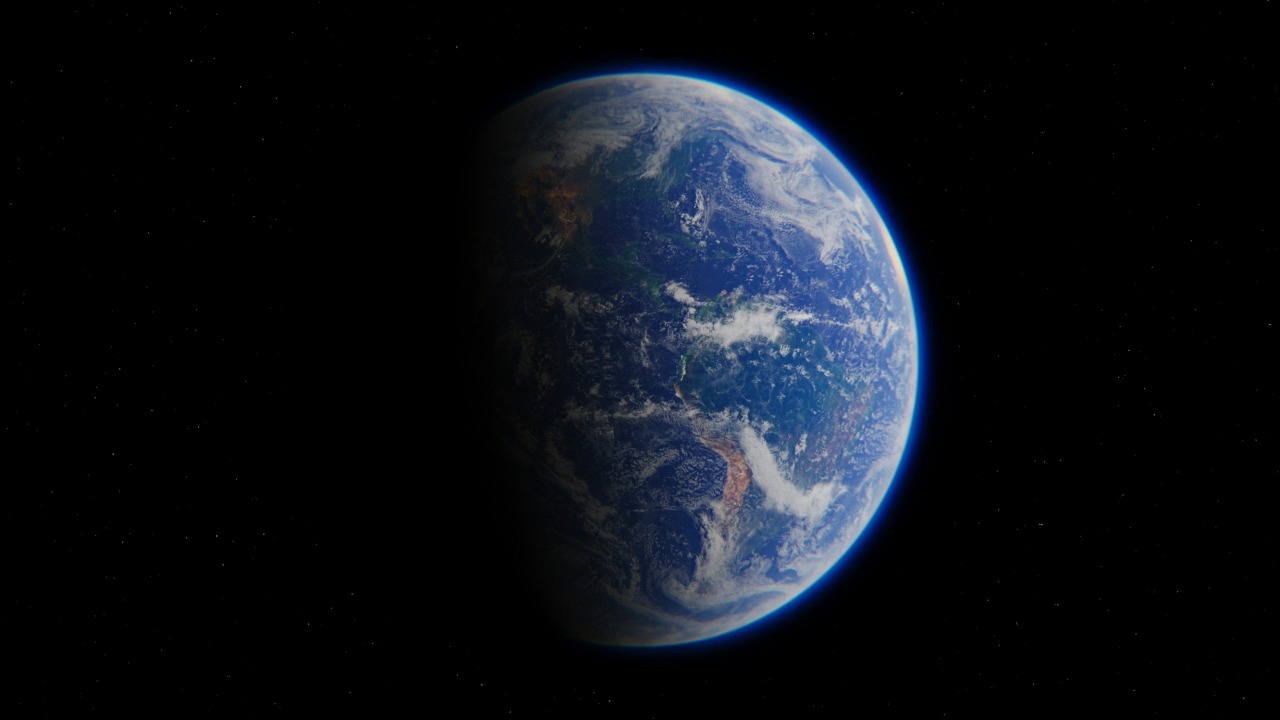

For decades, scientists treated the end of Earth’s habitability as a problem for the far future, measured in several billion years. New high powered simulations have now pulled that horizon dramatically closer, suggesting that the planet’s atmosphere could turn lethal for complex life in roughly a billion years as oxygen collapses and the Sun’s heat climbs. The result does not mean humanity is on the brink of vanishing tomorrow, but it does reset how I think about “the end of the world,” especially when set against the way we talk about doomsday in politics, culture and viral internet rumors.
Instead of a single ticking timer, the picture that emerges is a layered set of clocks, from the slow brightening of the Sun to the very human risks that could end civilization long before physics and chemistry finish the job. The new NASA linked supercomputer work effectively cuts the old back of the envelope estimates in half, and it forces a harder question: if we now have a clearer sense of when Earth itself will fail us, what are we doing with the time we still control?
What the NASA supercomputer actually found
The most striking shift comes from a detailed simulation of Earth’s atmosphere that tracks how the planet responds as the Sun gradually grows hotter. Instead of assuming a simple, steady brightening, researchers used a high performance model to follow how oceans, rocks, microbes and air interact over immense timescales, and the result was stark. The work indicates that life on Earth will become impossible in about 1 billion years as rising solar energy strips away oxygen, drives extreme temperatures and leaves the surface too hostile for even the hardiest organisms that currently survive in the toughest niches on the planet, a scenario described in a supercomputer simulation of Earth. That timeline is roughly half of the older rule of thumb that gave complex life two billion years before the Sun’s expansion and oxygen loss caught up with it.
Several reports describe how scientists from NASA and Toho University fed climate and atmospheric models into a powerful computing system to run hundreds of thousands of scenarios. One account notes that a new study predicts that Earth will lose its oxygen in about a billion years, with researchers at Toho University using NASA models to reach that conclusion, and that the shift could come faster than many people assumed, as explained in a piece on Earth and oxygen. Another report describes a project by NASA and Toho University, powered by a high performance system, that ran 400,000 simulations of Earth’s atmosphere to pinpoint when oxygen levels crash, a detail highlighted in an Instagram post about a supercomputer simulation. In a separate summary, supercomputers used by NASA scientists and researchers from Japan’s University of Toho are described as having figured out when all life on Earth will end as the Sun gets hotter, temperatures rise, air quality worsens and only technological support systems might extend habitability, according to a report on Supercomputers and NASA.
The Sun, the biosphere and a billion year deadline
Behind the scary headlines is a straightforward physical story about the Sun and Earth. Over billions of years, the Sun will continue to expand and emit more heat, slowly transforming Earth into an increasingly hostile world where oceans evaporate, greenhouse gases spike and the familiar balance of the biosphere breaks down. One account of the new work explains that even though that might be hard to imagine on human timescales, the long term trend is clear, with severe atmospheric and environmental changes eventually making the planet uninhabitable, a picture laid out in a report on the Sun and Earth. In another summary, a scientist involved in the research, Kazumi Oza, is quoted explaining that for many years the lifespan of Earth’s biosphere was discussed based on the steady brightening of the Sun, but that the new modeling refines how long complex organisms might be able to survive, a point described in coverage of Kazumi Oza.
What changes in the new work is not that the Sun will eventually swell into a red giant, but that the atmosphere and oceans will likely fail life far earlier than the star physically engulfs the planet. A detailed explanation of the extinction timeline notes that calculations by a group of scientists and NASA confirm that within about a billion years, the combination of solar brightening and atmospheric shifts will wipe out the conditions that support complex organisms on Earth, a conclusion laid out in a report on the Extinction of life. Another account of the joint NASA and Toho University work stresses that the study used a supercomputer to explore how Earth’s climate and atmosphere respond to both the Sun’s long term evolution and the ongoing human induced climate crisis, underscoring that the far future and present day are linked in the same physical system, as described in a piece that notes how a supercomputer has the.
The human made doomsday clocks
While the astrophysical clock now points to a roughly billion year deadline for Earth’s biosphere, there is a very different timer that scientists and security experts use to track the risks we create for ourselves. The Doomsday Clock, maintained by the Bulletin of the Atomic Scientists, is a symbolic gauge of how close humanity is to self inflicted catastrophe from nuclear weapons, climate change and disruptive technologies, and its current setting is a stark warning. A recent update moved the clock to 89 seconds to midnight, a small numerical change but a frightening one that reflects escalating global tensions and environmental damage, as described in a video explaining that the clock was moved forward 1 second and is now at 89 seconds.
The organization behind the clock is preparing another high profile update. An announcement invites the public to join the 2026 Doomsday Clock Announcement, noting that on January 27th the Bulletin of the Atomic Scientists will reveal the 2026 setting, with the decision made by a science and security board that includes eight Nobel Laureates, as described in a call to Join the Doomsday. A separate description of the clock explains how it is presented to the public, with references to how viewers are told that they need to follow specific steps to watch the announcement and submit a media inquiry, underscoring how the Doomsday Clock has become a global media event as well as a scientific warning, as outlined on the main Doomsday Clock page. In another video, the Bulletin’s leaders explain that it is the determination of the science and security board of the Bulletin of the Atomic Scientists that sets the time, highlighting the mix of scientific and geopolitical judgment that goes into each move, as seen in a recording introduced with the word Jan.
Prophecies, viral hoaxes and the 2026 fixation
Alongside the sober warnings from astrophysics and security experts, there is a parallel ecosystem of predictions that treat 2026 as a kind of magical cutoff. One widely discussed example comes from Physicist Heinz von Foerster, who in 1960 used population growth data to predict that the world would end in 2026, a claim he published in the journal Science and that has resurfaced as the date approaches, as recounted in a feature that asks whether One scientist predicted doomsday in 2026. Another report revisits the same figure, describing how a Physicist in 1960 said the world would end in 2026 and promising to explain the exact date, again centering Physicist Heinz von Foerster and his mathematical model, as detailed in a piece that introduces the story with the words Dec, Physicist and Here. These predictions do not align with any known physical mechanism for planetary collapse, but they show how eager people are to pin a specific year on the end of the world.
More from Morning Overview