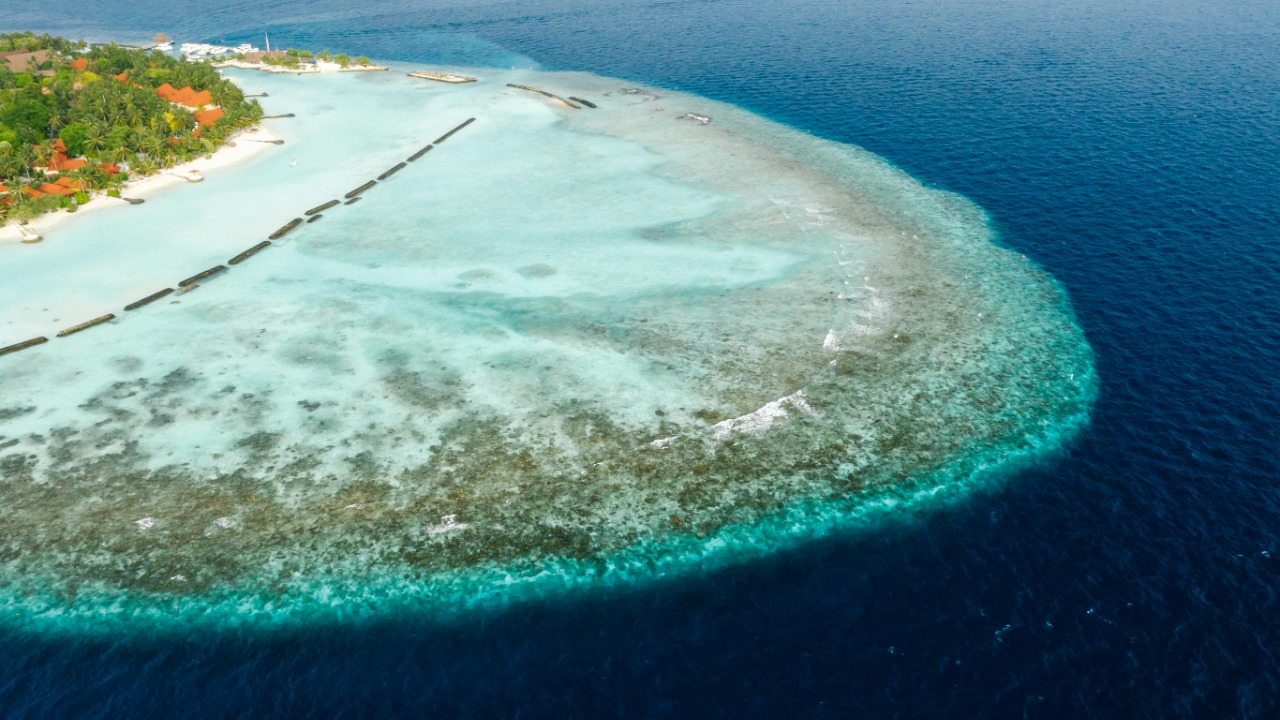

From orbit, some of the most remote corners of the ocean are suddenly lighting up in surreal shades of turquoise, lime, and even orange. NASA’s latest satellite images show waters around far‑flung islands turning strange colors as microscopic life surges to the surface, painting the sea like a living canvas. What looks like a visual glitch is in fact a precise signal that the planet’s marine engine is revving, and sometimes straining, in ways that matter far beyond these isolated coasts.
I see these color shifts as an early warning system written in chlorophyll and bioluminescence. Around places like the Chatham Islands, the Shetland Islands, and the storm‑lashed coasts near Patagonia, the ocean is revealing how climate, currents, and nutrients are reshaping the base of the food web in real time.
Remote islands, electric seas
One of the starkest examples sits at about 800 kilometers, or 500 miles, east of New Zealand’s South Island, where the rugged, sparsely populated Chatham Islands are ringed by swirling bands of milky blue and green. From above, those colors trace dense blooms of phytoplankton that cluster where currents and winds concentrate nutrients, turning what would otherwise be a dark, uniform blue into a mottled palette that satellites can easily pick out. The isolation of the Chatham archipelago makes the contrast even more dramatic, a bright halo of life around a small speck of land in the open Pacific.
Closer inspection shows that the exact position of these blooms is not random. At about 800 kilometers from New Zealand, the islands sit where currents, eddies, and changing wind patterns can trap surface waters for hours, long enough to boost phytoplankton populations into visible plumes. I read those streaks as a fingerprint of how physical oceanography and biology intersect: the same forces that shape waves and storms are also quietly deciding where the ocean’s microscopic plants will thrive.
From Patagonia to the Falklands, turquoise as a climate signal
Far to the east, another set of images shows Patagonia’s coastal waters turning an almost opaque turquoise, a transformation that looks more like glacial meltwater than open sea. Here, the color shift comes from dense phytoplankton blooms that scatter light in complex ways, producing bands of teal, jade, and chalky blue that wrap around headlands and drift into offshore gyres. In recent imagery, the various colors visible in these Patagonian waters have been linked directly to the concentration and type of microscopic organisms, a relationship that researchers in Patagonia’s coastal zone are now using to track how the region’s oceans respond to changing winds and runoff.
Just across the water, the Falkland Islands sit at another crossroads of currents, where the cold Falkland Current meets warmer flows from the north. When I look at satellite composites from this sector of the South Atlantic, the turquoise plumes around Patagonia appear to bleed toward the island chain, hinting at a shared system that ferries nutrients, larvae, and heat between them. The same turquoise that delights remote‑sensing specialists is also a tracer of how climate‑driven shifts in circulation could ripple through fisheries and seabird colonies that depend on predictable pulses of plankton.
Shetland’s swirling greens and the physics of bloom
In the North Sea, the spectacle repeats with a different accent. Off the Shetland Islands, satellites have captured spirals of emerald and aquamarine that curl around the archipelago like smoke rings. Here, phytoplankton imparted brilliant blues and greens to North Sea waters near the islands, turning what is usually a muted slate color into something closer to a painter’s mixing tray. The patterns are not just pretty; they trace the outlines of eddies and fronts that concentrate nutrients and shape where fish, seabirds, and marine mammals can find food.
On one particularly vivid day, images showed a Spectacle of Color in which filaments of green wrapped around darker cores of water, a sign that different water masses were colliding and mixing. Phytoplankton, which normally give the ocean a subtle blue appearance, suddenly became dense enough to dominate the scene, turning the surface into a map of chlorophyll. For me, those swirls are a reminder that the ocean’s physics and biology are inseparable: the same eddies that steer ships and storms also choreograph the blooms that feed entire ecosystems.
When blooms go orange, red, or glow in the dark
Not all color changes are benign shades of blue and green. Along the Kimberley coast of Australia, tidal currents have recently stirred up a bloom of a non‑toxic phytoplankton species called Noctiluca scintillans, creating a brilliant orange‑marbled pattern on the ocean surface that looks almost like rust from space. In high‑resolution imagery, the bloom appears as tangled ribbons of orange and cream, a sharp contrast to the surrounding blue water that signals just how dense the cells have become. The organism, known simply as Noctiluca, can also glow at night, turning breaking waves into streaks of electric blue that sailors have described for generations.
In more extreme cases, entire swaths of ocean can light up in a uniform, ghostly white, a phenomenon sailors have called “milky seas” for at least 400 years. Modern satellites have now photographed these luminous patches, some as large as the state of Indiana, revealing that they are likely caused by vast populations of bioluminescent bacteria or plankton that emit light in unison. Reports from the Sea of Stars near Vaadhoo Island in the Raa Atoll show how shorelines can glow so intensely that they mirror the night sky, blurring the line between ocean and atmosphere. I see these glowing events as the most dramatic reminder that the sea’s color is not static paint but an active signal of microbial life.
What bizarre colors reveal about a changing ocean
Behind the visual drama lies a more technical story about how scientists are reading these colors as data. One of NASA’s newest Earth‑observing satellites is tuned specifically to detect pigments in ocean surface waters, allowing researchers to map chlorophyll and other compounds at unprecedented resolution. By tracking how these pigments change over time, the mission can pinpoint when and where blooms begin, how long they persist, and whether they are likely to be dominated by species that support fisheries or by those that produce toxins. The resulting maps, described as a sea aswirl with chlorophyll, turn the ocean’s shifting hues into a quantitative climate record.
At the same time, researchers are probing why some blooms tip into harmful territory while others remain relatively harmless. There is an ongoing debate whether the factors leading to harmful algal blooms are natural or anthropogenic, with one line of work focusing on potential mutualism between species such as Lingulodinium polyedrum and bacteria like Marinobacter algicola. That research, framed explicitly around the idea that There may be tight ecological partnerships driving some of the most intense events, suggests that warming waters, shifting nutrient loads, and changing circulation could all be tilting the balance. When I look at satellite images of oddly colored seas now, I see not just beauty but a complex negotiation between microbes, chemistry, and climate.
More from Morning Overview