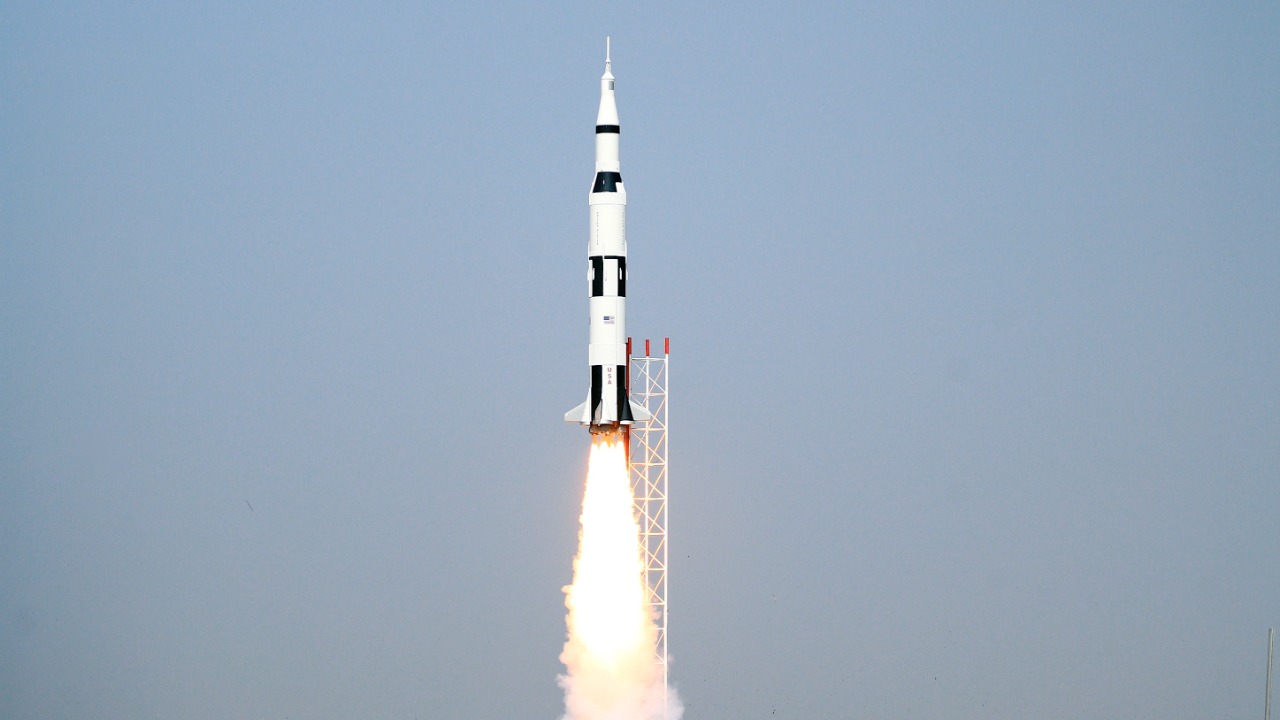

The Space Launch System was supposed to be NASA’s triumphant return to Saturn V scale, a government built mega rocket that could guarantee American astronauts a path back to the Moon. Instead, it has become a case study in how legacy contracting and political inertia can collide with a new era of cheaper commercial launch. After years of quiet warnings, NASA and its overseers are now openly acknowledging that the SLS model is financially untenable, and the agency is being pushed toward a future where this giant rocket may fly only a handful of times, if at all.
That reckoning is arriving just as President Donald Trump’s administration moves to reshape the Artemis Program with deep cuts and outright cancellations. The awkward truth is no longer whispered in budget footnotes or inspector general memos, it is written into White House proposals and NASA’s own affordability plans: at current prices, the SLS cannot coexist with the rest of the exploration agenda without crowding out science, technology and even the Moon missions it was built to serve.
The price of a “Moon rocket” that broke the bank
From the start, the Space Launch System was sold as a pragmatic reuse of shuttle era hardware, but the cost curve never bent in NASA’s favor. Independent tallies of the program’s spending show that the combination of the SLS core stages and the Orion crew capsule has already consumed tens of billions of dollars, with per launch costs that dwarf any commercial alternative. Analyses of the cost of SLS have repeatedly concluded that the program’s budget footprint leaves little room for other exploration hardware, even before counting the ground systems and support contracts that keep the rocket alive between flights.
Inside the agency, the sticker shock is no longer a taboo subject. NASA officials have acknowledged in internal and public documents that the SLS mega rocket is “unaffordable,” a word that appears in multiple assessments of the program’s long term viability. One widely cited estimate put cumulative SLS related spending at around $20 billion by the time the first mission flew, a figure echoed in reporting that described how NASA officials conceded that their Moon rocket’s costs had hit that threshold even before routine operations began.
Inspectors, audits and the phrase “unsustainable”
The most blunt language about SLS has not come from critics on the outside, but from the government’s own watchdogs. The NASA Office of Inspector General has spent years dissecting the rocket’s budget and schedule, and its work is now central to the political case against the program. In one high profile assessment, the inspector general concluded that “at current cost levels the SLS program is unsustainable,” a line that has been widely quoted since it appeared in a detailed review of NASA and SLS. That conclusion did not emerge from a quick glance at spreadsheets, it was the product of an extensive audit that tracked how much each Artemis mission would cost to assemble and launch.
The OIG’s scrutiny has only intensified. A later report, labeled with the stark phrase SHORT OF ITS SLSCOST SAVINGS GOAL, found that, despite NASA’s “affordability initiatives,” the agency was still far from achieving the reductions it had promised to Congress. That document warned that the current transition plan would not deliver the expected savings until “less costly commercial heavy lift alternatives become available,” a clear signal that the watchdog sees private rockets as the only realistic path to lower costs. The same IG-24-001 report underscored that the SLS affordability plan was falling behind its own benchmarks, even as NASA publicly touted progress.
NASA’s own watchdog network turns up the heat
Behind those headline findings sits a broader oversight ecosystem that has grown increasingly vocal about SLS. The Office of Inspector General has made the rocket and its associated programs a recurring theme in its annual list of NASA’s Top Management and Performance Challenges, a document that highlights the biggest risks to the agency’s mission. On its public site, the watchdog frames its work as “Excellence Thr” in oversight, and recent NASA OIG communications have emphasized the need to rein in large, long running programs that threaten to crowd out innovation.
In a recent report to Congress, the OIG highlighted oversight activities that identified hundreds of millions of dollars in potential cost savings across NASA’s portfolio, a figure that implicitly challenges managers to rethink how they fund flagship projects. That update, issued under the banner OIG Communications, even used an image of star trails over Lake Brittle, Virginia, to symbolize the long arc of accountability. The same report to Congress made clear that SLS is part of a larger pattern of programs that require sustained scrutiny if NASA is to keep its exploration ambitions aligned with fiscal reality.
White House budgets and the move to cancel SLS
The inspector general’s language might have remained a technocratic warning if it had not collided with a political shift in Washington. President Donald Trump’s proposed 2026 budget does not just trim around the edges of Artemis, it seeks to cancel the Space Launch System outright along with other cornerstones of the Moon architecture. In a detailed breakdown of the plan, one analysis noted that “At the heart of the budget proposal is the phased cancellation of three key components of the Artemis Program: the Space Launch Sy,” a reference to the SLS, the Orion spacecraft and related infrastructure that would be wound down over several years. That framing appears in a discussion of how the Artemis Program would be reshaped while still trying to keep a path to the Moon before China.
The numbers behind that decision are stark. A White House summary of the proposal states that “SLS alone costs $4 billion per launch and is 140 percent over budget,” a line that crystallizes why the administration is willing to absorb the political blowback of canceling a rocket that has already flown. That same document, which also targets Orion and the Lunar Gateway, has been cited in coverage of how the White House is seeking to end SLS, Orion and Lunar Gateway programs in one stroke, arguing that the money is better spent on commercial services and smaller missions.
Trump’s budget and the political turn against SLS
The budget fight is not just about spreadsheets, it is about who gets to define America’s path back to the Moon. In Florida, where SLS related jobs are concentrated, local coverage has zeroed in on how President Donald Trump’s proposal would “slash NASA funds” and “kill off Artemis’ SLS rocket and Orion spacecraft.” One report even opened with the line “Getting your Trinity Audio player ready,” before detailing how the Getting Trinity Audio segment introduced a story about the potential end of the Space Launch System and its companion capsule.
Nationally, the stakes are framed in terms of strategic competition and scientific tradeoffs. A detailed account from Washington noted that the proposal would “axe key parts of NASA’s moon program” and identified the SLS rocket and a planned lunar station among the targets. That report, datelined WASHINGTON and attributed to Reuters, emphasized that President Donald Trump is willing to cut not only exploration hardware but also “many science programs” to reshape NASA’s portfolio, a move that has alarmed researchers who fear a zero sum trade between human spaceflight and everything else.
More from Morning Overview