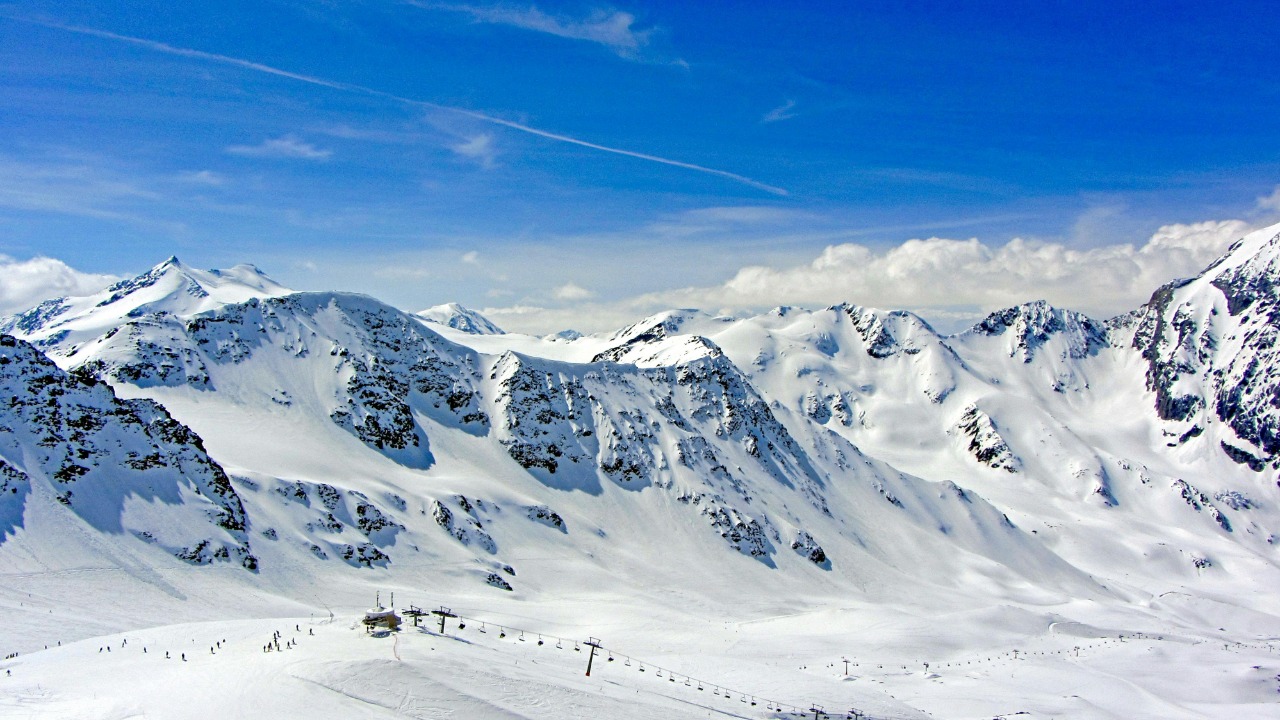

The high peaks that store winter snow for the American West are entering one of their leanest seasons on record, and the consequences reach far beyond ski resorts. From the Rockies to the Sierra Nevada, the natural reservoir of mountain snow that feeds taps, farms and turbines is shrinking just as demand and temperatures climb. The mountains that supply water to roughly 40 million people are no longer reliably freezing and holding that moisture until summer.
Instead, more winter storms are arriving warm, falling as rain that rushes away instead of lingering as snow. That shift is leaving the Colorado River Basin and neighboring watersheds exposed to a new kind of risk: not just drought in the traditional sense, but a structural loss of the snowpack that once buffered cities, wildlife and power grids against dry years.
Snowpack as the West’s hidden reservoir is failing
For decades, Snowpack in the high country has functioned as the West’s most important off-the-books reservoir, quietly banking water in frozen form until spring. Federal Key Points describe how this natural storage system underpins drinking water, irrigation and hydropower for Western communities, smoothing out the region’s famously dry summers. When that snow fails to accumulate, rivers run lower, soils dry out faster and the entire system has less margin for error.
Much of the Western US is now in what scientists call a snow drought, a condition where mountain snow is far below normal even if rain has been plentiful. Much of the region started 2026 with record precipitation but unusually warm storms that left ridgelines brown instead of white. That pattern, wet yet warm, is eroding the very mechanism that once guaranteed a slow, predictable melt into rivers like the Colorado.
The Colorado River’s worst start in a quarter century
Nowhere is the problem more consequential than in the mountains that feed the Colorado River, the lifeline for cities from Denver to Phoenix and farms from Yuma to the Imperial Valley. Early season measurements show that Snowpack in the ranges that supply the Colorado River is off to its worst start in a quarter century, even as the river remains the primary water source for about 40 m people. A companion analysis of the same data underscores that this anemic Snowpack is unfolding across Utah’s headwaters as well, compounding the strain on the basin.
Scientists have been warning that the Colorado River Basin is particularly vulnerable because warming air is squeezing more moisture out of every flake of snow. Research on the Colorado River has found that Global warming is shrinking the snowpack and changing its reflectivity, or albedo, so it melts faster and feeds less water into streams. Another detailed look at the Colorado River Basin notes that Abou 40 m people depend on this system, meaning even modest percentage losses in snow-fed flows translate into very real shortages downstream.
Utah, California and the Intermountain West feel the pinch
The snow drought is not confined to the Colorado’s core watershed. As of January 15, As of January 2026, most of the Western US snowpack was well below normal, with Colorado singled out for having its lowest snowpack ever recorded. A separate federal However notes that even a burst of late-season storms may not be enough to erase the deficits that have already built up across the Intermountain West. In Utah, a special report from the Natural Resources Conservation Service described what it called the most dismal winter ever recorded, with multiple major watersheds at or near record lows.
On the ground, that means reservoirs and ecosystems are already under stress before spring runoff even begins. In southern Utah, water managers are watching storage like Sand Hollow Reservoir near St. George and other key facilities that supply communities from Salt Lake City to Los Angeles, while biologists warn that Wildlife could suffer if levels drop too far. In California, a dry start to the year has created dire conditions for the Sierra Nevada snowpack even though big storms filled reservoirs earlier; state monitors say California is now seeing below normal precipitation paired with elevated temperatures that eat away at what snow does fall.
Warm storms, record deficits and a new kind of risk
What makes this winter different is not just how little snow is on the ground, but how it disappeared. Satellite and ground observations show that Very wet but very warm weather has dominated the western U.S., leaving many high elevations with substantial Very large snowpack deficits. Instead of building a deep, cold snowpack, storms have delivered rain that runs off quickly, sometimes even triggering floods, while the long-term water supply quietly erodes. Across the West, the winter is off to a dry start in terms of snow, with Across the West and Wide swaths of mountain terrain reporting far below average snow water equivalent.
Those deficits are now reaching record levels in some basins. With so much in the West dependent on ample snowfall, states, ski companies and local agencies are pouring money into cloud seeding and other attempts to coax more snow out of marginal storms, even as many communities rely on the West’s share of the Colorado River for their water. Federal analysts warn that Western snow droughts like this one are likely to become more frequent as temperatures climb, turning what used to be rare bad years into a recurring feature of the climate.
Downstream consequences: reservoirs, power and hard choices
The immediate impact of a thin snowpack shows up in reservoirs, and nowhere is that more visible than at Lake Powell, the massive storage pool at the center of the Upper Colorado River system. Managers tracking Upper Colorado River and SWE over the past four years say At the center of it all lies Lake Powell, which not only generates hydropower but also regulates deliveries to Arizona, California and Nevada. A separate crisis report on the Colorado River concludes that current operating rules through 2026 are unlikely to prevent critically low levels, warning that Decisions about deeper cuts to water use may be on the table if snow-fed inflows do not improve.
Those cuts are not hypothetical. An analysis published in Sep found that if current consumption continues and the Southwest sees another string of dry years, there may not be enough water in storage to meet existing obligations, even before accounting for future growth. The study, released on a Thursday, modeled scenarios in which so much water is held back in upstream reservoirs that too little could be released downstream to satisfy legal compacts. That kind of structural shortfall would ripple through cities, farms and tribal nations that have long assumed the river, and the snow that feeds it, would always be there.
More from Morning Overview