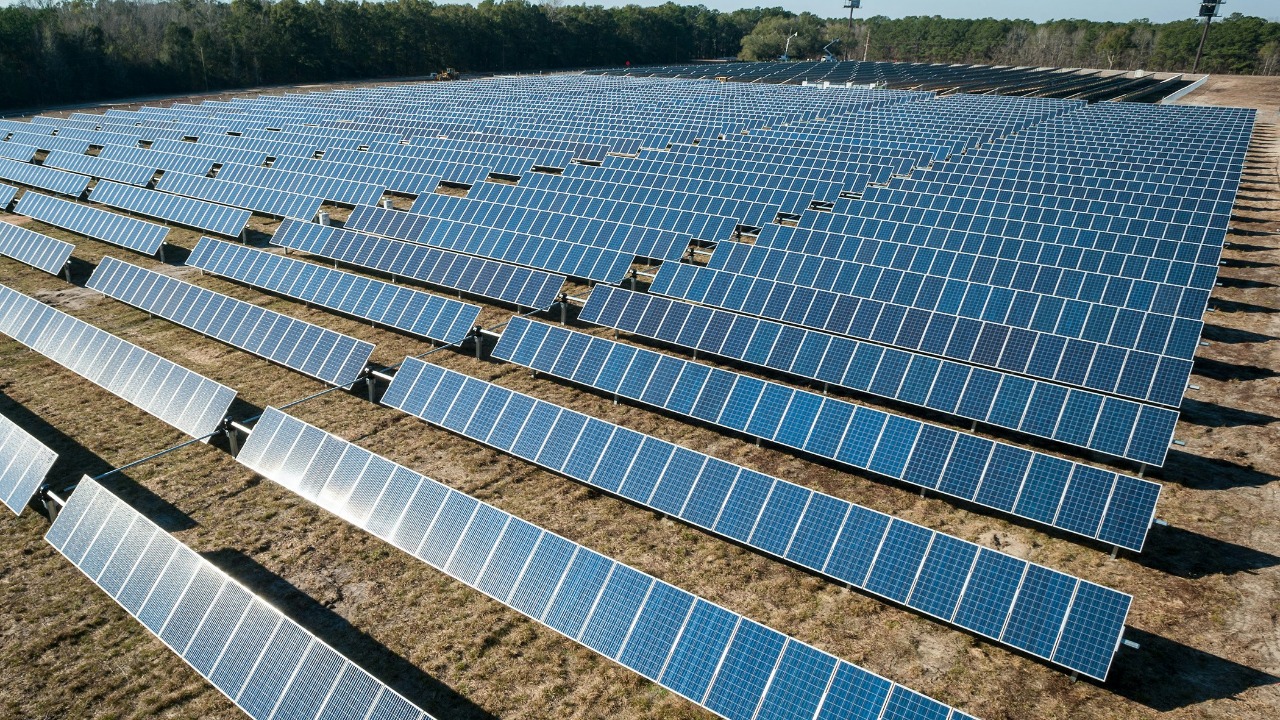

Michigan has locked in one of the country’s most aggressive clean power timelines, committing to a fully carbon-free grid by 2040 even as lawmakers slash environmental budgets and federal support erodes. The state’s strategy now hinges on whether legal mandates, regulatory muscle, and private investment can outrun those fiscal headwinds. I see a high-stakes experiment unfolding: can a Midwestern manufacturing powerhouse hit 100% clean electricity while absorbing deep cuts to the very agencies meant to police pollution and guide the transition?
The answer will shape not only Michigan’s climate trajectory but also its economic future, from auto plants to homeowners’ rooftops. The same laws that set ambitious targets are colliding with a new era of austerity and shifting national priorities, forcing state officials, utilities, and communities to improvise in real time.
From climate ambition to binding law
Michigan’s clean energy push did not start with a single bill, but the recent legislative package turned long-debated goals into binding requirements. The state’s broader climate identity, from its industrial base to its Great Lakes shoreline, is now inseparable from this transition, and that context is visible in how Michigan is described in national energy debates. When Governor Gretchen Whitmer approved a sweeping set of climate and power bills, the administration framed it as a generational reset of how the state produces and uses electricity.
The centerpiece is a statutory clean power requirement that by 2040, Michigan will generate all of its electricity from carbon-free sources, a commitment embedded in a broader climate action package. That package, described in official materials as “Governor Whitmer Signs Historic Clean Energy & Climate Action Package,” pairs the 100% target with equity language aimed at communities disproportionately affected by environmental hazards. In parallel, the administration has highlighted a “100% Clean Energy Standard” under Senate Bill 271, and those same materials emphasize that by 2040 Michigan will produce all of its power from clean sources, locking the goal into law rather than leaving it as an aspirational pledge.
The legal scaffolding: standards, plans, and resource maps
Behind the headline target sits a dense legal architecture that I see as the real engine of the transition. Public Act 235, described in regulatory filings as the Clean Energy Plan, establishes a clean energy standard of 80% by 2035 and 100% by 2040, and requires electric providers to file detailed plans by January 1, 2026. A companion regulatory track, labeled “Clean Energy Standard and Integrated Resource Plans,” notes that Public Act 231 updates the IRP Statute so that long-term utility planning is explicitly aligned with the new targets, a shift captured in the state’s Public Act documentation.
Regulators are now translating those statutes into day-to-day oversight. The Michigan Public Service Commission has convened a dedicated Clean Energy Standard workgroup, with all MPSC meetings conducted via teleconference and remote access information posted for stakeholders. At the same time, the governor’s office has ordered the Department of Environment, Great Lakes, and Energy to map out emerging resources, directing the Department of Environment, to report to the Executive Office on a Michigan geologic hydrogen exploration and preparedness initiative that ties directly into the MI Healthy Climate Plan. Together, these moves show a state trying to lock in both the rules and the resource base needed to make the 2040 promise real.
Mandates meet money: budget cuts and lost federal support
The legal framework is ambitious, but the money behind it is suddenly less certain. Earlier budget negotiations in Lansing produced a stark signal when the Republican-controlled House advanced a $78.5 billion spending plan that included a $200 M reduction to the environment department, described as a $200 Million Cut to EGLE in the “Michigan House Passes Budget” summary. Environmental advocates warned that the Michigan House Republicans’ version of the 2026 State Budget “decimates” protections for water and health, with Charlotte Jameson arguing that the plan guts core programs at EGLE and the Department of Natural Resources, a critique detailed in a State Budget analysis.
Those state-level cuts land just as federal backing is also shrinking. Commentators in Michigan have tied President Donald Trump’s climate decisions to a broader pullback in national support, noting that, unfortunately, states across the country, including Michigan, are suffering the consequences of his dismissal of climate policy and that since his inauguration he has denied key financial incentives, a critique laid out in an Unfortunately column. Reporting on the ground adds a concrete price tag: Michigan has lost $540 million in climate-related grants, and instead, Michigan automakers are scaling back and refocusing on gas and hybrid vehicle production, a trend emblemized by Ford’s adjustments, according to a Instead report. The combination of state cuts and lost federal dollars leaves Michigan trying to execute a 100% clean power law with fewer public resources than its architects anticipated.
Utilities, homeowners, and the fine print of the transition
Even with budgets under strain, the machinery of implementation is grinding forward, and I see much of the real action happening in the fine print that governs utilities and property owners. A recent status report notes that Michigan’s current renewable energy target is 50% by 2030 and 60% by 2035, benchmarks that utilities must hit on the way to full decarbonization, according to a BY BAUYRZHAN ZHAXYLYKOV account from Capital News Service in LANSING. That same reporting underscores that utilities which fail to adapt could face steep penalties or even be forced to sell assets or go out of business, a reminder that the law is designed to change corporate behavior, not just send a signal.
At the household level, the rules are also shifting. The Homeowners’ Energy Policy Act requires associations to adopt an energy policy by April 1, 2026, and the law, described in legal guidance as the The Homeowners Energy Policy Act, limits how associations can restrict rooftop solar or other clean technologies. A related advisory, titled “Deadline Approaching: Associations Must Adopt Energy Policy,” warns that the deadline is firm and that associations must adopt an energy policy by April 1, 2026, a requirement summarized in a Deadline Approaching briefing. These granular rules, from IRP filings to HOA covenants, are where the 2040 goal becomes a lived reality for ratepayers and homeowners.
Economic stakes: jobs, investment, and political crossfire
Michigan’s clean energy law is also an economic bet, one that boosters argue could keep the state at the center of the next industrial wave even as federal policy shifts. Advocates point out that, in fact, Michigan has received more federal dollars for clean energy projects than any other state, and that private, state and local government investments are stacking on top of that base, according to an analysis of Michigan and Private capital flows. Environmental groups argue that the new laws are “Moving Michigan to 100% Clean Energy,” describing one of the cornerstones of the Clean Energy and Jobs Act as an expansion of the state’s renewable standard and insisting that Michigan is open for business, a framing laid out in a Moving Michigan explainer. Those same advocates highlight “Boosting Energy Efficiency” provisions that tighten building standards and promise to save residents money, as described in a Boosting Energy Efficiency section.
Yet the politics remain volatile. A policy memo from the Mackinac Center notes that Michigan has seized the opportunity to demonstrate its commitment to combating climate change and ensuring a sustainable, just, and prosperous future, while also urging lawmakers like Geiss (D–Taylor) to consider cost impacts, a tension captured in a Michigan policy recommendation. Legal scholars have traced how, in November of 2023, the governor and legislature moved from goal to law by embedding decarbonization into the resource planning (IRP) process, a shift dissected in a From Goal to Law brief on Institutionalizing Michigan Electricity Decarbonization. Another legal summary notes that in November, 2023, Michigan’s legislature approved SB 271 to expand renewable portfolio targets, a move cataloged under Michigan Expanded RPS Targets. Together, these documents show a state that has chosen to hardwire clean energy into its economic strategy even as federal climate cuts and local budget fights threaten to blunt the impact.
More from Morning Overview