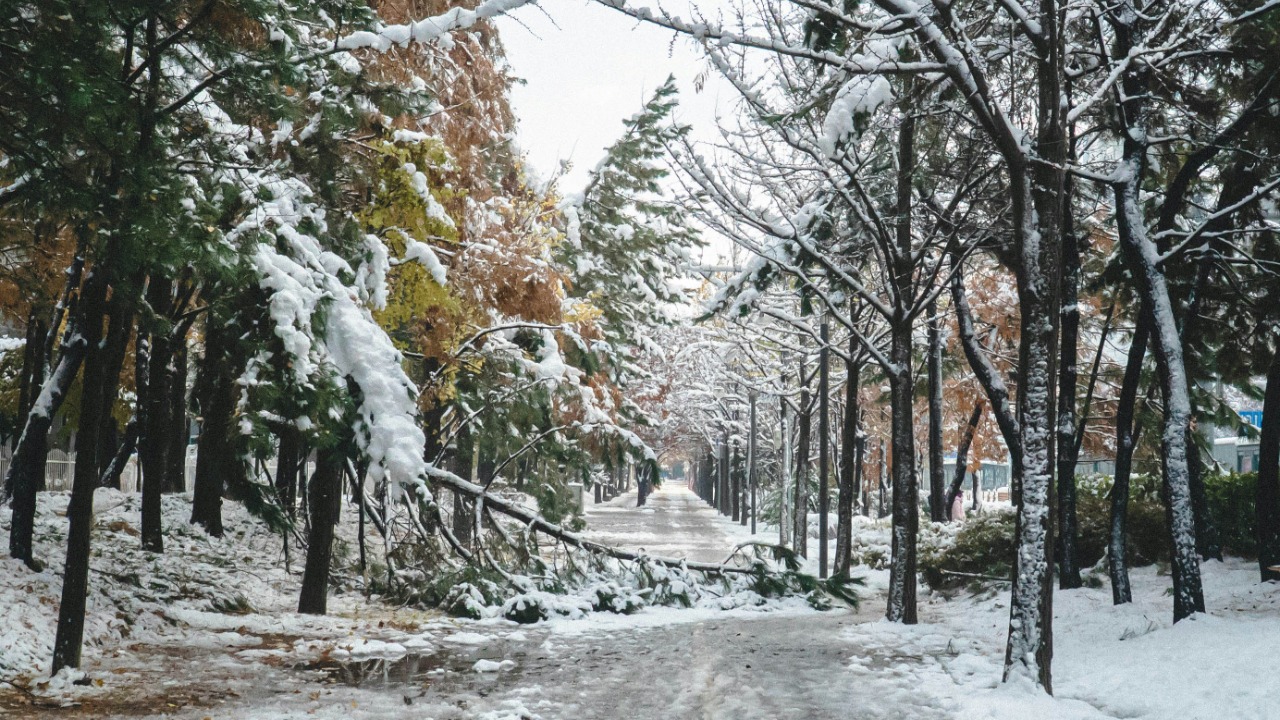

As an Arctic blast settles over the northern United States, a viral warning has seized social media: it is going to get so cold that trees will literally explode. The phrase is dramatic, but it is rooted in a real winter phenomenon that can turn quiet forests into something that sounds like a rifle range. I set out to separate the physics from the fear, and to understand what meteorologists actually mean when they talk about “exploding trees.”
The reality is less cinematic than the memes suggest, yet still serious enough to matter for anyone living near mature trees. Under the right conditions, trunks can crack with such force that the noise mimics a blast, and the damage can weaken branches or entire trees. That makes this cold snap not just a test of home heating systems, but also a reminder to pay attention to what is happening in the woods and yards around us.
How a viral warning turned into a winter science lesson
The latest wave of concern began when a meteorologist warned that an extreme Arctic outbreak could be cold enough to make trees explode, a message that quickly spread across six Midwestern states as residents braced for subzero wind chills and dangerous travel. In that forecast, the focus was on a surge of bitter air expected to arrive from Friday into early next week, with the meteorologist’s caution about “exploding” trunks framed as one more hazard in a long list that already included frostbite and power outages, according to The Latest. The phrasing was tailor-made for social media, where a single dramatic line can overshadow the nuance that usually follows in a full forecast discussion.
From there, the idea jumped platforms, with weather accounts and news aggregators amplifying the claim that a winter storm meant trees were “about to start exploding.” One widely shared post highlighted the work of Joe Wilkins, who writes about weather and noted how the phrase had taken off after a forecaster using the handle @MaxVelocityWX referenced it in a discussion of the incoming cold, a moment later recapped by Joe Wilkins. As often happens, the internet latched onto the most sensational fragment, leaving many people unsure whether to expect a noisy night in the woods or a more mundane bout of creaking branches.
What “exploding trees” really are in deep cold
When I look past the headlines, the science points to a process that is dramatic but not quite explosive in the cinematic sense. Trees are full of water, and when temperatures plunge rapidly, the moisture in the outer layers of the trunk can freeze and expand faster than the inner wood can adjust. That creates intense internal stress, and instead of a fireball, what usually happens is a sudden, powerful split in the bark and outer wood that can sound like a gunshot. Arborists describe these events as frost cracks, not true detonations, a distinction underscored by experts in Michigan who emphasize that it is not an explosion, it is a strong and sudden split that can leave a long vertical scar, as explained in a detailed look at what really happens.
Scientists who study tree physiology note that the risk rises when temperatures drop quickly after a period of relative warmth, because the sap is still mobile and the cells are not fully hardened for deep winter. Under those conditions, the expanding ice can push outward until the trunk fails with a sharp report, a phenomenon that some meteorologists say can be so violent that it almost does explode, even if the mechanism is mechanical rather than chemical. One analysis of the viral claim put it bluntly, acknowledging that, yes, it can and does happen, but clarifying that the tree is not turning into shrapnel so much as cracking under pressure that is high enough that it almost does explode, a nuance captured in a breakdown of why Yes, the phenomenon is real but rare.
Why some trees are louder and more vulnerable than others
Not every tree in a frozen landscape is equally likely to crack with a bang, and the differences start with species and structure. Deciduous hardwoods with large, water-rich trunks can be more prone to dramatic frost cracks, especially if they have existing wounds or internal decay that create weak points where stress concentrates. In contrast, evergreens are built to handle cold, with flexible needles and resins that help them shed snow and tolerate low temperatures, yet even they can fail when the combination of heavy ice, high winds, and extreme cold pushes them past their limits, a pattern highlighted in coverage of how Meteorologists describe the risk.
Location and recent weather history matter just as much as species. Trees on the edge of open fields or along streets are more exposed to wind and rapid temperature swings, which can increase the chance of cracking compared with those sheltered inside a forest. In Michigan, specialists have pointed out that certain species are more vulnerable to splitting, and that trees already stressed by disease, drought, or previous storm damage are at higher risk when a severe cold snap arrives, a point underscored by Experts who have been fielding questions from concerned homeowners. That means the same Arctic air mass can leave one neighborhood echoing with sharp cracks while another, with healthier or more sheltered trees, stays relatively quiet.
What meteorologists and arborists say you should actually expect
When I talk to forecasters and tree experts, a consistent message emerges: the sound can be startling, but the odds of a tree literally blowing apart are low. One forestry specialist, Seiler, has stressed that while heavy snow, ice, and bitter cold can absolutely wreak havoc on trees, the more accurate term for what people hear in these events is frost cracks, not explosions, a clarification that has been repeated in coverage of how But the viral phrase overshoots the science. Meteorologists echo that view, noting that the main threats from this Arctic outbreak remain life-threatening wind chills, slick roads, and potential power interruptions, with tree cracking a localized hazard rather than a widespread catastrophe.
That does not mean the risk is imaginary. Meteorologist Cody Matz, who covers weather in Minneapolis, has addressed the claim directly, explaining that in very rare cases, the pressure from freezing sap can cause a tree to fail so suddenly that it can sound like an explosion. He has emphasized that the event is still a structural failure, not a combustion, and that the primary concern is falling limbs or debris rather than a blast wave, a distinction he laid out while discussing how such cracks can sound like an explosion in coverage from Meteorologist Cody Matz. For residents, that means the practical takeaway is to be aware of trees near homes, driveways, and sidewalks, especially if they already show signs of stress.
How to stay safe when the woods start sounding like a rifle range
For people living in places like Northeast Wisconsin, where deep cold is a familiar part of life, the latest viral warning has become a teachable moment. One local station there tackled the question head-on in a segment titled “Will your trees explode in extreme cold like a viral social media post claims,” with a Video Transcript that walks viewers through why the internet’s most dramatic claims are overstated and what to watch for instead as they head into another winter here in Wisconsin, a message shared through a Video Transcript. The advice is straightforward: if you hear a loud crack in the woods during extreme cold, treat it as a sign that a tree may have split and avoid walking directly under large branches until you can assess the situation in daylight.
More from Morning Overview