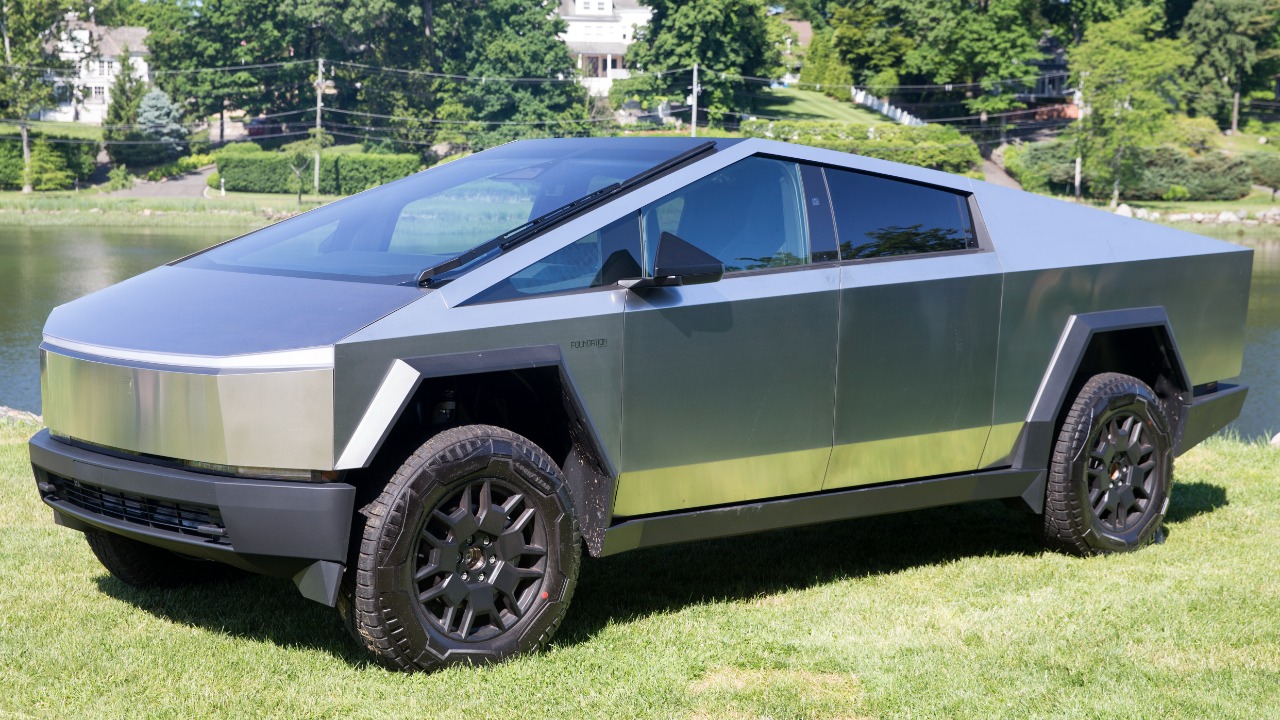

A brazen arson attack that destroyed a Tesla Cybertruck at a dealership in Mesa, Arizona has now resulted in a five year federal prison sentence. The case, which unfolded in U.S. District Court, turns a viral act of vandalism into a cautionary example of how quickly performative rage can collide with serious criminal penalties.
What began as a late night fire that gutted a stainless steel pickup and scorched a showroom wall has ended with a convicted arsonist facing years behind bars, restitution, and supervised release. It is a stark reminder that targeting high profile technology brands for spectacle or grievance is treated as a violent crime, not a prank.
The late night blaze that destroyed a Cybertruck
According to federal prosecutors, the attack unfolded at a Mesa Tesla facility where a Cybertruck was parked outside the building alongside other vehicles. Security cameras captured a man approaching the truck, splashing it with accelerant, and setting it alight, a sequence that left the angular electric pickup engulfed in flames and sent fire racing toward the dealership wall. The resulting aerial images showed a charred Cybertruck and visible damage to the building itself.
Investigators later detailed that the blaze destroyed the Cybertruck and damaged the Mesa Tesla dealership structure and three nearby Tesla vehicles, turning a single ignition into a multi vehicle and property loss event. Local coverage described how the Man who set fire to the Mesa Tesla site left behind a scene that required significant cleanup and repairs, with the stainless steel truck reduced to a burned out shell and the dealership wall blackened and cracked.
How investigators identified and caught the arsonist
From the outset, federal agents treated the case as a serious arson investigation, leaning on surveillance footage and physical evidence to track the suspect. Security cameras at the Tes facility captured clear images of the perpetrator’s clothing, build, and movements around the Cybertruck and the dealership grounds, footage that later appeared in Security photos released by the Department of Justice. Those images became the backbone of the case, allowing investigators to match the suspect’s outfit and appearance when they finally moved in to arrest him.
When agents located the man believed to be responsible, they found he was still wearing the same clothes seen in the dealership footage and carrying items that tied him back to the scene. One account notes that When he was arrested, he was still in the distinctive outfit worn during the arson and had evidence on him while victims still suffered the consequences of the fire. That combination of video, clothing, and physical links gave prosecutors a straightforward path to charge him with multiple felonies tied to the blaze.
The guilty plea, sentencing, and “Find Out” moment
In U.S. District Court, the defendant, identified in court records as Moses, pleaded guilty to five felony counts tied to the arson, including damaging property used in interstate commerce and using fire to commit a federal offense. The plea came after federal prosecutors laid out how the Cybertruck and the dealership wall were deliberately targeted, and how the fire spread to other Tesla vehicles on the lot. Court filings describe how Moses admitted his role in the attack during proceedings in District Court, clearing the way for a sentencing hearing before District Judge Diane.
At that hearing, the judge imposed a five year prison term, followed by supervised release and restitution obligations, a punishment that federal prosecutors framed as the inevitable “Find Out” phase of what some online had treated as a FAFO stunt. One detailed account of the case notes that the man has now reached the Find Out stage of his FAFO journey, after a Mesa resident torched a Tesla Cybertruck and damaged the dealership wall. Another description of the sentencing underscores that a five year sentence was handed down for the Mesa Tesla Cybertruck arson, closing a case that had drawn national attention.
Why prosecutors rejected a political motive
Throughout the case, there were questions about whether the arson was driven by politics, given how polarizing Tesla, Elon Musk, and the Cybertruck have become in American culture. Federal prosecutors acknowledged that the defendant expressed strong views about the company and its chief executive, but they ultimately argued that personal anger and a desire for attention, not ideology, were the primary drivers. One report notes that While the judge heard arguments about whether the crime was politically motivated, the court ruled it did not legally qualify as such and did not factor that into sentencing, according to Arizona federal prosecutors.
That distinction matters because labeling an attack as political can trigger terrorism related enhancements and reshape how similar crimes are prosecuted in the future. Instead, officials framed the Mesa fire as part of a broader pattern of arsons and threats aimed at Tesla facilities, but still within the realm of conventional property crime. Coverage of the case pointed out that An Arizona man who pleaded guilty to setting fire to a Cybertruck and a Tesla dealership was sentenced to five years, even as commentators warned that treating violence against companies as an acceptable part of American politics risks normalizing attacks like this one.
What the case says about Tesla, Cybertruck backlash, and accountability
The Mesa arson did not happen in a vacuum. Tesla has faced a wave of vandalism and arson incidents at its facilities, with critics targeting everything from the company’s labor practices to Elon Musk’s public persona. In this case, the blaze destroyed a Cybertruck and damaged the building at a Tesla site in Arizona, a pattern that one analysis framed as part of a broader backlash against the brand. As one account put it, a Blaze at a Tesla dealership in Arizona wiped out a Cybertruck and scarred the building, and the Man responsible has now been sentenced after being caught red handed.
Yet the sentence also underscores that however divisive Tesla and Elon Musk may be, the justice system is not inclined to treat attacks on their property as symbolic protest. The five year term, combined with restitution and post release monitoring, signals that federal courts see this kind of arson as a straightforward violent crime with real victims, from the Mesa Tesla employees to the company’s customers. One detailed narrative of the case notes that reporter Philip Uwaoma described how the arsonist was tracked down less than a quarter mile from the scene, while another analysis pointed out that Elon Musk remains at large as a cultural lightning rod even as individual attackers like this one are finally going to prison.
More from Morning Overview