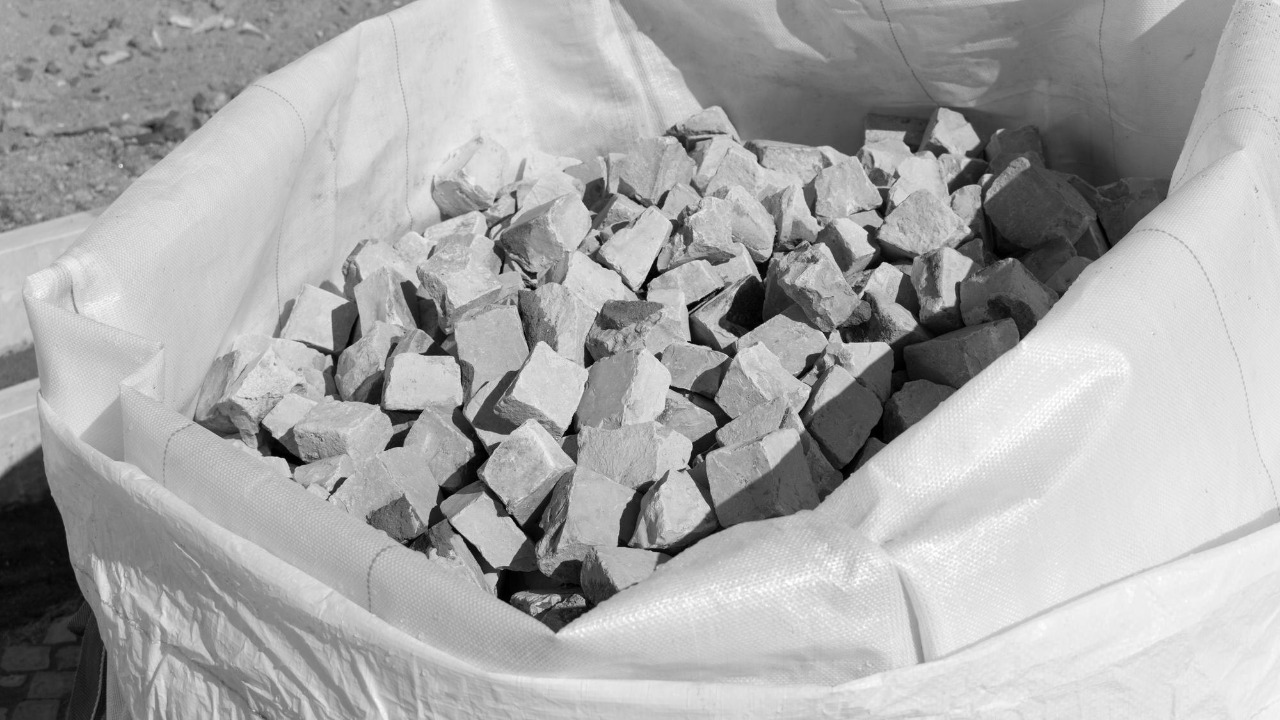

Lithium waste concrete is still more thought experiment than construction material, but the idea captures a real tension: the world is racing to deploy batteries while struggling to manage the waste they leave behind. If engineers can safely fold that waste into the most ubiquitous building material on Earth, the ripple effects for climate policy, industrial supply chains, and urban design could be profound.
Right now, however, the core technical details of lithium waste concrete remain unverified based on available sources, so the most honest way to approach the topic is to treat it as a speculative pathway and focus on what can be said with confidence about materials, data, and the systems that would be needed to make such a radical shift credible.
Why lithium waste concrete is still an unproven idea
At its core, the notion of mixing lithium battery waste into concrete tries to solve two problems at once: the carbon intensity of cement production and the mounting stockpiles of spent cells from electric vehicles and grid storage. In principle, using finely processed battery residues as a partial cement replacement could reduce clinker demand and lock hazardous materials into a stable matrix. Yet none of the sources available here provide experimental data, performance metrics, or safety assessments for such a material, so any claim about its strength, durability, or emissions profile is unverified based on available sources.
That absence of direct evidence matters, because construction materials move slowly and conservatively, shaped by building codes, insurance rules, and decades of field performance. Without test results, lifecycle analyses, or regulatory filings to point to, I have to treat lithium waste concrete as a hypothetical technology rather than an emerging product. The most that can be said with confidence is that it sits at the intersection of battery recycling, cement chemistry, and circular-economy policy, and that intersection is still largely mapped by models and lab-scale concepts rather than by commercial projects.
What it would take to validate a new construction material
For lithium waste concrete to move from concept to job site, researchers would need to build a rigorous evidence base that looks a lot like the structured datasets engineers already use in other domains. In language technology, for example, developers rely on carefully curated vocabularies and corpora, such as the large word lists compiled in resources like the English dictionary datasets used for algorithm testing, to benchmark performance and catch edge cases. A comparable approach in materials science would require exhaustive records of mix designs, curing conditions, compressive strengths, and long-term durability tests across thousands of samples.
Those datasets would also need to capture the messy variability of real-world waste streams, from different cathode chemistries to contaminants introduced during shredding and sorting. In natural language processing, researchers stress-test models against sprawling frequency lists such as the multi-million-token word frequency files that reveal how often terms appear in practice rather than in theory. A similar philosophy would have to guide any serious program to qualify lithium-bearing aggregates or binders, because the material would be judged not on a handful of pristine lab batches but on how it behaves when scaled across diverse plants and climates.
Learning from other industrial scandals and safeguards
If lithium waste concrete ever reaches the market, it will do so in a regulatory environment shaped by past failures in industrial transparency. The automotive sector’s emissions cheating saga, often analyzed using machine learning tools such as the Dieselgate word-embedding notebook, is a reminder that complex technologies can be gamed when oversight lags behind innovation. Construction materials are less glamorous than cars, but the stakes are just as high, because structural failures or hidden toxicity can play out over decades and across entire cities.
That history argues for a cautious, data-heavy path rather than a rush to market. Any proposal to embed battery residues in concrete would need independent testing, open publication of results, and clear communication to builders and residents. In customer-facing industries, strategists emphasize that long-term trust depends on consistent, transparent experiences, a point driven home in frameworks for managing customer relationships that stress reliability over hype. The same logic applies here: if the public senses that environmental benefits are being oversold or safety questions brushed aside, confidence in greener construction materials could erode quickly.
Data, vocabularies, and how we talk about “waste”
One underappreciated challenge in evaluating speculative technologies is the language used to describe them. Terms like “waste,” “recycling,” and “upcycling” carry different meanings for chemists, regulators, and residents who live near industrial plants. Computational linguists tackle similar ambiguity by grounding models in explicit vocabularies, such as the extensive allwords lists that enumerate possible tokens for security and search applications. In the context of lithium waste concrete, policymakers would need equally precise definitions to distinguish between benign mineral fillers and hazardous residues that merely change form.
That precision is not just semantic. Insurance contracts, zoning rules, and environmental permits all hinge on how materials are classified, and those classifications are often encoded in technical glossaries and standards. Researchers who build language models rely on curated resources like the vocabulary files that define which character sequences a system can recognize, and they know that gaps or biases in those lists can skew outcomes. In the same way, if regulators adopt narrow or outdated definitions of battery “recycling,” they might inadvertently encourage practices that stabilize waste in concrete without truly addressing long-term environmental risks.
Simulating complex systems before pouring real concrete
Before any builder pours a slab that contains unconventional ingredients, engineers will want to see robust simulations that explore how the material behaves under stress, temperature swings, and chemical attack. In education and research, interactive environments such as the visual programming projects hosted on platforms like the Snap simulation workspace show how complex systems can be modeled and tweaked before they are deployed in the real world. Translating that mindset to materials innovation would mean building digital twins of structures that incorporate lithium-bearing mixes, then probing them for failure modes that might not appear in short-term lab tests.
Those simulations would need to be grounded in empirical data rather than optimistic assumptions. Just as language technologists train models on large, carefully filtered corpora like the 100,000-word vocabulary collections used for benchmarking, materials scientists would have to feed their models with detailed records of how different waste-derived additives affect hydration, microstructure, and long-term cracking. Without that foundation, digital experiments risk becoming elaborate guesswork, offering a false sense of security about a material that has not yet earned its place in structural applications.
Global standards, local materials, and the role of corpora
Construction is both intensely local and quietly global. Building codes differ from city to city, yet many of the standards that govern cement, aggregates, and admixtures are harmonized across continents. That tension mirrors the way language resources are built: researchers compile massive corpora that span dialects and domains, such as the multilingual dictionary archives used in information retrieval, then adapt them to specific tasks and regions. If lithium waste concrete ever moves beyond the lab, it will have to navigate a similar path, fitting into global norms while respecting local geology, climate, and regulatory culture.
Standardization would also depend on shared reference materials that let engineers and regulators speak the same technical language. In computational fields, widely replicated word lists like the most-replicated vocabularies help align experiments and make results comparable across labs. For a new class of concrete that incorporates battery residues, the equivalent might be open databases of test results, agreed naming conventions for different waste fractions, and harmonized protocols for leachate testing. Without that common ground, each jurisdiction would be forced to reinvent its own rules, slowing adoption and increasing the risk of inconsistent safety margins.
Public perception, trust, and the limits of speculation
Even if the technical hurdles can be cleared, any attempt to fold lithium waste into the built environment will ultimately be judged in the court of public opinion. Residents who already worry about industrial pollution are unlikely to embrace a material they perceive as “toxic concrete,” especially if they feel excluded from the decision-making process. Communication strategies will matter as much as compressive strength curves, and they will need to be grounded in clear, accessible language rather than jargon. In other domains, educators use simple tools such as classroom-friendly visual projects to demystify complex systems, and a similar commitment to transparency would be essential here.
For now, though, the honest position is that lithium waste concrete remains a speculative concept, not a proven climate solution. None of the sources available provide direct evidence of pilot plants, field trials, or regulatory approvals for such a material, so any confident claims about its ability to “upend construction” would be premature. What can be said with certainty is that the data practices, linguistic precision, and trust-building lessons embedded in resources like large shared corpora and structured technical vocabularies will be indispensable if and when researchers try to turn this intriguing idea into something that can safely hold up a bridge, a school, or a home.
More from MorningOverview