
A seemingly simple image a magnet suspended, silently floating in mid-air could represent a seismic shift in how we understand the laws of the universe. Recently, physicists working with advanced superconductive systems have observed behavior that may challenge conventional physics and offer insights into quantum gravity, dark matter, and the very fabric of space-time.
The phenomenon isn’t just about levitation it’s about precision, purity, and potential. In the right conditions, a floating magnet inside a superconductive chamber creates an ultra-sensitive, frictionless environment that may become one of the most powerful tools in experimental physics.
How Superconductive Levitation Works

The science behind it is rooted in the Meissner effect, a quantum phenomenon where superconductors expel magnetic fields entirely when cooled below a certain temperature. This causes magnets to levitate with zero resistance or friction, producing a perfectly stable, silent suspension.
In ultra-controlled environments — such as cryogenic vacuum chambers researchers can observe the magnet’s behavior with extreme sensitivity. Even the tiniest external force, from gravitational waves to quantum field fluctuations, can be detected by monitoring the magnet’s motion.
A New Window into Fundamental Physics
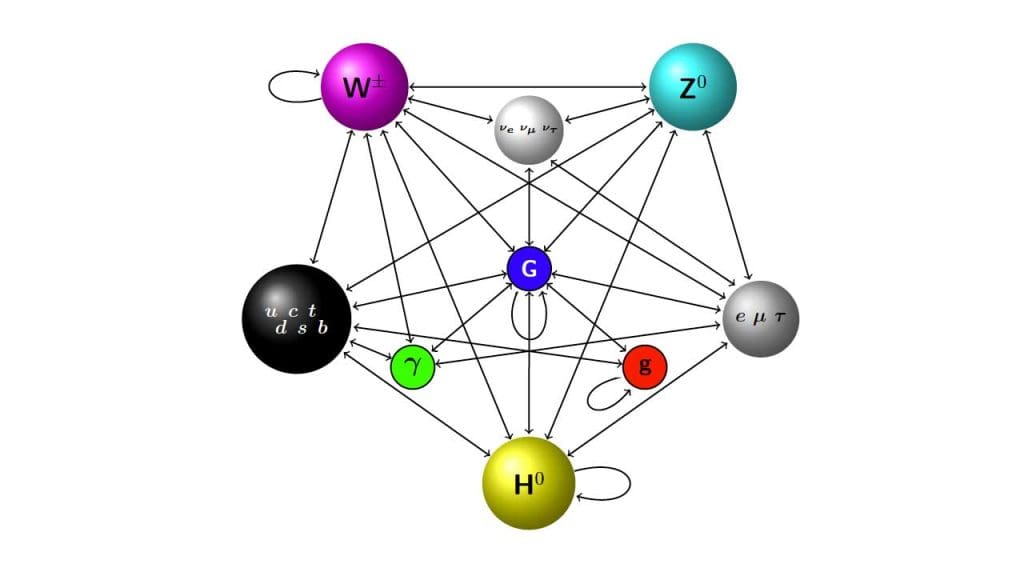
The real excitement isn’t just the levitation it’s what this platform allows scientists to measure. By isolating nearly every known variable, this setup becomes a potential testbed for quantum gravity, dark energy fluctuations, and exotic particles like axions or WIMPs (weakly interacting massive particles).
Some researchers even suggest that this floating magnet system could detect minute violations of known physics, offering insights into where Einstein’s general relativity and quantum mechanics break down — possibly helping unite the two in a long-sought “Theory of Everything.”
From Physics Labs to Real-World Breakthroughs
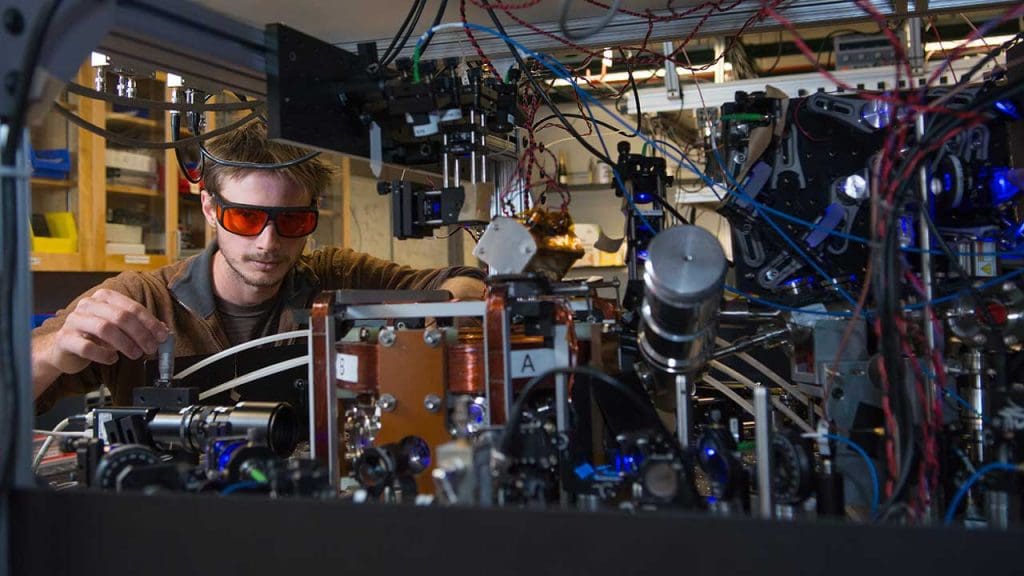
While this discovery is deeply theoretical, its practical applications are promising. Zero-friction systems like these could revolutionize quantum computing, inertial navigation, gravitational wave detection, and energy-efficient transport.
In the future, similar levitation systems could even form the basis for space-based observatories, precision sensors, or stable quantum storage devices that outperform today’s best technologies by orders of magnitude.
Final Thoughts: The Stillness That Could Shake Science

The image of a floating magnet may appear calm — but beneath its stillness lies a storm of scientific possibility. This breakthrough is a reminder that profound insights don’t always come from violent explosions or billion-dollar particle colliders. Sometimes, they float quietly, in a chamber cooled to absolute zero, waiting to reveal the next great leap in physics.
