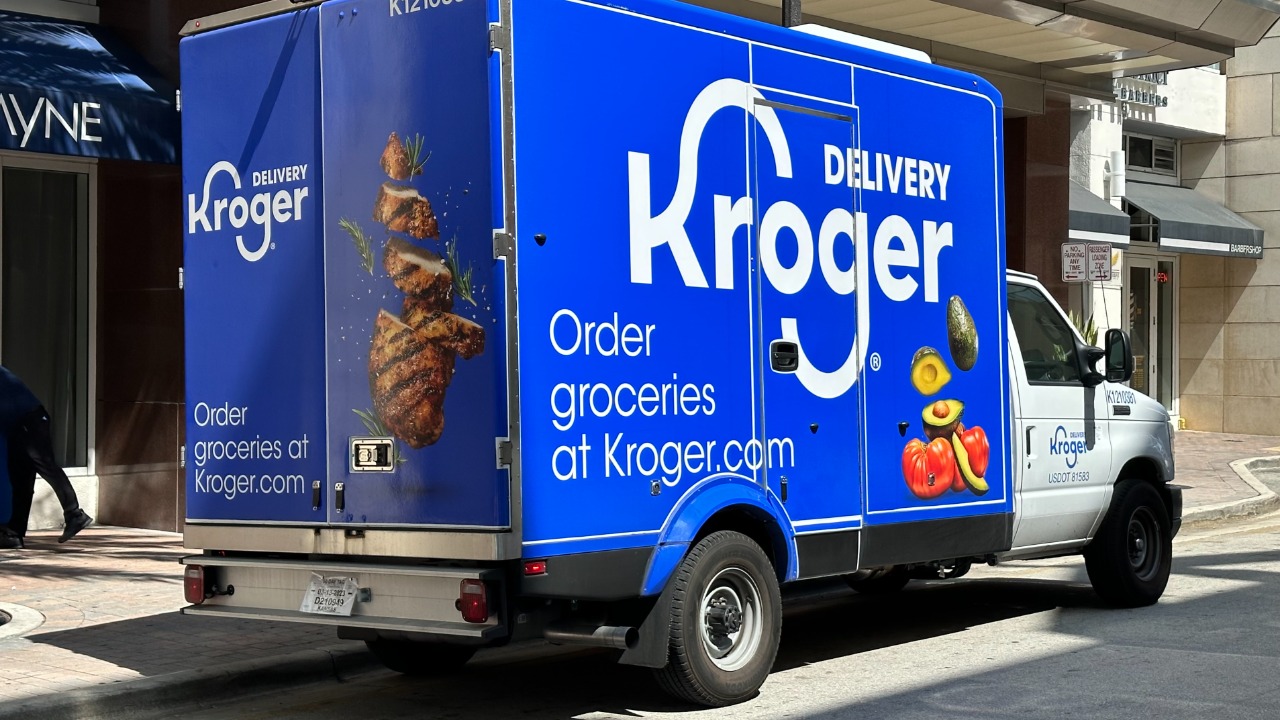

Grocery delivery drivers who once shuttled bags from Kroger stores to customers’ doorsteps say a quiet algorithmic shift has pushed them out of work, replacing human judgment with automated dispatch systems that favor cheaper labor and tighter routes. Their stories capture a broader tension in retail, where companies frame artificial intelligence as a tool for efficiency while workers experience it as an invisible boss that can erase a livelihood with a software update.
As Kroger leans on data-driven logistics and third-party platforms to speed up orders and cut costs, drivers describe a workplace where metrics, not managers, now decide who gets the next batch, which routes are worth taking, and when a job simply disappears from the app. I see their accounts as a case study in how AI-powered optimization can quietly restructure a job without ever announcing a layoff.
How Kroger’s delivery model shifted under the hood
The starting point is understanding how Kroger’s delivery operation has evolved from a store-based side task into a complex network of in-house services, gig platforms, and automated routing tools. The company has invested heavily in e-commerce, building dedicated fulfillment centers and partnering with services that use algorithms to match orders with available drivers, a model that naturally prioritizes speed and cost over continuity for individual workers. In practice, that means the same software that boosts on-time deliveries can also redirect work away from higher-paid or less “efficient” drivers without any human conversation.
Drivers who once worked directly with store managers now find that their schedules and earnings are governed by opaque systems that rank them on acceptance rates, completion times, and customer ratings. When those systems are tuned to favor lower-cost options, such as independent contractors or new hires willing to accept smaller payouts, long-time workers can see their order volume collapse even if their performance metrics remain strong. That shift, from human scheduling to algorithmic allocation, is what many describe when they say AI effectively took their jobs, even if their names never appeared on a formal layoff notice.
Drivers describe disappearing shifts and algorithmic silence
From the workers’ perspective, the most jarring change is not a pink slip but a sudden drop in available batches, with no explanation beyond what they can infer from the app. Several drivers recount opening their phones to find that routes they had run for months were now assigned to different vehicles or third-party couriers, while their own dashboards sat empty. The absence of a clear reason, or even a person to ask, leaves them reading the tea leaves of algorithmic behavior, trying to guess whether a tweak in the system has quietly downgraded their status.
Some describe patterns that look like automated triage: high-density urban routes with strong tip histories shift to gig workers who accept lower base pay, while longer suburban drives or low-margin orders are left for whoever is still logged in. Others say they watched their weekly income fall by hundreds of dollars after the company rolled out new routing tools that consolidated deliveries into fewer, more tightly packed trips. In their telling, the software did not just optimize routes, it redefined who counted as “needed” labor, and they only realized they were on the wrong side of that line when the work stopped appearing.
Inside the AI tools that now steer grocery delivery
Behind those experiences sit a cluster of technologies that retailers increasingly bundle under the label of AI, from demand forecasting models to real-time dispatch engines. These systems ingest order histories, traffic data, driver locations, and labor costs, then generate recommendations about how many workers to schedule, which orders to batch together, and which driver should handle each run. When a company like Kroger integrates those tools into its delivery stack, the result is a constantly updating map of “optimal” labor use that can shrink or expand the pool of active drivers in minutes.
Routing algorithms are particularly powerful in this context because they can turn what used to be several separate trips into a single multi-stop route, cutting the number of drivers needed for the same volume of orders. Forecasting models add another layer by predicting when demand will spike or sag, then adjusting how many workers the system invites to log in. For drivers, that can feel like a moving target: one week the app is flooded with offers, the next it is nearly silent, even though customer demand in their area seems unchanged. The difference is not the neighborhood, it is the model’s new calculation of how few people it can get away with using.
From employee to gig worker: how AI favors flexible labor
One reason drivers link their job losses to AI is that the same optimization logic that trims routes also tends to reward the most flexible, lowest-cost labor arrangements. When dispatch software is designed to minimize per-order expense, it naturally gravitates toward independent contractors who are paid only when they complete a delivery, rather than employees who earn hourly wages and benefits. That shift aligns with a broader trend in retail logistics, where companies increasingly blend in-house staff with gig workers, then let algorithms decide which group gets the next order.
For former Kroger delivery workers, the practical effect is that their predictable schedules and steady paychecks have been replaced by a scramble for app-based gigs that can vanish without warning. Some say they were encouraged to sign up for partner platforms after their in-store roles were cut back, only to discover that the same automated systems that sidelined them in one context now governed their prospects in another. In that environment, AI does not just manage the work, it helps redraw the boundary between what counts as a job and what is treated as on-demand piecework.
Metrics, ratings, and the new algorithmic boss
Even for those who remain in the system, the nature of supervision has changed from face-to-face feedback to a constant stream of metrics that determine access to future work. Drivers describe dashboards that track on-time rates, order acceptance, customer satisfaction, and even how often they decline low-paying batches. When those numbers fall below thresholds set by the software, the consequences can include fewer offers, less desirable routes, or in some cases deactivation from the platform, all without a conversation with a human manager.
This kind of algorithmic management can feel especially harsh in delivery work, where factors outside a driver’s control, such as traffic jams or apartment intercom failures, can drag down their stats. Yet the system often treats those outcomes as individual performance issues rather than structural constraints, reinforcing a sense that the AI is both judge and jury. Workers who once could explain a delay to a supervisor now find that their only recourse is an in-app appeal process that may or may not reverse a penalty, and even when it does, the lost opportunities in the meantime are rarely restored.
What Kroger gains from AI optimization, and what it risks
From the company’s vantage point, the appeal of AI-driven delivery is straightforward: faster fulfillment, lower labor costs, and more consistent service across markets. Automated routing can reduce fuel use and idle time, while predictive staffing can keep payroll aligned with demand instead of relying on rough estimates. Those efficiencies matter in a grocery sector where margins are thin and customers increasingly expect same-day or even one-hour delivery windows, and they help explain why retailers have poured resources into these tools.
The risk, however, is that the human cost of those efficiencies becomes a reputational and operational liability. When long-time drivers feel discarded by a system that never explains its decisions, they are more likely to speak out, organize, or seek regulatory intervention, especially as lawmakers pay closer attention to algorithmic labor practices. There is also a practical downside: losing experienced workers can hurt service quality in subtle ways that models do not capture, from knowing which apartment complexes are hard to access to understanding how to handle fragile items in a rush. If the pursuit of optimization erodes that tacit knowledge, the short-term gains in cost and speed may be offset by customer frustration and higher turnover.
Regulators and courts start probing algorithmic scheduling
The experiences of Kroger delivery workers are landing in a policy environment where regulators are already scrutinizing how companies use algorithms to manage labor. Agencies at the federal and state level have begun examining whether automated scheduling and dispatch systems comply with existing labor laws, particularly when they blur the line between employee and contractor or effectively discipline workers without due process. Those inquiries reflect a growing recognition that AI is not just a technical tool but a form of workplace governance that can sidestep traditional protections.
Court cases involving gig platforms have also raised questions that resonate with grocery delivery, such as whether algorithmic control over routes, pricing, and performance metrics amounts to the kind of supervision that should trigger employee status. While outcomes vary by jurisdiction, the legal debates highlight a core tension: companies argue that their systems simply match supply and demand, while workers point to the same software as evidence that they are being directed like staff without the corresponding rights. As more drivers link their job losses to AI-driven decisions, I expect those arguments to surface more often in disputes involving retailers and their logistics partners.
Workers push for transparency and a human backstop
In response to these shifts, delivery workers and their advocates are not just calling for higher pay, they are asking for visibility into the systems that shape their livelihoods. One recurring demand is for clear explanations when an algorithm reduces a driver’s access to work, including the specific metrics involved and a way to contest errors. Another is for companies to guarantee some baseline of human review before a worker is effectively sidelined, so that a glitch or misclassification does not quietly end a career.
Some labor groups are also pressing for rules that would limit how aggressively companies can use AI to cut hours or reclassify roles without formal notice. They argue that if a software update can have the same impact as a layoff, then it should trigger similar obligations around severance, retraining, or at least advance warning. For Kroger and its peers, engaging with those demands could mean redesigning their systems to include worker-facing dashboards that explain key decisions, as well as dedicated teams empowered to override the algorithm when it produces outcomes that are technically efficient but plainly unfair.
What a more worker-centered AI rollout could look like
The story of Kroger’s delivery drivers does not mean AI and grocery logistics are inherently incompatible with decent work, but it does highlight how much depends on design choices. A more worker-centered approach would start by treating drivers as stakeholders in the deployment of new tools, not just data points to be optimized. That could involve pilot programs where drivers test routing changes and provide feedback before a full rollout, along with impact assessments that measure not only cost savings but also effects on income stability and job security.
Companies could also build guardrails into their systems so that optimization does not automatically translate into job loss. For example, when a new model reduces the number of drivers needed in a region, the default response could be to offer voluntary transfers, retraining for other roles, or guaranteed minimum hours for a transition period, rather than simply letting the app starve some workers of orders. By pairing AI with explicit commitments to fair treatment, retailers would signal that technological progress is not a one-way ratchet toward precarity, but a tool that can be aligned with long-term employment if they choose to use it that way.
More from MorningOverview