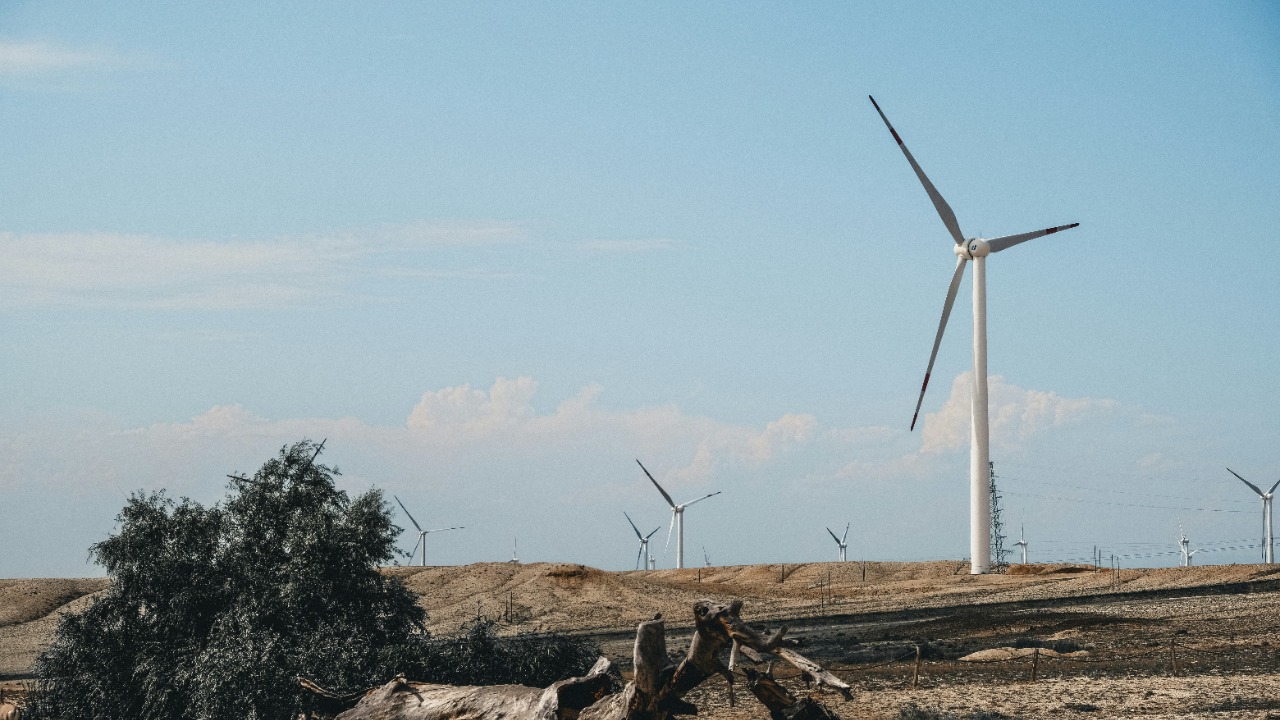

The offshore wind project President Donald Trump tried to stop is moving forward again, and the courtroom reversal is bigger than one construction site. It signals that judges are increasingly skeptical of the administration’s attempts to use national security and executive power to choke off wind energy development. The result is that a project Trump cast as a threat is now poised to deliver power, jobs, and a precedent that could shape the rest of his energy agenda.
What is roaring back to life is not just a single wind farm but a broader legal and political fight over who gets to decide the pace of the clean energy transition. In case after case, federal judges are testing the limits of Trump’s authority to sideline turbines he has mocked as “losers” and worse, and they are starting to draw lines he cannot easily cross.
The wind farm Trump halted, and the judge who restarted it
The latest rebuke came when a federal Judge concluded that the Trump administration’s national security rationale for freezing a nearly completed offshore wind farm did not hold up. The project had been halted after the administration abruptly suspended its permissions around Christmas, citing unspecified threats, even though the turbines were already largely in place and the grid connections planned. In the ruling, the court found that the government had not provided evidence that justified stopping a facility that was on track to supply electricity to more than 400,000 homes and businesses, clearing the way for construction to resume and for the project to finally connect to the regional grid, as reported in a summary By Evann Gastaldo.
This was not the first time a court had to step in after Trump officials tried to pull the plug on offshore wind at the last minute. Earlier in the month, another Judge allowed an offshore windfarm that had been halted by Trump to resume construction after the administration paused it just before Christmas, again invoking national security. That decision was widely described as a setback for the president, who has repeatedly called windfarms “losers” and has made no secret of his disdain for turbines, a posture that framed the legal fight from the start and was detailed in coverage of the Setback for his administration.
Vineyard Wind’s reprieve and the Massachusetts test case
The most closely watched of these projects is Vineyard Wind, the Massachusetts offshore development that has become a test case for how far Trump can go in trying to stall clean energy in federal waters. After the administration moved to halt Vineyard Wind by raising national security concerns, the company and state officials challenged the order in court, arguing that the project had already cleared extensive federal reviews and that the late-stage objections were political rather than technical. A recent decision in federal Court gave Vineyard Wind a reprieve, with the judge allowing the project to move forward while the legal fight continues, a turn described in detail by Ethan Genter in his report on how Vineyard Wind Wins.
That ruling came on the heels of another decision in Massachusetts, where a federal Judge ruled that the offshore wind project halted by the Trump administration could continue despite the White House order. In that case, the court sided with arguments presented by state officials and developers that the administration had overreached when it tried to block the project after years of permitting work. Reporting By JENNIFER McDERMOTT and MICHAEL CASEY for The Associated Press noted that the judge’s order directly undercut the administration’s attempt to stop Vineyard Wind and underscored that the courts were willing to block the administration’s order when it clashed with established environmental and energy law, as described in their account By JENNIFER.
Revolution Wind and the broader offshore build-out
The legal pushback is not limited to one coastline. In another major case, a federal court reversed Trump’s order halting Revolution Wind, an Orsted project off Connecticut and Rhode Island that is central to New England’s clean power plans. The administration had suspended the lease for the project, arguing that more review was needed, but the Judge ruled that suspending the lease was “unreasonable” and that the government had failed to justify such a drastic step. That decision restored the project’s path to completion and protected the transmission cable route that will carry electricity from the offshore turbines to customers onshore, according to a detailed account of how Suspending the lease was overturned.
These cases are unfolding against a backdrop of aggressive federal targets for offshore wind that predate Trump’s efforts to slow the sector. Developers like Orsted have lined up multi-state projects that are meant to feed power into grids from New England to the Mid-Atlantic, and state governments have already signed long-term contracts premised on those turbines being built. When courts restore projects like Revolution Wind, they are not only reviving individual construction sites but also shoring up a broader build-out that includes supply chains, port upgrades, and workforce training programs that depend on regulatory stability, a dynamic that legal analysts have highlighted while tracking the administration’s setbacks in cases where a Judge has Judge Smacks Down.
Trump’s wider campaign against wind, and the courts’ response
Trump’s hostility to wind power is not a secret, and it is not confined to obscure regulatory filings. At Davos, in a moment that stood out amid discussions of trade and even Greenland, Donald Trump used his global platform to express open disdain for wind turbines, repeating claims about their supposed dangers and unreliability. That personal animus has filtered into policy, with the president frequently returning to wind as a political punching bag and framing turbines as symbols of an energy transition he rejects, a pattern captured in a widely shared clip from Davos that dissected why Trump hates wind so intensely.
Inside the federal government, that attitude translated into concrete directives. Trump’s January 2025 directive, issued soon after he took office, sought to sharply restrict new wind projects on any federal waterway or public land, effectively putting a chill on both offshore and onshore development that required federal permits. Analysts noted that the directive was part of a broader strategy to tilt the energy mix back toward fossil fuels and to test how far executive power could go in reshaping the market, a strategy examined in depth in coverage that asked whether wind power could survive Trump’s January 2025.
The legal limits of Trump’s anti-wind agenda
Courts are increasingly drawing boundaries around that strategy. In a major early decision, a federal Judge sided with Maryland and threw out a Trump order that had been blocking development of wind energy across a wide range of projects. The ruling invalidated an executive move that had threatened both offshore and onshore wind projects by freezing key approvals, and it signaled that states could successfully challenge federal attempts to unilaterally shut down clean energy growth. The case, which turned on whether the administration had followed proper procedures and respected statutory mandates, ended with the Judge rejecting the administration’s arguments and restoring a path forward for developers, as summarized in a report headlined by the finding that the Judge sides with.
Another pivotal ruling came when a United States court overturned Trump’s ban on new wind energy permits, a policy that had threatened to stall a generation of projects before they even reached the leasing stage. New York Attorney General Letitia James hailed that verdict as “a big victory in our fight to keep tackling the climate crisis,” emphasizing that the decision would allow the continued development of new wind energy projects that are central to state and regional climate plans. By striking down the ban, the court reinforced the idea that the administration cannot simply close the door on entire categories of clean energy without running afoul of existing law, a conclusion detailed in coverage that quoted New York Attorney on the stakes.
More from Morning Overview